





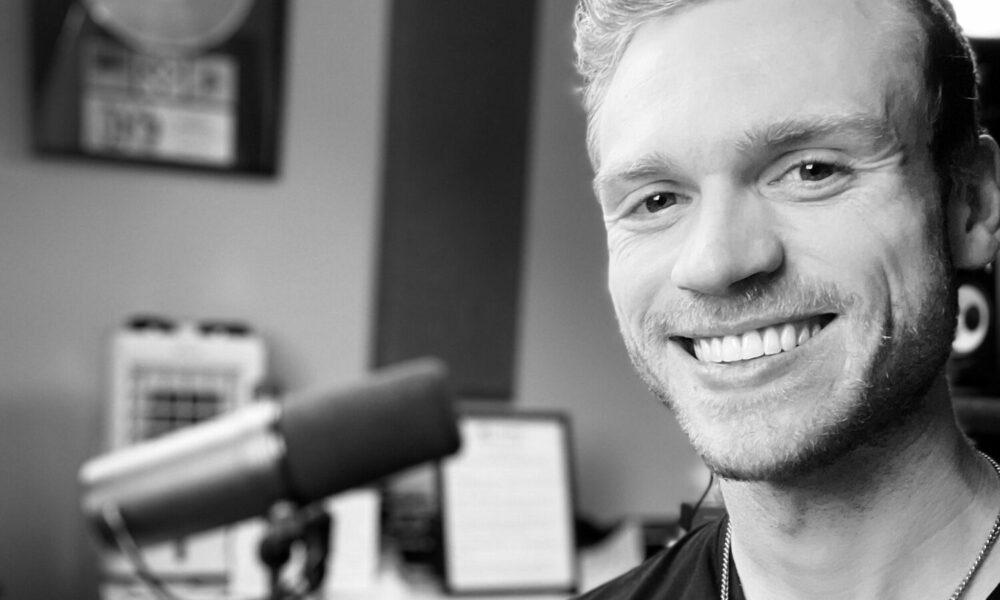
Today we’d like to introduce you to Michael Walker.
Hi Michael, please kick things off for us with an introduction to yourself and your story.
I started playing music when I was about six years old. My parents had me start playing piano, and I played not because I was in love with the piano back then but because they bribed me with video games; luckily, it started to take hold in high school. It was probably right around that time that I had mild social anxiety; I was not very popular in school and had trouble fitting in. And I noticed that girls paid attention to me when I played music. They acted like I was special, which felt good. Out of high school, I started touring with Paradise Fears full time, and I learned the hard way that you can’t just book the shows and then play them. You have to be able to get people to come out to the shows. I remember going into Walmart and getting a big stack of flour tortillas and a big jar of peanut butter, and that was breakfast, lunch, and dinner. I remember booking our first tour, and hardly anyone came out. It was the bartender in the back of the room. And that was when we were living in our van, sleeping in parking lots, eating peanut butter tortillas. And our lead singer had an idea which took us from that point to selling 24,000 CDs in about six months. That idea is what we now have come to call “tour hacking.” Tour hacking, in a nutshell, was this – we would walk up to fans who were waiting in lines for other shows. And we noticed that some of our favorite bands (like All Time Low, Mayday Parade, and Blink 182) played these massive shows with thousands of people waiting out front sometimes for the entire day in advance to get a good seat. So we thought – what if we walk up to those people, introduce ourselves, and share some of our music? So we started doing that. And I was a super shy, awkward kid, so that didn’t come naturally to me. But we found that those people were the right people to connect with. They were the people who actually go out to shows, care enough about music to support it, get up off their butts, and spend money to be there. And so it was an amazing, validating experience because it was the first time we connected with people who were true fans of the music, not just friends and family. And we sold 24,000 CDs doing that in about six months. And because of that, one of the bands that we were tour hacking on (All Time Low), who happened to be our favorite band of all time, heard about what we were doing and allowed us to open for them on tour. And that was a dream come true for us. That had a snowball effect, where we got to tour with many of our favorite bands that we grew up listening to. And in some cases, they were even opening for us, which was super humbling. And I got to tour for about 10 years full time.
About five years ago, when I found out I was going to be a dad, I was gone traveling nine or ten months out of the year. And I wasn’t living a very conducive lifestyle to being the kind of father and husband I wanted to be. Back then, we had gotten our start through grassroots marketing and meeting people face to face. We relied on live shows. And some of the things we’re doing now with digital marketing and funnels and ads are things I didn’t learn until the last five years. Things might’ve been different if I had known what I know now. But we stopped touring full-time. So I started Modern Musician. And the first year was one of the most difficult years of my life. And I’m grateful that this is the case because I think I’ve been very fortunate and had a great life with great opportunities presented to me. My parents are some of my biggest role models, and I had never experienced any serious adversity when I was growing up relative to what some people have had to go through. So I’m grateful that this was one of my rock bottom moments. I remember that year after stopping touring; at that point, so much of my identity was based on it. And I felt proud because we had worked hard. When we started, people called us “Paradise Queers” and we got picked on. So it felt validating to achieve this level of success on our own. We released an album that hit number two on iTunes. We had about 24 million streams on Spotify and toured worldwide as independent artists without a record label or manager. And so it was something that my identity was attached to.
And that year, when I was on the tail end with Paradise Fears, it felt like I was in limbo – like, “what am I gonna do now?” I didn’t have college experience; I felt like a failure as a husband and a father because I didn’t know how I was going to provide for my family. And that was right around the time that I stumbled upon someone who’s probably become my number one mentor in my entire life – a guy named Jeff Walker (no relation) who has a business called Product Launch Formula. And he teaches internet entrepreneurs how to release a course and create a program from their experience. And so I started doing that, and that first year I worked my butt off and invested a lot of money into starting my business. I was actually about $36,000 in debt. While still getting things in order, I invested a lot into education, masterminds, and mentorship, and it wasn’t an instant path to success. It took time. And at the end of the first year, I remember I was at this point where I had this decision to make. I’d gotten to a point where I was making a little bit of money monthly, and I could see the seed I planted was starting to germinate and blossom, but I didn’t have the fruits yet. And it came time to invest another $12,000 into this mentorship program. And I’m so grateful that I stuck with that because that second year is when we had our first six-figure year with Modern Musician. And then the following year is when we had our first seven-figure year. And now we have a team of 35 amazing human beings and team members who are some of the most intelligent, caring people I know, and I’m just super grateful.
We help musicians take the music they’ve worked on, put their soul into it, and get it heard by the right people who are most likely to resonate with it. And we help them build relationships with those people and a community around their music. And we teach them how to monetize things so they can sustainably live with their music and passion. They get to transition from making music on the side as more of a hobby to something that pays the bills.
And I would say now where we’re at with our story is that we used to have seven or eight different software tools we built with our artists. And about a year ago, we connected with a software developer, and I had the vision to integrate all the functionality from different tools we were using into a single piece of our proprietary software. We offer this to our clients. It’s specifically for musicians, and it’s called StreetTeam. And the purpose of the platform is to help artists identify – who are their top fans, who are the most engaged people and the people who care the most in their community, and who are the people who are spending the most. So we rank them by action points and by revenue. That way, they know who the top fans in their audience are, and they can grant rewards and do special things for their fans because they know who those fans are. And for the fans, it’s a way to gain recognition, level up in an artist’s community, and have a platform that allows them to connect with their favorite artists directly. So that’s the vision with StreetTeam, and we’re building in the Music Relic Marketplace – our NFT marketplace – as well, which I’m super excited about. I think it goes hand in hand with this idea of getting access to an artist through their street team or inner circle – by owning one of their limited edition versions of their music.
We all face challenges, but looking back, would you describe it as a relatively smooth road?
Growing up was an obstacle, me being a super shy, awkward kid. I think that tour hacking was something that helped me to overcome that. It was like facing the fear of rejection by walking up to these strangers repeatedly. Something happens in your brain when you’re ready to walk up to a stranger and introduce yourself in line at shows. It was terrifying, and everything inside me screamed, “Do not do this. If you do this, you’re going to die. You’re going to die if you go do this.” And that’s something that has to do with evolutionary psychology. We used to live in tribes. And so if you got rejected by the wrong person, you might get ostracized and die. At least, that’s what I hear. And it makes sense because it’s certainly not logical that we feel like we’re going to die if we get rejected. But that was an obstacle – overcoming my fear of rejection and social anxiety and learning to be comfortable in my skin. And then, as I talked about becoming a dad and losing my identity and thinking – do I need to go back to college and get a “real job.”
Alright, so let’s switch gears a bit and talk business. What should we know?
We specialize in digital marketing campaigns and funnels. We have software as a service that helps artists connect directly with their fans so they can build automated emails and text message sequences. They can track the different actions their fans are taking, give them points, and reward them based on their status and community.
What do you specialize in / what are you known for?
I think we’re known for and specialize in paid traffic, especially Facebook and Instagram messenger campaigns. That’s our main wheelhouse. With tour hacking, it worked because of the conversations we were having back and forth. It’s really about that connection. And for many of the artists we’re working with, that’s the main thing they get out of what we offer – I think it’s the real connections with actual fans who aren’t just friends and family, but people who genuinely enjoy their music. We’re also really good at building systems and having a way to automate this process so they can filter out and find the people who can resonate with and enjoy it the most. And then, they can focus on personally connecting with the people who care instead of posting on social media 10 times a day and hoping something goes viral. One thing that sets our program apart is that we offer a weekly one-on-one session with a team member. We have 35 amazing team members, and they’re all musicians themselves and are implementing everything that we’re learning. It’s like this amazing community where we’re learning and growing together very quickly and using that knowledge to iterate our developing tools. And I think that the one-on-one connection sets us apart because most courses have less than a 3% success rate. You have people who buy courses and don’t do anything with them. And less than 3% is awful, but that’s the dark underbelly of the online education world. It’s less than 3%. With our program, because of the one-on-one sessions that we include, the odds of success are astronomically higher. If they get on those weekly one-on-one sessions, then there’s no way by the end of the program that we wouldn’t have launched their system successfully. Our team does a lot of the heavy lifting for you on those calls. And that’s part of the magic of having the one-on-one sessions, where our team can help them with accountability and help get things set up.
What are you most proud of brand-wise?
I think our team is what I’m most proud of. The human beings we have on the team are some of the most intelligent people I know. And I’m also proud of our ability to grow very quickly. We’ve learned so much, put things into action, and get things done quickly because we’re iterating and working directly with our artists.
What do I want people to know about our brand, offerings, and services?
I want them to know that we’re very selective with who we bring in because it needs to be the right fit for our team and community. And it’s a premium program. So it’s not for everyone. We have a podcast (the Modern Musician Podcast) which is free, where each week, I interview an expert from a different sector of the music industry about the best tools to grow your craft and career in the business today. We also have a free course on YouTube that we’re releasing right now. We also have a lot of free value and free content that we share that you can stay plugged in with. But for the people looking to grow as quickly as possible and get plugged into an amazing ecosystem of musicians that are changing the scope of the music industry for independent artists and doing it in a very quick, organic, and authentic way – I recommend applying for our Gold Artist coaching program.
What quality or characteristic do you feel is most important to your success?
We can iterate and learn quickly, not fearing failure or “looking stupid.” We recognize that you don’t achieve success without making mistakes or failing along the way. And so, creating a space where it’s okay and safe to “fail” is valuable. And I think we’re good at doing that. For example, the playground we just created is a risk-free place where we can quickly test out, iterate, and develop all these new features. We created it because we knew we had to start getting more sophisticated with how we rolled out new features. And so we knew that we needed to keep that heart of creativity, iteration, fast development, and failing forward in our DNA. So that’s something I think is super important. Also, I think it’s about caring and having genuine empathy and compassion. That’s something that our team brings to the equation; it’s the level of coaching and mindset. I think for most of the clients we work with, the main problem isn’t really that they’re not talented enough, that they’re not technically proficient enough, or that they don’t have what it takes to be successful. It’s mainly mindset issues. It’s mainly fear and insecurity that are holding them back from letting themselves be heard and letting themselves be seen. And so I think that’s one of the most important characteristics. It’s the empathy and authenticity, and compassion that our team brings to the artists that we work with.
Pricing:
- Gold Artist Academy (application only)
- 1Fan Challenge – $47
- StreetTeam Software – $47/$97/$297 per month
- MusicMentor™ – $47/month
- MM YouTube Channel, MM Podcast – FREE
Contact Info:
- Website: https://www.modern-
musician.com/ - Instagram: https://www.
instagram.com/modern.musician. podcast/ - Facebook: https://www.
facebook.com/themodernmusician - Twitter: https://twitter.com/_
ModernMusician - Youtube: https://www.youtube.
com/c/ModernMusicianOfficial