
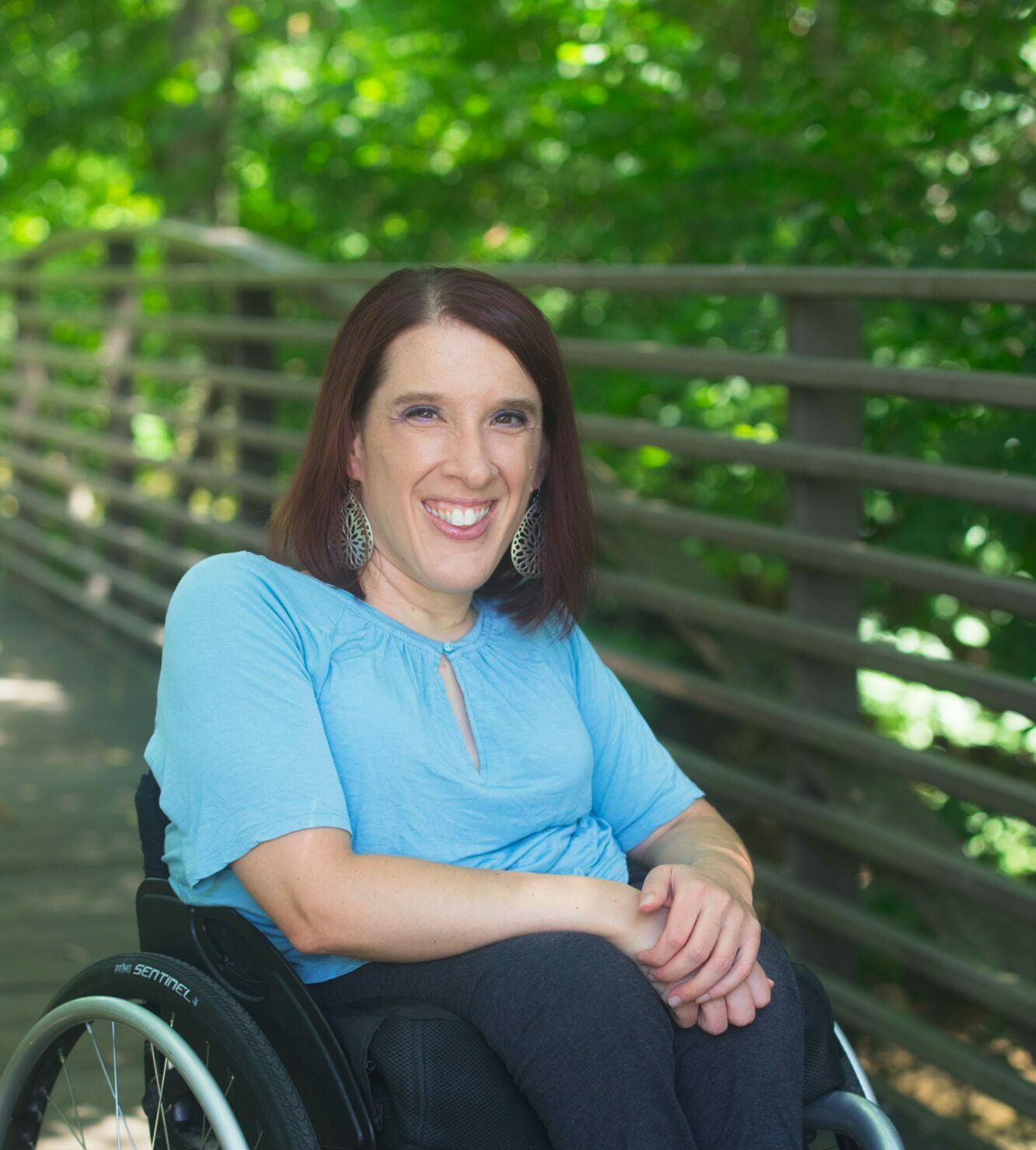
Today we’d like to introduce you to Amy Saffell.
Hi Amy, so excited to have you on the platform. So before we get into questions about your work-life, maybe you can bring our readers up to speed on your story and how you got to where you are today?
I was born in 1982 in Atlanta with a birth defect called spina bifida, which means that my spine didn’t close fully, resulting in paralysis from the waist down. I’ve used a wheelchair my whole life, so, for me, it’s as normal as walking is to other people. I made my first friend with spina bifida before I was even old enough to know what a friend was. Growing up in Atlanta, even in the early 80s, wheelchair sports were already really popular, from the Peachtree Road Race, the largest 10K in the world, and its large wheelchair division, to wheelchair tennis to the growth in wheelchair sports related to Atlanta’s hosting of the 1996 Olympic and Paralympic Games. I grew up with lots of kids with disabilities and saw lots of successful adults with disabilities who were athletes and had jobs and families of their own. It wasn’t common back then (and I would argue that it still isn’t, but progress is being made) to see people with disabilities in the media, but I subscribed to Sports ‘N Spokes Magazine, which still today is a premier media source for adaptive sports, so whether it was in person or in the pages of the magazine, I saw people with disabilities doing a plethora of things in life, so I assumed that I could, too. I was mainstreamed in school and spent most of my time around able bodied people, just like most people do, and whenever anyone doubted, either outwardly or implicitly, what people with disabilities were capable of, I always knew they were wrong because I had seen people with disabilities with my own two eyes doing those very same things people doubted that people with disabilities could do. Growing up, sports were important to me, and I played tennis, wheelchair basketball, and wheelchair handball, so even in my youth, I had experienced lots of things that other people didn’t know that people with disabilities could do, and that’s just in sports. If I hadn’t seen someone with a disability doing something, I just assumed I hadn’t met them yet and really never doubted what people with disabilities could do or that I would be successful. I went to college at Furman University in Greenville, SC. Until then, I had other kids in my school who were wheelchair users every year except 7th grade, meaning most days of the year, I saw another peer who used a wheelchair. I wanted to go somewhere for college without really considering if there were other students with disabilities there. I wanted to know that my success in life was real and not just because things had been set up for me to be successful. I had really never even considered what it would be like to not have people with disabilities that I saw every day. I soon learned because I saw a total of 3 wheelchair users in my 4 years in college, and while I drew a lot of confidence in knowing that I was capable of accomplishing so much without things already being set up for me, it wasn’t until I didn’t have friends in wheelchairs locally that I realized how much I missed it and how important seeing people who looked like me actually was to me. At the time, there weren’t wheelchair sports in the Greenville area, but I was a big fan of NCAA basketball, so even though I wasn’t playing, I became student manager of Furman’s men’s basketball team, knowing getting to experience NCAA basketball was something I might only be able to take advantage of in this short window of time and that I could pursue wheelchair sport again later, and it was a wonderful experience. I moved to Nashville after I graduated college. I majored in Communication Studies and had interned at a radio station. In Nashville, I landed a job at a record label, which I stayed at for 12 years before I got laid off. While working at the record label, I started volunteering at ABLE Youth, a Middle Tennessee based wheelchair sports nonprofit. In my adulthood, I also returned to my own adaptive sports in adaptive rock climbing and running (Yes, that’s what it’s called for wheelchair athletes, too!) races, from 5Ks to completing 14 half marathons. But, ABLE Youth focuses on giving kids opportunities in wheelchair sports and using sports as a motivating catalyst for kids to learn independence skills. Studies show that kids with disabilities who participate in adaptive sports are more likely to go on to be employed than kids with disabilities who don’t, so both sports and getting kids ready for a successful future after high school are important. I know how important adaptive sports were in my own life in me understanding what my capabilities in life were and in meeting other kids with disabilities who I could relate to, and I wanted and still want to make sure that all kids with a disability get those benefits. When I was laid off from my record label job, I knew that ABLE Youth’s Founder and Executive Director was looking to retire, and soon I was hired as the new Executive Director. That was 8 years ago, and I have loved helping so many kids and families on their journeys. I love being able to share my own experiences with the kids and to introduce them to so many opportunities in life.
I’m sure it wasn’t obstacle-free, but would you say the journey has been fairly smooth so far?
I don’t think life is continuously a smooth road for anyone, but throwing a disability in the mix does bring along its challenges. One challenge is physical accessibility. Still in 2024 physical accessibility is often a challenge, whether it’s due to the way things were built, the actions of someone else negating what would normally be accessible or something else. One example relate to my career is that someone had hooked me up with an internship in Nashville between my junior and senior year of college at a music publishing company. I went to visit before I started, and I found out that the area of the building I would need to be in wasn’t wheelchair accessible, so interning there wouldn’t be possible. I ended up going back and getting out all of my CDs and reading the liner notes, especially paying attention to my favorite songs, who they were written by, and what their publishing company was. I reached out to some and ended up getting an internship somewhere else, despite not having a connection. Another example is that when I moved to Nashville, I couldn’t just rent a room in someone’s home like lots of people new to the city do. It’s very rare to find a home that is wheelchair accessible. I didn’t want to sign an apartment lease not yet having a job. My only option was staying at an extended stay hotel. It was expensive, but it was my only option really. Obstacles also come from the attitudes of others and what they believe people with disabilities can or can’t do. Professionally, I know I have been passed over for a job because the employer didn’t think I could carry some materials that would have been needed for the some parts of the job, but they also never asked me about it so that we could talk it through. I know misconceptions are in people’s minds more often than I realize.
Alright, so let’s switch gears a bit and talk business. What should we know?
ABLE Youth helps kids with physical disabilities learn independence skills through adaptive sports. Through our programs, our kids learn just how much they can do in life, even when others try to tell them what they can’t do, and they make friends with lots of kids who are just like them, when oftentimes they don’t see anyone else their age with a physical disability in their everyday life except at ABLE Youth. It’s amazing to see their belief in themselves grow in all areas of life just by first learning that they can play sports. Because our kids have physical disabilities, almost all are not eligible for Special Olympics, so we are a one-of-a-kind organization in Tennessee giving kids with physical disabilities the opportunity to participate in adaptive sports while learning just how bright of a future they have.
Programs:
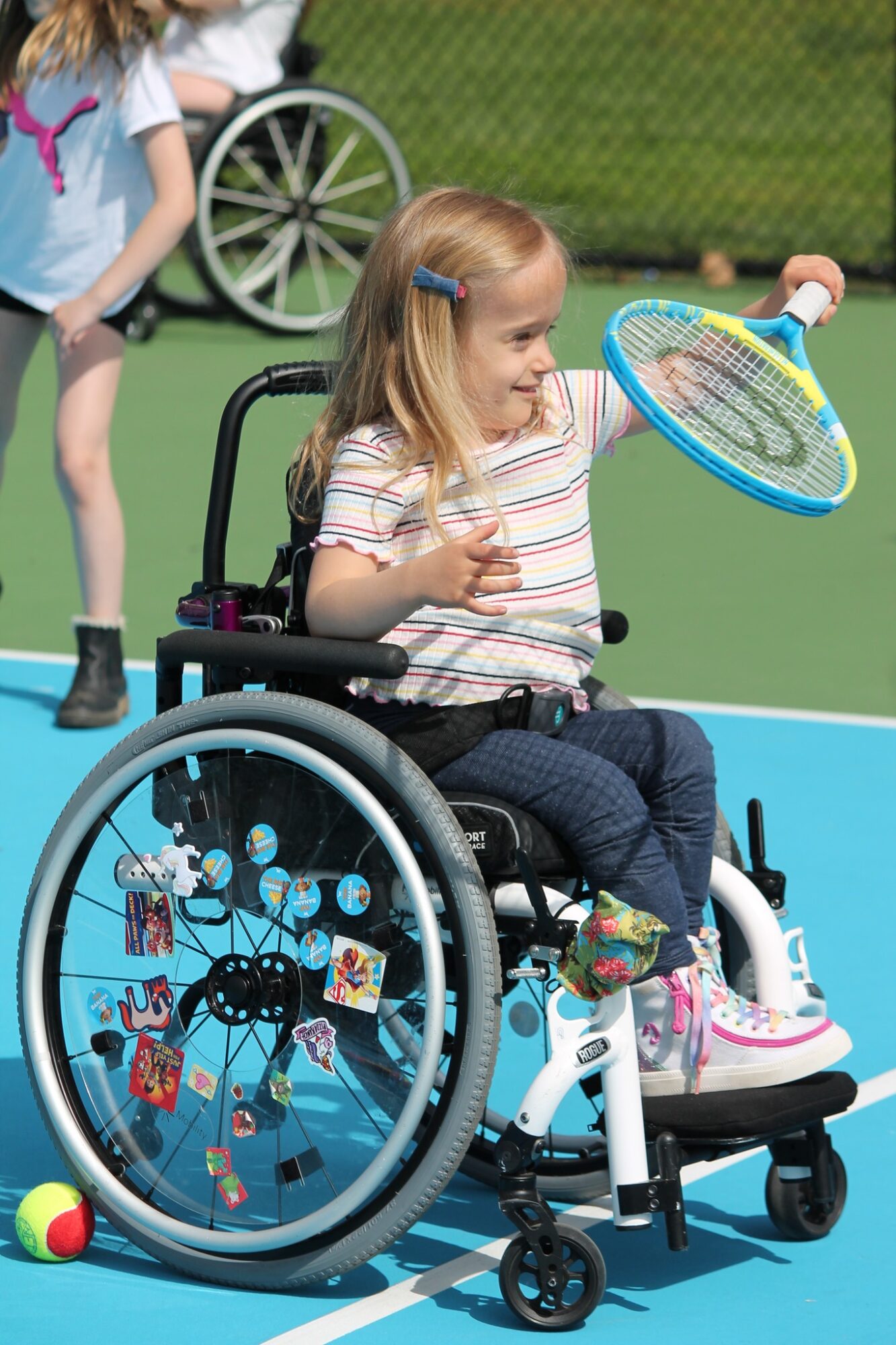
Super Sports Saturday – A monthly opportunity for our kids, toddlers through high school, to get together to learn and practice adaptive sports and independence skills, as well as a chance for our kids to form friendships. The social aspect and self-esteem they build is an important part of the program. Some of the adaptive sports we do at Super Sports Saturdays are wheelchair tennis, wheelchair basketball, volleyball, lacrosse, track, and field, and we’re continuing to add more. A lot of our kids are introduced to adaptive sports here for the very first time.
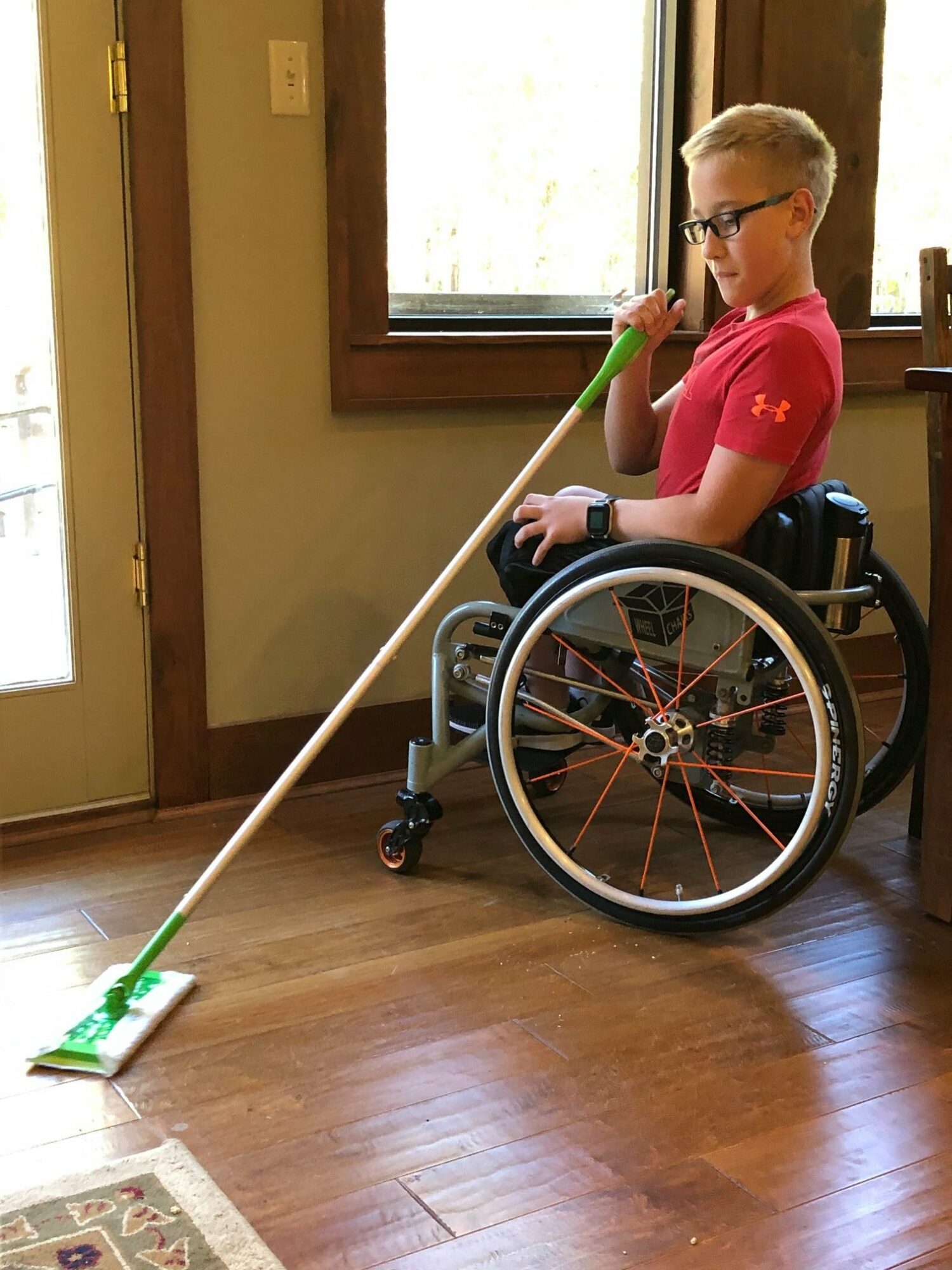
Independence Camp – A yearly chance for our kids to learn independent living skills. Most of the time, the parents of our kids don’t have a disability or use a wheelchair, so they’re at a loss for how to teach their kids these skills. At Independence Camp, there are leaders who are wheelchair users to teach them the skills, and they have all the time they need to learn and practice these skills. Kids create a close bond over knowing that they’re all learning these skills and are working towards their future goals of being independent adults and cheer each other on in those goals.
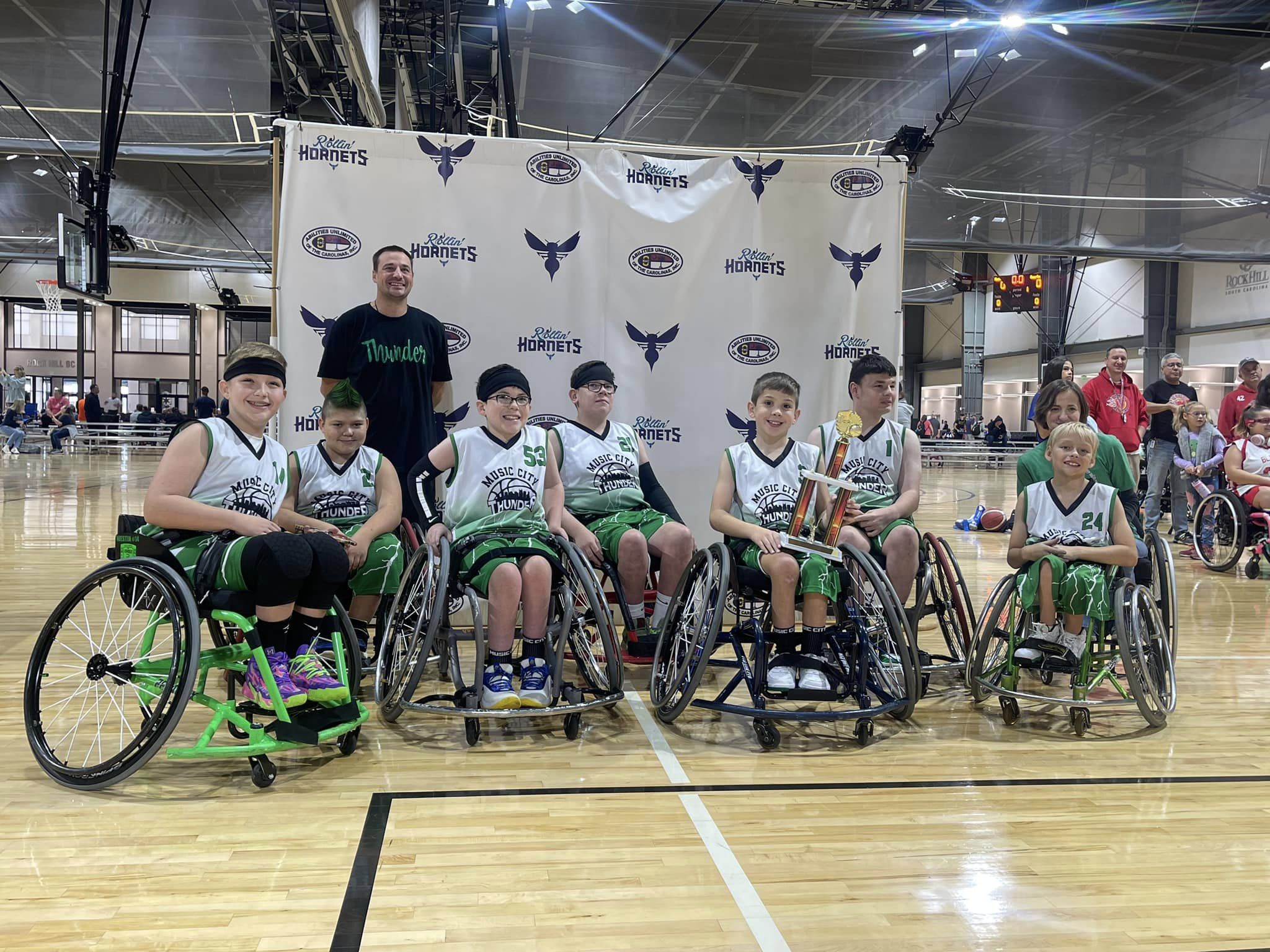
Wheelchair Basketball – We have two Music City Thunder wheelchair basketball teams. Prep, typically for kids ages 13 and younger, and Varsity, typically for kids older than 13, although younger kids can “play up” a division, are the two divisions under the National Wheelchair Basketball Association. We have about 15 kids total playing right now. We are in the Southeastern Conference, and we often play tournaments in Charlotte, Atlanta, Cincinnati, and Birmingham during the season, plus sometimes an additional one. This year’s National Tournament was in Richmond, VA, and it was the first time in a while that both of our teams qualified. At the tournaments, there are other youth adaptive athletes from around the country there, furthering their friendships and their sense of belonging, helping them realize that there are tons of kids around the country with physical disabilities living their best lives, too. Kids are also encouraged to practice independent travel skills, helping them prepare for independence in adulthood.
Adaptive Athletic Meets – There is a list of sanctioned adaptive athletic meets across the country, and as a newer program area, we have been taking about 6 athletes per season to a regional meet, plus the National Tournament for athletes who qualify. The kids get to pick which events they do. All of them offer track, field, and swimming, and some offer things like powerlifting and archery. We host practices for the kids, and the main goal is for kids to try out new sports and develop their potential, whatever that may be. At the meets, there are other youth adaptive athletes from around the country there, furthering their friendships and their sense of belonging there, too. Kids are also encouraged to practice independent travel skills, helping them prepare for independence in adulthood.
Other Opportunities – Kids have the opportunity for adaptive rock climbing and road racing through the organizations Catalyst Sports and Achilles International, respectively.
Networking and finding a mentor can have such a positive impact on one’s life and career. Any advice?
Get out or get online and go to as many events, in person or virtual, as possible, and start conversations with as many people as possible. If they are ongoing meetings, you can get to know people, and if go and it’s a bust, no big deal. Just keep trying.
Contact Info:
- Website: www.ableyouth.org
- Instagram: https://www.instagram.com/ableyouthtn/
- Facebook: https://www.facebook.com/ABLEYouthInc
- Youtube: https://www.youtube.com/@ABLEYouthTN