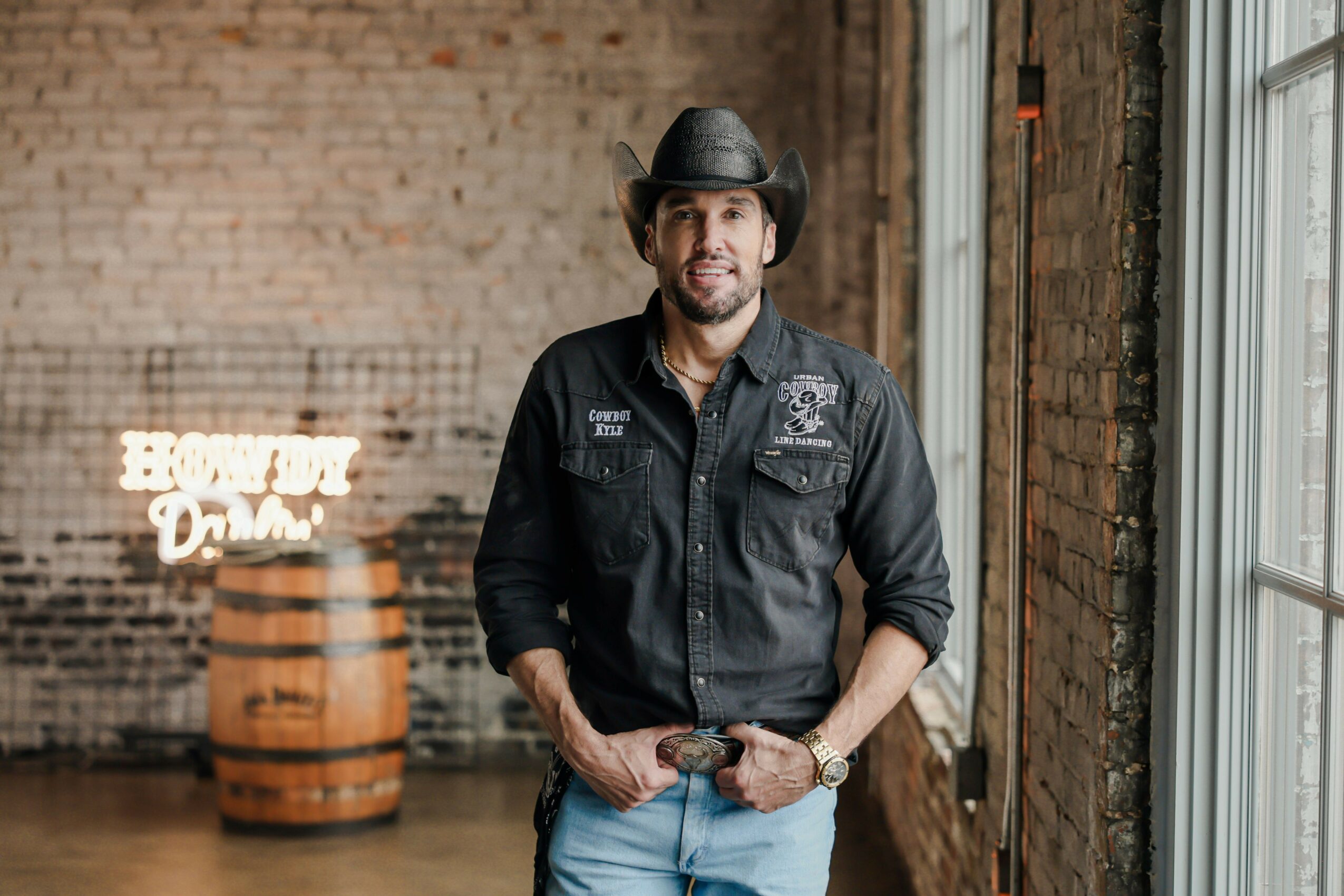




Today we’d like to introduce you to Kyle Erickson.
Hi Kyle, thanks for sharing your story with us. To start, maybe you can tell our readers some of your backstory.
I was born and raised in Carbondale, Illinois, and for most of the first part of my life, I was known more as a track athlete than a cowboy. My dad was an NCAA national champion in the 400 meters, and I inherited some of his speed. I started competing when I was 10 years old and ultimately spent 17 years in the sport.
After beginning high school in Carbondale, I moved to Elmhurst, Illinois, outside Chicago, where I had the opportunity to train under one of the country’s top high school track coaches. I became an Illinois state champion in the 110-meter hurdles and went on to earn a full athletic scholarship to UCLA. At UCLA, I was a two-time All-American, team captain my junior and senior years, and ran what was then the fourth-fastest 400-meter hurdles time in school history. I competed professionally for five years after college, racing throughout Europe, Mexico and the Caribbean. One of the highlights of my career was finishing eighth at the 2004 U.S. Olympic Trials in the 400-meter hurdles. I competed in my second Olympic Trials in 2008 and retired from the sport at 27.
The cowboy part of my story came somewhat unexpectedly. Around 2007, while living in Southern California, I became a huge country music fan. Artists like Alan Jackson, Dwight Yoakam, Waylon Jennings, Randy Travis and Jason Aldean were some of my early favorites, and over time the music and culture became a big part of my identity.
Then, in 2015, a friend took me line dancing at Incahoots in Fullerton, California. I fell in love with it immediately. Southern California had a surprisingly large country dance scene at the time, with hundreds of people line dancing and two-stepping at venues throughout the area. Cowboy Country in Long Beach became my favorite, and I spent countless nights there dancing between 2015 and 2018.
What fascinated me was that this incredible culture existed in Southern California, yet it wasn’t really visible to the rest of the country. Social media hadn’t yet exposed it on a large scale. When I looked at Nashville—the country music capital of the world—I was surprised to find that there wasn’t a comparable country line-dancing scene here. I saw an opportunity.
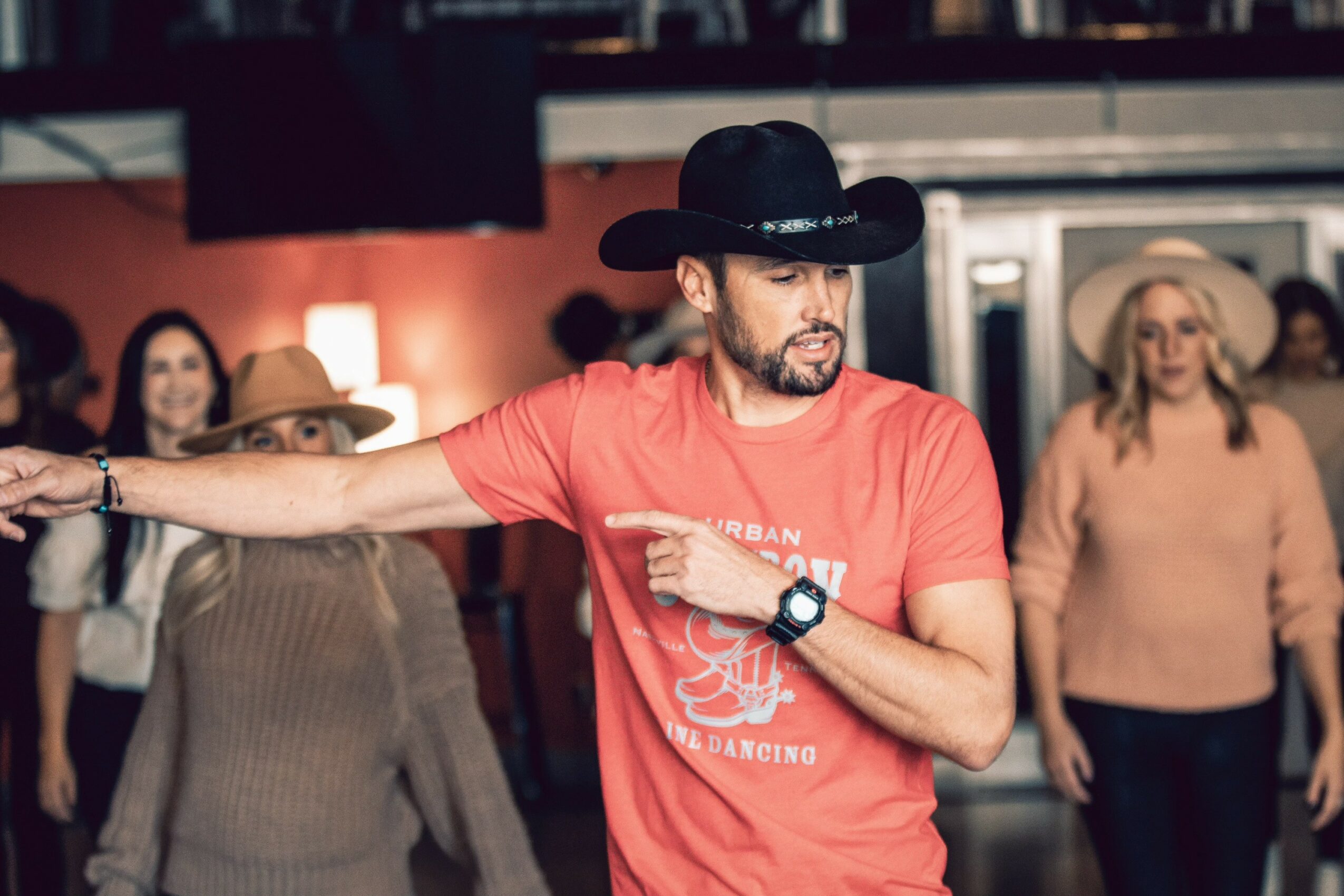
I moved to Nashville in 2018 with the idea of eventually building a business around country line dancing. I took a job as a line dance instructor at the Wildhorse Saloon, although at the time I knew how to dance much better than I knew how to teach. Teaching is an entirely different skill, and Wildhorse became the place where I really learned how to break dances down and teach them to people who had never danced before.
After spending 2019 at Wildhorse, I branched out on my own and officially started Urban Cowboy Entertainment, doing business as Urban Cowboy Line Dancing. It was very grassroots in the beginning—a basic website, a Facebook page, a Google business listing and an idea that I believed could work even though line dancing still wasn’t a major part of Nashville tourism.
Things really started gaining traction in 2021. We began booking a significant number of private lessons, particularly for bachelorette groups visiting Nashville, and I started both our Instagram and TikTok accounts. My fifth TikTok video went viral, and that changed the trajectory of the company. Our videos began reaching people all over the country, and eventually all over the world.
At the same time, line dancing itself began experiencing an enormous resurgence. I believe Urban Cowboy was fortunate to be at the forefront of that movement. We took a style of country dancing I had experienced in Southern California and introduced it to a massive audience through social media at a time when relatively few people outside those established dance communities knew that culture existed. Over the next several years, we watched line dancing grow from something fairly niche into a nationwide—and increasingly worldwide—phenomenon.
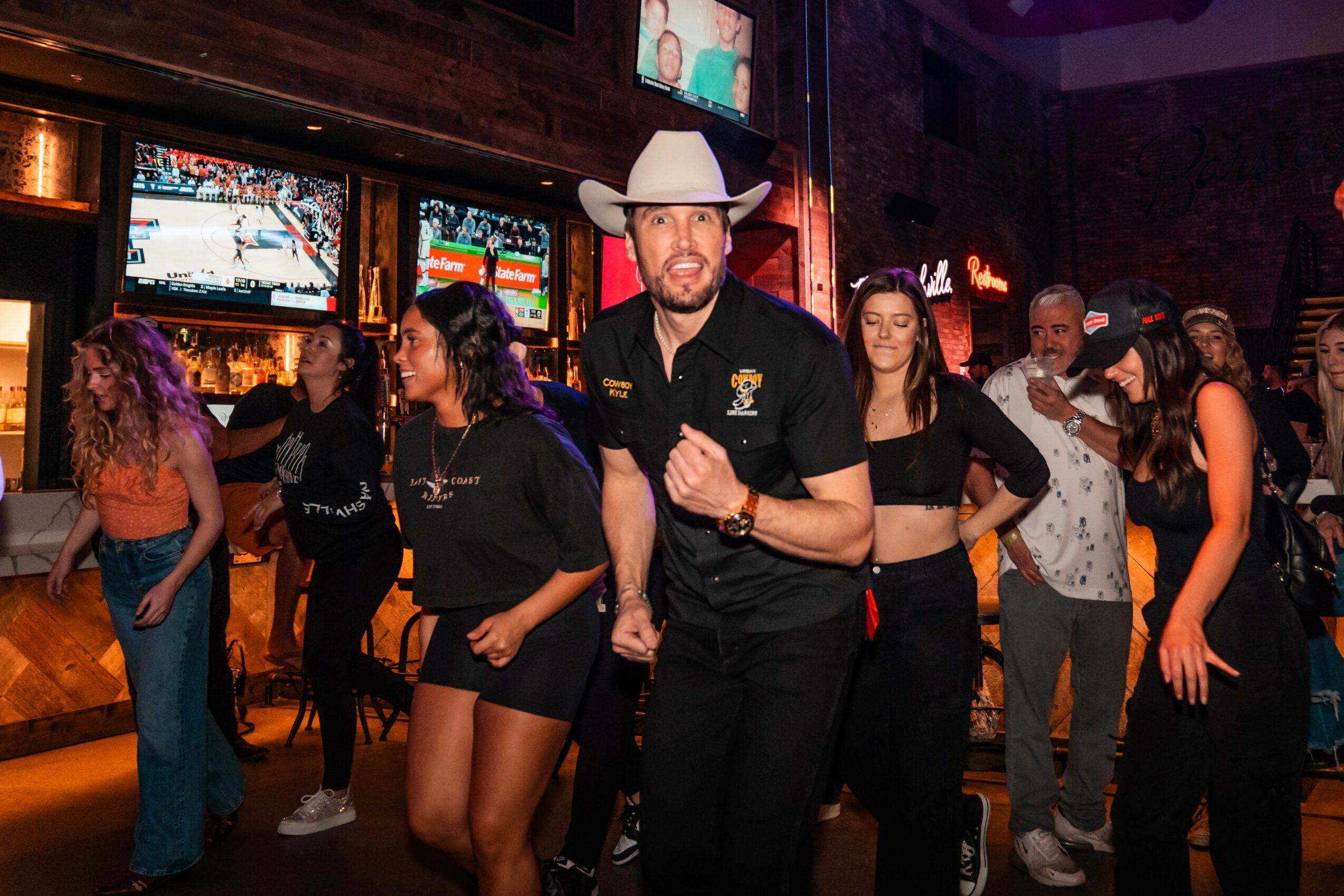
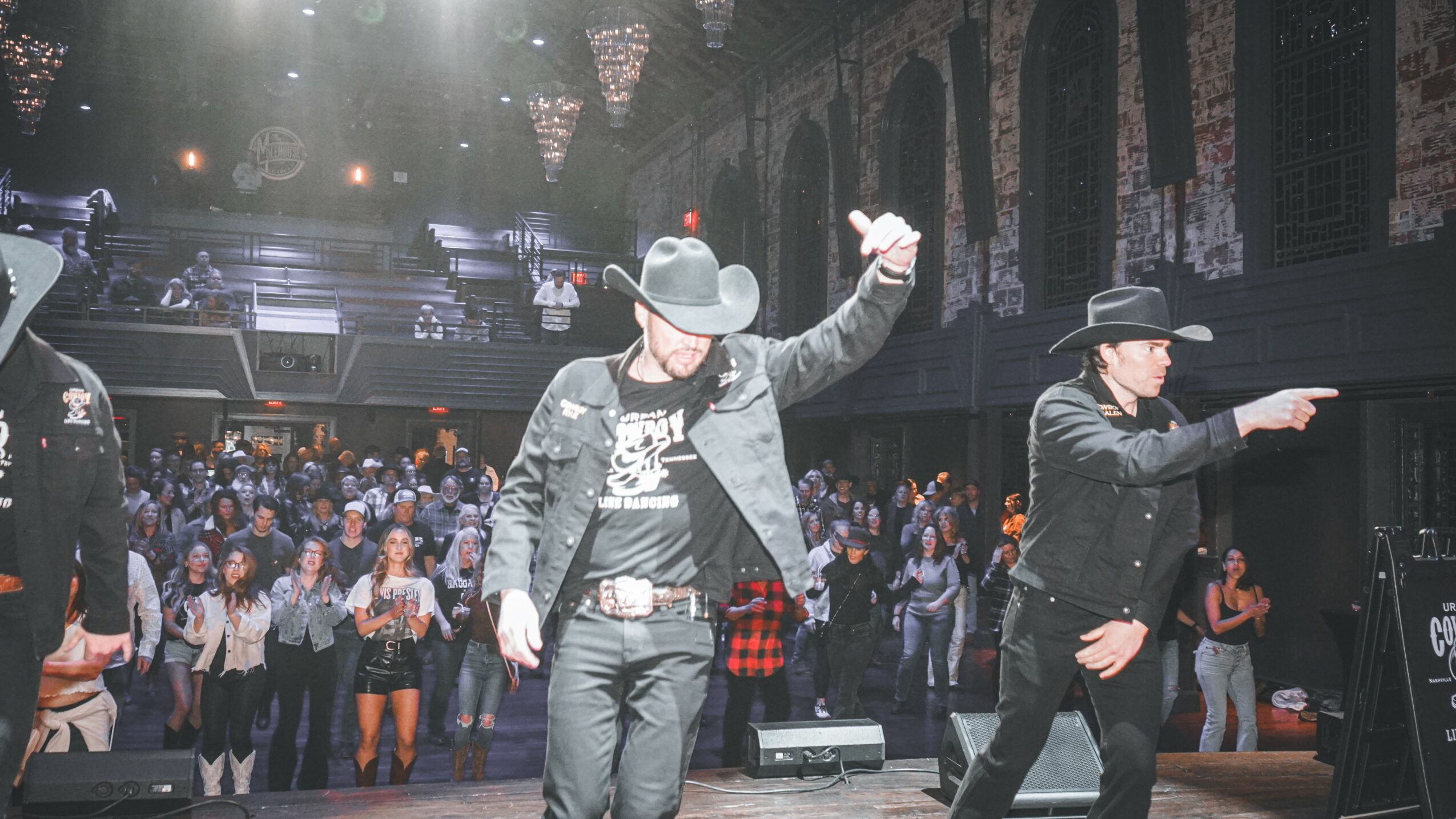
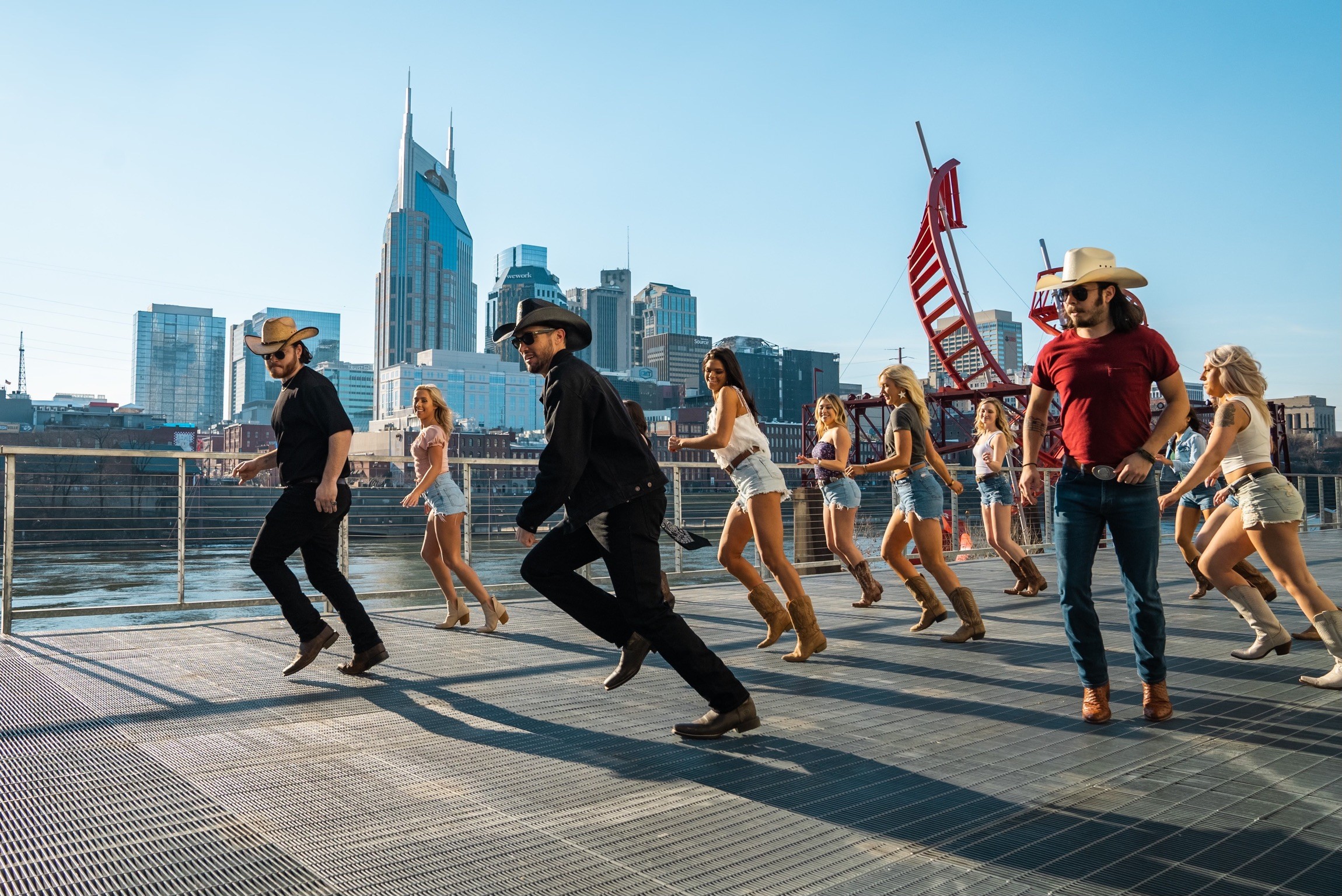
One of the things that helped us stand out was taking the dancing outside the traditional dance hall. My instructors and I began doing what we called our Broadway “flash mobs.” We’d bring speakers downtown, start line dancing in the street and sometimes have hundreds of people join us. Those videos traveled around the world and helped create this image of the “cowboys who dance on Broadway.” Visitors still recognize us from those videos when they come to Nashville, and some arrive expecting that they’ll find us dancing on Broadway every night!
Today, our social media community has grown to roughly 1.4 million followers on TikTok, 560,000 on the Urban Cowboy Instagram account, 173,000 on my Cowboy Kyle Instagram account, and more than 100,000 YouTube subscribers. What’s especially interesting to me is how international the audience has become. People who have followed us online for years will come to Nashville from another state or another country and book a lesson because they want to experience it themselves.
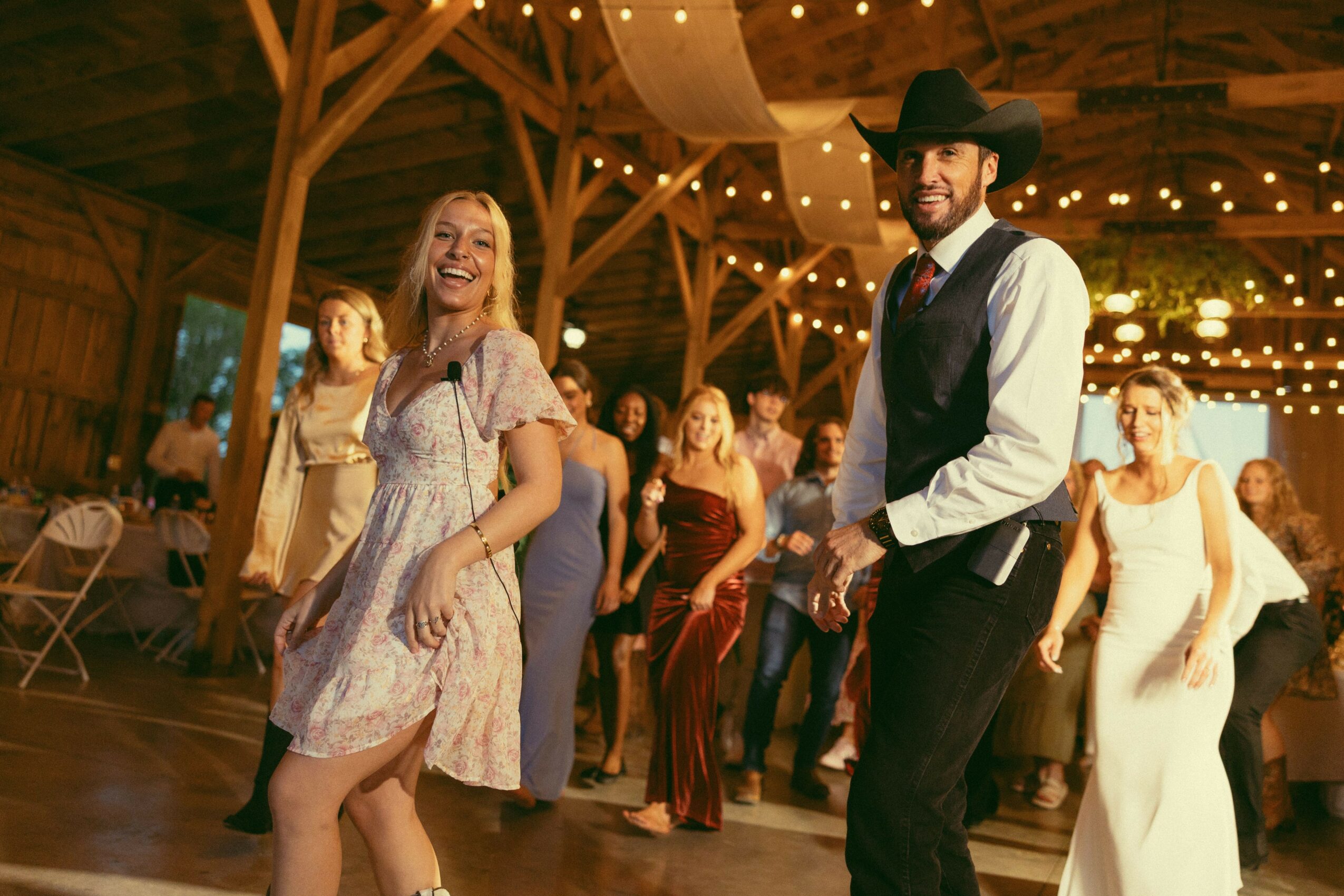
The business has grown considerably beyond where it started. We still specialize in private line-dance lessons, but we’ve expanded into private bar-hopping experiences on Broadway, corporate entertainment, community events, weddings, conventions, venue partnerships and events throughout Nashville. We also travel for events across the U.S. and internationally, including trips to Canada for the Calgary Stampede and events in Montreal, and we’ve had the opportunity to teach a number of celebrities and high-profile clients over the years.
Now, in 2026, I’m about seven years into building the company, and the part I enjoy most is seeing how much the culture has changed. When I arrived in Nashville, I was trying to build a business around something that barely existed here. Today, line dancing has become a major part of the Nashville experience and has exploded with a new generation of dancers across the country.
It’s been a pretty unexpected journey—from a kid running hurdles in Southern Illinois, to professional track and field, to Southern California country bars, and eventually to building Urban Cowboy in Nashville. None of it was exactly a straight line, but looking back, each chapter played a part in getting me here.
Would you say it’s been a smooth road, and if not what are some of the biggest challenges you’ve faced along the way?
It definitely has not been a smooth road. One of the biggest challenges was that when I started Urban Cowboy Line Dancing, the market I was trying to build in Nashville essentially did not exist yet. Nashville was already known around the world for country music, but surprisingly, there was very little of the type of country line dancing and two-stepping culture that I had experienced in Southern California. That meant I was not simply starting a business—I was also trying to educate people about what modern country dancing could look like and create demand for something that most visitors and even many locals did not yet realize they wanted.
In the beginning, everything was grassroots. I built the website, established the social media accounts, created the Google business presence, taught the lessons, handled the bookings, and gradually figured out how to turn what I knew as a dancer into an actual business. Learning to teach was its own challenge. Being able to perform a dance and being able to break it down clearly for a room full of beginners are two completely different skills, and my time teaching at the Wildhorse Saloon was really where I developed that ability.
There were also the normal financial challenges that come with building a business from scratch. For a long time there was no guarantee that the next week or month would bring enough bookings. Nashville tourism is also highly seasonal, so there can be dramatic differences between the busy spring and summer months and the slower periods of the year. As the company grew, so did the overhead. Hiring employees, training instructors, marketing, equipment, insurance, studio expenses, and administrative costs all have to be paid whether business is booming or not.
Social media became an enormous part of our growth, particularly after one of my first TikTok videos went viral. That created incredible opportunities, but it also created another challenge: social media success can be unpredictable. An audience of more than a million people does not automatically translate into consistent revenue, so I had to learn how to turn attention into an actual sustainable company rather than simply becoming a popular social media account.
Another challenge has been watching the industry change around us. As line dancing became increasingly popular nationwide, more instructors, venues, and companies entered the space. In many ways that was exciting because it validated what I believed about the potential of the industry, but it also meant that we had to continue evolving, improving our marketing, strengthening our brand, and creating experiences that differentiated us from the growing competition.
There have also been periods where tourism and consumer spending have slowed significantly, which can have an immediate impact on an entertainment business like ours. Those periods have forced me to become a better business owner—not just an entertainer or instructor. I have had to learn about budgeting, staffing, advertising, operations, customer acquisition, partnerships, and long-term financial planning.
Through all of those challenges, the biggest lesson has probably been that building something new requires a willingness to adjust constantly. The original idea for the company has evolved many times, but the core vision has stayed the same: creating a modern country dance experience that is fun, approachable, and accessible to people who may have never stepped onto a dance floor before.
Can you tell our readers more about what you do and what you think sets you apart from others?
Today, I’m the owner and founder of Urban Cowboy Entertainment, better known as Urban Cowboy Line Dancing. We’re a Nashville-based country entertainment company specializing in line dancing, but what we do has grown into something much bigger than simply teaching people dance steps.
Our core business started with private line-dance lessons for visitors coming to Nashville. We wanted to create an experience that was fun, energetic and approachable even for someone who had never danced before. Over time, we expanded into private bar-hopping experiences on Broadway, corporate events, conventions, weddings, community events, venue partnerships, live entertainment and events throughout the country.
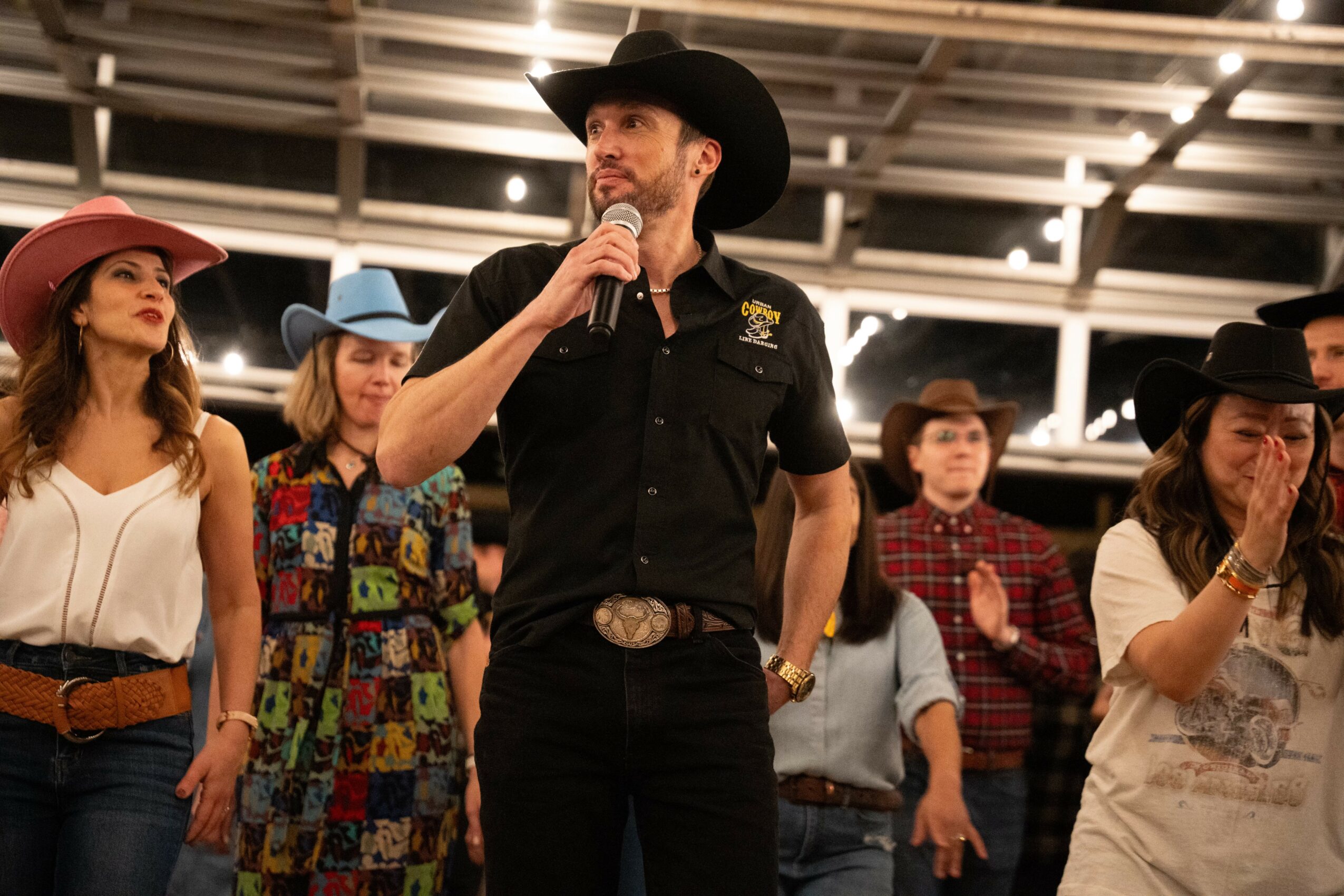
One thing that sets us apart is that we’ve always approached line dancing as entertainment as much as instruction. Our instructors aren’t just there to stand in front of a group and teach steps. They’re there to create an experience. Personality, crowd interaction, music, humor and making people feel comfortable are all a huge part of what we do.
That philosophy also shaped our social media. Instead of simply filming instructional videos, we wanted people watching online to feel the energy of country dancing. Some of our most recognizable content has been our Broadway line-dance videos, where our cowboy instructors set up music downtown and start dancing, sometimes drawing hundreds of people into the experience. Those videos helped introduce our brand—and Nashville-style line-dance entertainment—to millions of people around the world.
Today, Urban Cowboy has a social media audience of more than two million followers across our various platforms and accounts. We’ve had people recognize us in Nashville who have traveled here from all over the United States and other countries, and we’ve had the opportunity to travel ourselves for events throughout the U.S. and Canada. We’ve also worked with major corporate groups, conventions, weddings, tourism groups, celebrities and other high-profile clients.
What I’m probably most proud of, though, is the role Urban Cowboy played in helping bring line dancing to a new generation.
When I moved to Nashville in 2018, country line dancing wasn’t nearly as visible here as most people would probably assume. I had experienced this incredible dance culture in Southern California and believed there was an opportunity to bring that energy to Nashville and eventually a much larger audience. Social media ultimately gave us the vehicle to do that.
Beginning around 2021, our content started reaching millions of people at the same time that interest in country music and country culture was expanding into new audiences. We were one of the early brands at the forefront of the modern line-dance resurgence, and it’s been remarkable watching something that was relatively niche become a major part of country culture across the United States and increasingly around the world.
I also take a lot of pride in the fact that we’ve helped broaden people’s perception of who a country dancer—or even a cowboy—can be. My own background isn’t particularly traditional. I grew up as a track athlete, spent years living in Los Angeles, and came into country culture because I genuinely fell in love with the music and dancing. Urban Cowboy has always reflected that combination of traditional country culture with a more modern, accessible and sometimes unexpected edge.
That’s really what the name “Urban Cowboy” represents to me. You don’t have to grow up on a ranch or have danced your entire life to become part of this culture. We can take someone who has never line danced before, put a pair of boots on them, teach them a few dances, and an hour later they’re ready to go experience Nashville in an entirely different way.
At the end of the day, that’s what I think sets us apart. We’re not just teaching line dancing. We’re creating an experience around it, and we’ve been fortunate enough to help introduce that experience to a much larger audience.
We’d love to hear about how you think about risk taking?
I definitely consider myself a risk-taker, although I think there is a difference between taking a risk and simply being reckless. Most of the major risks I’ve taken have come from seeing an opportunity, believing strongly in it, and being willing to accept that I could be wrong.
Probably the biggest example was moving from Los Angeles to Nashville in 2018. I had spent almost two decades in Southern California and had an established life there, but I had become deeply involved in the country dance scene and saw something that I thought was missing in Nashville. Southern California had this incredible community of line dancers and two-steppers, while Nashville—the country music capital of the world—surprisingly didn’t have the same kind of established country dance culture.
To me, that represented an opportunity.
I moved to Nashville with the idea that I could eventually build a business around country line dancing, but there was certainly no guarantee that people would want what I was planning to offer. In some ways, the fact that the market didn’t really exist was both the opportunity and the risk. When you’re entering an established industry, at least you already know there’s demand. I was betting that the demand could be created.
Taking a job at the Wildhorse Saloon gave me an opportunity to learn the teaching side of the business, but eventually I had to take another risk and leave that environment to build something of my own. I started Urban Cowboy from the ground up with a basic website, a Facebook page, a Google business listing and very little certainty about where the customers were going to come from.
There were definitely periods when it wasn’t clear whether it was going to work. Then the pandemic arrived shortly after I started the company, which obviously wasn’t ideal timing for a business centered around bringing groups of people together! But I stayed with it, and when Nashville tourism began coming back, the business started gaining real traction.
Social media was another calculated risk in a different way. When I started posting heavily in 2021, there wasn’t a blueprint telling me that people around the country were going to care about watching cowboys line dance in Nashville. We experimented, put ourselves out there and created content that was different from what most traditional dance businesses were doing. My fifth TikTok went viral, and eventually those platforms became one of the biggest engines behind our growth.
I think some of my comfort with risk probably comes from my background in track and field. I spent 17 years in a sport where you train for months or years for something that might come down to less than a minute on the track. You can prepare incredibly well and still lose. You learn pretty quickly that failure isn’t necessarily catastrophic; sometimes it’s simply information that tells you what needs to change before the next race.
Business feels similar to me. I’ve made decisions that worked extremely well and others that didn’t. I’ve spent money on ideas that never produced the return I expected. I’ve tried events and partnerships that didn’t work. I’ve hired people who were great fits and others who weren’t. That’s part of building a company.
The lesson I’ve learned is that I would rather take an intelligent risk on something I believe in than avoid an opportunity simply because the outcome isn’t guaranteed. At the same time, experience has made me more calculated about risk. Earlier in my career, I was probably more likely to jump first and figure things out afterward. Today, I spend more time looking at the downside, asking what I can afford to lose, and determining whether the potential upside justifies it.
Moving to Nashville was certainly a risk. Starting a line-dance company in a city that didn’t really have a line-dance scene was a risk. Leaving an established venue to build my own brand was a risk. Putting our personalities and our dancing in front of millions of strangers online was a risk.
But looking back, most of the defining moments in my life happened because I was willing to make a move before I knew exactly how it was going to turn out.
Contact Info:
- Website: https://urbancowboynashville.com
- Instagram: https://www.instagram.com/urbancowboylinedancing/ and https://www.instagram.com/keepin_it_cowboy/
- Facebook: https://www.facebook.com/UrbanCowboyLineDancing
- LinkedIn: https://www.linkedin.com/in/kyle81/
- Youtube: https://www.youtube.com/@urbancowboylinedancing