




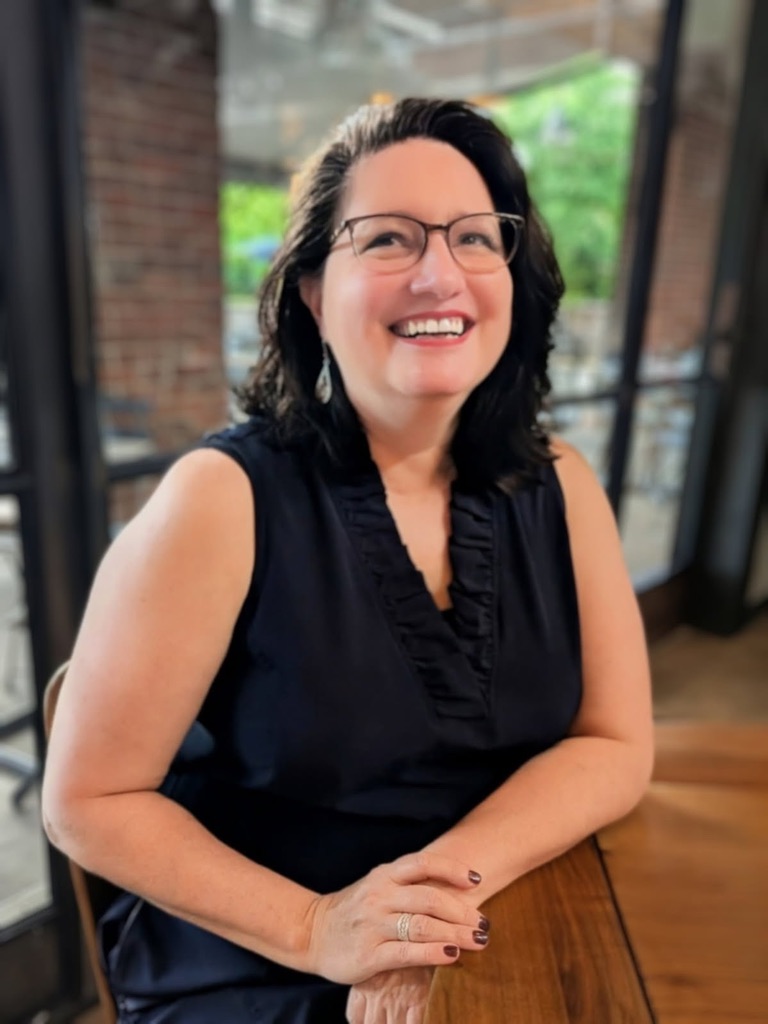
Today we’d like to introduce you to Valerie M Wilhite R.
Hi Valerie M, we’re thrilled to have a chance to learn your story today. So, before we get into specifics, maybe you can briefly walk us through how you got to where you are today?
I was born in Knoxville and grew up in Murfreesboro. If you know what Middle Tennessee was like in the late 80s and 90s you’ll understand how magnetic Nashville was. To those not from here, Nashville was Music City because of Country Music. But if you lived here you knew the music scene was far richer than one single genre. For me the city was exciting and remarkable because of its cultural and social fluidity. You could catch a foreign film at Sarratt, see Sonic Youth, turn up at the symphony, and find the same people dancing salsa in the street when my fellow Colombo-americano friend, David Sandoval, would park his red sports car in front of Fido’s, open the door, and blast salsa music. Strangers dancing in the street ended the night sharing a table at Sunset Grille. I loved this city.
I was also dying to live in Europe and make study of culture and literature my life. So, I went to grad school in Champaign-Urbana. I did a DEA in Medieval Studies at Paris IV-La Sorbonne a PhD in Comparative Literature at the University of Illinois Urbana-Champaign, with research centered on the medieval Romance-speaking Mediterranean world and its literary and cultural exchanges. I loved that work. I still do.
The humanities were already under attack in the early 2000. Positions disappeared. Departments were restructured into irrelevance. I ended up a professor in the Caribbean, at The University of the Virgin Islands, when in September 2017, Hurricane Irma was announced. One of the strongest Atlantic hurricanes on record. I lived alone, right on the water. I left on the last flight off island before it hit. I meant to go south, away from the storm’s path, but got stuck in Puerto Rico stranded in a hotel until a few days after it passed. As St Croix was a disaster, I continued south to Bogotá where I planned to stay with my madrina, godmother for a couple of weeks. Then Hurricane Maria followed before I could return. The STzX airport was closed. I was, in the most literal sense, stuck.
So I did what any reasonable medievalist would do in that situation. I wandered into the jewelry district and enrolled in a class.
The first day, my teacher took me to the bench, handed me a torch, and had me pump the bellows while he lit the nozzle of the torch. He sprinkled borax into the crucible. It sparked, flew, bubbled, and glassed over. Then he had me measure out the silver, and I watched it begin to glow, then melt, then develop that extraordinary mirror skin that molten metal gets just before it moves.
I felt something in my stomach: this is alchemy. I understand now why the medieval alchemists were so consumed by it.
That first encounter became years of serious study. I trained formally in Bogotá and later in Pereira, learning techniques with histories measured in centuries. When I returned to Tennessee in 2023 to be near my mother, who lives in Franklin, I brought the practice with me. In 2025, I participated in Periscope, Nashville’s entrepreneurship program, and won the Fifth Third Bank Excellence in Entrepreneurship Award through its pitch competition. Montealegre Atelier is what that practice has become.
We all face challenges, but looking back would you describe it as a relatively smooth road?
No. I’m not sure this was my road. Is my road really….yet.
The hardest part has been losing a life I loved.
As a kid I knew I’d be a professor of literature one day. I pursued that relentlessly. I loved grad school. and then I loved my academic life: the scholarship, the teaching, the intellectual community, the conversations that went on for years, the books, the arguments, the particular pleasure of spending your working life thinking seriously about difficult things. I never, ever imagined any other life for myself. But language departments were closing, positions disappearing, and the neoliberal restructuring of American higher education was dismantling the world in which I had spent my life. The hurricanes of 2017 brought another kind of displacement.
What I lost was not simply a job. It was my professional identity, my intellectual community, my friends, my books (streaming grey water from books with mushrooming black mold still haunts me), and an entire way of moving through the world that felt like mine. I often say I lost my life. I miss my life all the time.
I did find an art. I do love metalsmithing. I love the work, the material, the extraordinary things I am learning to do with it. But that doesn’t mean I no longer grieve the life I lost. I remain in mourning. I wait for a day when I will no longer feel I should be dressed in black and hiding under a black veil all XIXth-century widow-like. I am striving, reaching, clawing toward making Montealegre Atelier an economically viable business and, beyond that, the foundation of a life I can once again recognize as my own. I’m not there yet.
When I lived in Paris, I took the Métro and buses every day. Inevitably, someone would get on and begin, “Messieurs, mesdames, je suis désolé de vous déranger. Je suis actuellement sans domicile fixe…” And sometimes they would tell us, you may think this could never happen to you, but it could.
I always felt intensely that it was incumbent upon us all to listen and acknowledge them; they were telling us something profoundly true. I thought of them as a kind of chorus for our society, reminding us, day after day, that this could happen to any of us. We just didn’t believe it. We don’t know. I would watch people ignore them. And of course you do, because you hear it day in and day out. But that doesn’t make what they’re saying any less true.
You never know. It could be you.
And one day, for a flash, it was me. Almost. Except I had my aunt and godmother in Bogotá and my mother in Franklin.
Thanks – so what else should our readers know about your work and what you’re currently focused on?
I hold my torch over bits of silver. As they get hot, they suck into each other and form a sphere that begins to move and swirl. You see orange swirls on a mirror surface. At that moment I take a sapphire or a diamond in tweezers and try to smoosh it into the metal that wants to spit it out. If I manage to pull the heat away at just the right moment, the stone is held in by the metal that immediately freezes upon losing the heat of the intense blue flame. Those are my *P’tites Pépites*. This only really works with rubies, diamonds, and sapphires. Emeralds can’t take that kind of heat, but I love them, so I just take the time to set those afterward into a raw pépite. Every one comes out differently.
Other processes give me the chance to have a very different relationship with the metal. My *Vórtice* pendant is filigree, made from fine silver wire that I draw, twist, and coil by hand into a spiral holding two Colombian emeralds. I draw on *filigrana momposina*, the centuries-old Colombian filigree tradition, although my own work tends toward lighter, more open forms. It’s extraordinarily delicate and precise work. I hear myself breathe while I am doing it. The way you hear your breathing while doing yoga. It is meditative, which I love.
Then there is my collection *The Ruins*: substantial, architectural forms in solid silver, with irregular bars that create depth and shadow. The necklace is reversible, one side showing those bars in relief, the other revealing a surface that looks like molten chocolate only silver. The *Trama* hoops, on the other hand, begin as a wax model of intersecting bands, which I have cast in silver to create an open geometric structure.
I work with fabrication, sand casting, wax carving, and filigree, all processes with histories reaching back centuries or even millennia. What fascinates me is how many different things metal can do, and how many ingenious ways people have discovered to make it do them. I am constantly seeking out other metalsmiths and traditions to study. Recently, I worked with Jerin Brooks to learn anticlastic and synclastic raising and spicula, techniques that open up entirely new possibilities for shaping metal.
I suppose that is what unites the work: my curiosity about the material and the pleasure of discovering another way to manipulate it. There’s always something else I want to try.
PROUD OF QUESTION:
I think I am most proud of taking the huge chance, the huge leap of leaving academia and my euro-centered, mediterranean-centered life to go to Colombia and explore something tactile, physical, artistic, artisinal and craftlike.
I did not crumple up and cry. I went berraca and kept going, kept fighting for a meaningful life.
What would you say have been one of the most important lessons you’ve learned?
During my first couple of weeks of jewelry school in Bogotá, I thought I’d ruined a piece of metal.
I had started with grains: copper, brass, silver. I melted them together, made an ingot, filed away the burrs and flashing, reduced the ingot down to square wire, then drew it through the drawplate into round wire . It was painstaking work, each step building on the last, the metal gradually becoming exactly what it needed to be.
Then I measured once and cut it too short.
Unusable. All of that work, gone.
My teacher said, “A refundir.” He basically told me to melt it and start again.
That was it. Just melt it and start again. All those hours of work were lost, but the *materia prima* wasn’t. In metalsmithing, particularly with silver and gold, your work can be lost, but the precious material remains. You melt it down, you begin again, and eventually you reach what you were trying to make, with no trace of the failure left in the finished piece.
I had spent my entire previous life in a world where that was not true.
In academia, mistakes could haunt you forever. You publish an article and discover that your premise was wrong? There it is, forever, with your name on it. You can’t take it back. Your reputation is everything, and it is terribly fragile. And then there is the unforgiving clock ticking away. Get your book out, get that R1 tenure-track position, get tenure. Miss your window, and there is no starting over. You are out and you can’t get back in. That was the atmosphere of academia.
And then here was metal, which is hard, which resists, which pushes back, which has its own ideas about what it will and will not do, and it turned out to be so much more forgiving than the entire academic world I had inhabited.
Academia taught me that mistakes were fatal. Metal taught me immortality exists. Gold and silver endure forever and even I can start over again. I can exist in a new form.
Pricing:
- Sterling silver jewelry: Approximately $50–$300, depending on the design, materials, and complexity of the work.
- Gold jewelry: Select designs are available made to order in 14k or 18k gold.
- Current collections and prices: www.montealegreatelier.com
Contact Info:
- Website: https://www.montealegreatelier.com
- Instagram: https://www.instagram.com/montealegreatelier/
- Facebook: https://www.facebook.com/MontealegreAtelier/
- LinkedIn: https://www.linkedin.com/in/valeriemwilhite/
- Youtube: https://www.youtube.com/watch?v=PKa-8EveBL0&list=PL1G6afoTssWh6NYiysQ9azFTyh3OkDDCD&index=3