




Today we’d like to introduce you to Gillian Arnold Atlas.
Hi Gillian, it’s an honor to have you on the platform. Thanks for taking the time to share your story with us – to start maybe you can share some of your backstory with our readers?
My big dream growing up was to be a television director. When I told people, they laughed. Coming from a small town on the island of Tasmania in. the 1970’s, the idea that a girl might direct television sounded absurb. Woman television directors were so rare they were almost mythical. No one I knew had ever seen one! Life intervened early. I became a teenage mother and developed an alcohol problem. The path ahead narrowed quickly, at least in they eyes of others. But underneath the chaos, something in me stayed intact. I always believed I had nothing to lose, and that belief gave me a strange kind of courage.
While still in high school, I had harassed the Tasmanian Film Corporation which at the time was producing feature films and movies for television. I asked almost daily to be allowed to watch them filming. I even offered to work for free. I was so annoying they finally consented and that’s how I got my foot in the door. I learnt by watching, how set functioned, how crews communicated and how stories were shaped under pressure. Before long I was working as an assistant director. It wasn’t glamorous, but it was real, and it was enough to keep the dream alive.
I left Tasmania as soon as I could and arrived in Melbourne. This was to be my next education, training on the job as a Script Supervisor on an ongoing television series. It was where I learned that stories lived or died in the details, continuity, performance, precision. Sydney came after that, The most beautiful city on earth. Grundy Television, now Fremantle Media hired me as a Directors Assistant/Continuity on “Sons and Daughters”, one of the highest-rated dramas in the country. It still steams today, a cult relic of its time. I’d been working for around eight months when Grundy’s began looking for new directors. They invited people to direct a test scene. I wasn’t invited so I called them. The task was to direct a multi-camera scene and we were all given a scene, a few volunteer actors and three cameras. I directed it exactly as I believed fast-turnaround television demanded, performance first, time always ticking.
Within a week the phone rang. They thought I had potential and they offered me an episode of “Sons and Daughters” to direct. My dream had arrived early, before I quite knew what to do with it. I was 23 years old and at that time, the youngest female director in the country. Those early years were electric. I learned to think on my feet, make fast decisions, plan meticulously, and lead crews under pressure. I loved the work. I loved the intensity. I was a full-time director and I thought it would never end. But television shows do end. Work dries up. And somewhere along the way, I got sober.
Not long after, I was reading an international newspaper when I noticed a job advertisment in Singapore. They were setting up the country’s first English-speaking drama unit and were looking around the world for an executive producer and a director. I remember thinking, simply I could do that.
Within months, I was living in Singapore, working alongside Joanne Brough, a Hollywood executive producer. Together, we were tasked with building Asia’s first English-speaking drama series. The job wasn’t simply to direct, it was to train writers, actors, and directors within and industry shaped by different cultural expectations and a far smaller audience and budget, We worked with a crew of five people. The cast had real jobs and we scheduled around. Nothing about it was easy. Everything about it was new. The first series was a steep learning curve. The next two shows found their audience and ran into multiple seasons. I was learning storytelling across boarders and how the smallest nuance could mean different things in different cultures.
When Joanne was later invited to replicate the model in Indonesia, this time in Bahasa Indonesian, she asked me to come with her. Jakarta became my next home. Now I was directing through a translator, producing a one-hour weekly drama in a language I didn’t speak. It forced me to confront how much I took for granted. When I asked an actor to “give me a beat”, my translator looked at me blankly. “What is a beat?” I had to relearn my own language. No shorthand. No industry assumptions. “It’s a pause,” I said. “Just a moment before the next line.” there were no shortcuts anymore. Every instruction had to be clear, human, and precise. Directing without a shared language stripped the job down to its essence. It was one of the most profound professional experiences of my life. We were deep into producing twenty-six episodes when the country erupted. Civil unrest tore Jakarta apart. A president of thirty-two years fell. The city burned. Evacuations were ordered for Australian and American citizens. I remember my driver risking his life to get me to the airport, navigating streets lined with burning cars and buildings, bodies lying unclaimed on the roadside. His face was grey as he spoke. I was worried whether we would make it out. I worried even more about whether he would make it home. He wasn’t just my driver, he had been my best friend for three years. He was funny, diligent and loyal. This was not how I ever imagined leaving Indonesia. In truth, I never thought I would leave at all. But I did. I returned to Australia as the rioting continued behind me.
Returning to Australia after six years away, i found an industry that had evolved and I realized that I had too. It wasn’t long before I found myself in the office of a legend, Hal McElroy, a producer of many great Australian movies. He had moved into television and one of his ideas was to develop a daily drama series, that is, a series written shot and aired on the same day, five days a week! “Do you think it’s possible,” he asked. Having achieved what we did in Asia, I knew anything was possible. “Yes I said”. He then asked me to go away and write the methodology of how that series would work. Still shaken from my evacuation in Indonesia, missing my friends and wondering where many of them were, I found it hard to concentrate. I had a great opportunity, yet I couldn’t focus. Eventually I had to force myself to sit at my computer for one hour a day. Thats was how I wrote the document of how to produce a daily drama series, that would also include the news of the day woven into the character arcs. Next, Hal thought I would make a great producer. “Directors, he said, “I can get in the thousands. Good producers I can count on one hand. You will make a great producer and I’ll teach you what I know.” And he did just that. “Going Home” was born. Possibly the world’s first daily interactive drama series. The headline read “Today’s news, Tonight’s Drama”. We produced 130 episodes for 2 consecutive years. I pulled a lot of my crew from the old “Sons & Daughters” team. The family had re-united. What a journey and a hell of a lot of fun. That project led me into reality television, including directing “Big Brother”, before Asia called once more.
Back in Singapore I produced another one-hour drama, “Red Thread”, and encountered a moment that stays with me still. A cemeraman I had once mentored, Rajen, was now a producer, running his own series. Years earlier, he had wanted to direct, but regulations blocked his path. I used to give him scenes within my episodes because I believed in his talent. Seeing him succeed now felt like a quiet full circle. He was
Loving his dream. While still in Singapore I was approached by a woman to direct the first women’s talk show in Asia, streamed by Star World in Hong Kong. The executive producer and host was former CNN anchor May Lee, who had a clear dream. She was going to create the first English-language woman’s talk show in Asia. Of course I jumped on board. Once again it was a great team and another set of challenges. Star World streamed across many countries, each with its own cultures, religions, and customs. So when we tackled a subject like sex, the censorship teams were on full alert. Somehow May managed to shape the episode so it was acceptable to all audiences, a true testament to her wisdom, diplomacy, and flexibility. It was while directing this series that I learned about micro loans for women in India, human trafficking in Cambodia, and an elephant rescuer in Thailand. Each story opened a window into a world I might never otherwise have known. It was another extraordinary experience, one I was deeply fortunate to be a part of.
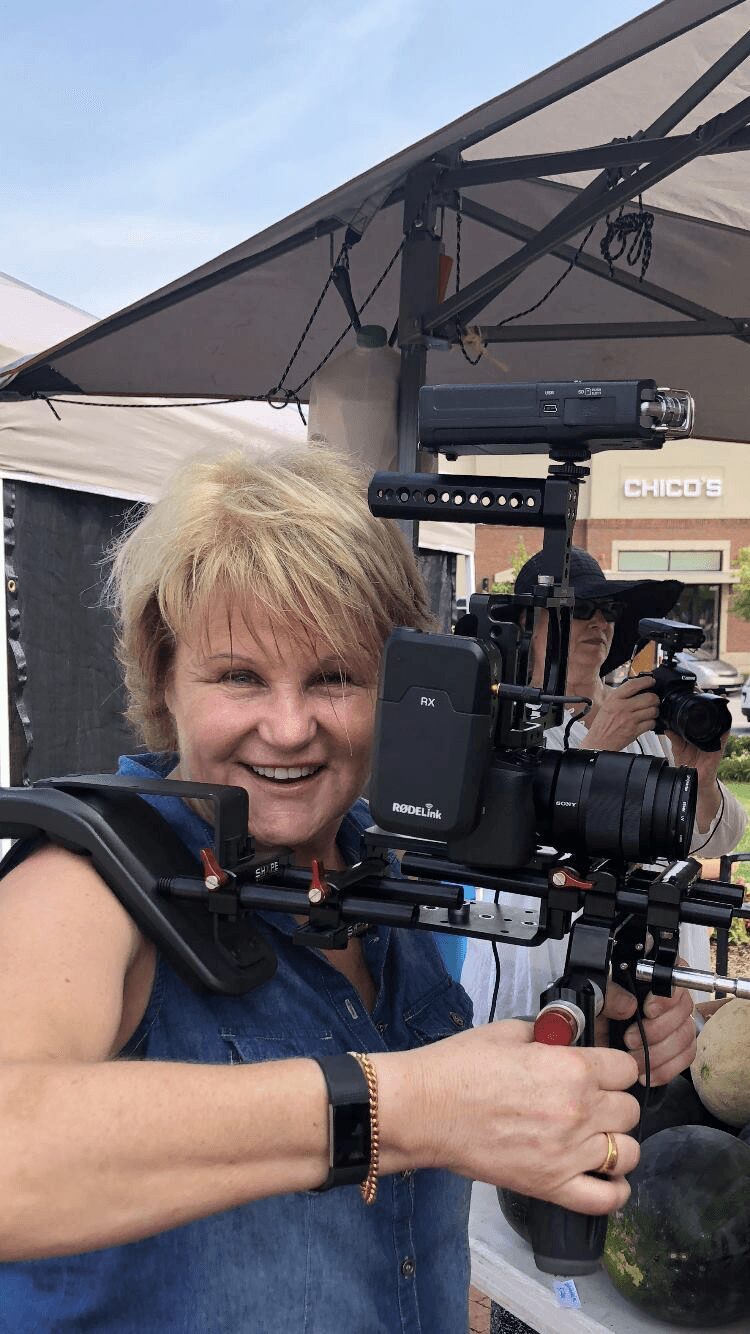
Now it’s 2026 and I live in the United States. After time in Los Angeles, a call brought me to Nashville to direct some press kits. I came, I liked it, I stayed. I taught myself to shoot and edit, wishing I’d paid closer attention to the crews I once led. Here, I met Bobbie Hill, the first black police officer to be promoted in the Nashville police department when Black officers couldn’t arrest white citizens. “I was a man without a country”, he told me. Yet he rose through the ranks to take charge of intelligence during the turbulent times of the 60’s and 70’s in Nashville. He became Nashville’s first black Sergeant, lieutenant and major. A true trailblazer of his time. His story is my first documentary and I find myself on yet another a steep learning curve. I’m navigating how to produce and fund a documentary, definitely a tough task. Alongside this, I’ve become an acting coach, drawing on years of directing to teach actors how to work intelligently and creatively with directors — a process I value deeply and love teaching. Photography has always been part of my language, and after a career spent looking through a camera lens, it now sits naturally at a professional level. I also lead directors’ workshops, sharing practical, lived experience rather than theory. Did I mention I also do work at The Next Door Recovery, a remarkable rehab for women where strength is rebuilt and hope is restored. I get to pass on my experience of staying sober, and maybe, just maybe, it might help change a life.
None of this was planned, but it reflects the pattern of my career: an ongoing evolution driven by curiosity, craft, and a commitment to storytelling across form and discipline.
I didn’t follow a straight line from Tasmania to here. I followed instinct, opportunity, and the belief that the only way was forward. Along the way, I faced setbacks and found resilience. I fell, got back up, got sober, started again, crossed boarders, learned new languages, sometimes literally. Most of all, I made incredible friends across the world. People who trusted me, taught me, challenged me, and stayed with me long after the work ended. Through them, I discovered what life is truly about, human connection. I sure am one lucky woman.
Would you say it’s been a smooth road, and if not what are some of the biggest challenges you’ve faced along the way?
I was adopted into a fractured family and faced a childhood marked by loss, abuse and uncertainty.
I struggled being a single Mum, coming from that working class, broken home, with no family support.
I struggled trying to balance a demanding career with raising a child. I was a child myself.. My son was born as I turned 16.
I struggled with taking a job opportunity in Singapore while my son, in his late teens chose to stay in Australia with his friends”.
I struggled after going through the riots and civil unrest in Indonesia. Returning to my safe country of Australia while I left my Indonesian friends there hoping to survive.
I struggled with my own success sometimes questioning was I ‘really that good”.
I struggled with alcoholism, and I remember watching a television show and seeing my credit as director. Though some parts seemed familiar, I don’t remember directing that episode. I finally hit rock bottom at 28, and since then, I’ve spent more than half my life sober. Today, I get to use that hard- won clarity and strength to help others, Turing my past struggles into purpose.
Thanks – so what else should our readers know about your work and what you’re currently focused on?
These days I specialize in telling my own stories, tho I can never quite resist collaboration. I love working with other creative minds and seeing what unfolds.
I am most proud of the people I had the privilege to mentor, watching them grow, succeed, and build careers they love. Their achievements are a joy to see and a reminder of the impact we can have on each other’s lives.
What sets me apart from others –
My ability to experience so much of life with wonder and curiosity, never taking anything for granted.
Contact Info:
- Instagram: nashville_acting_coach
- Facebook: https://www.facebook.com/gillianarnold888
- Linkedin: https://www.linkedin.com/in/gillianarnold888/
- Youtube: https://www.youtube.com/@TazzieD
- Other: uncommon_focus_pics