





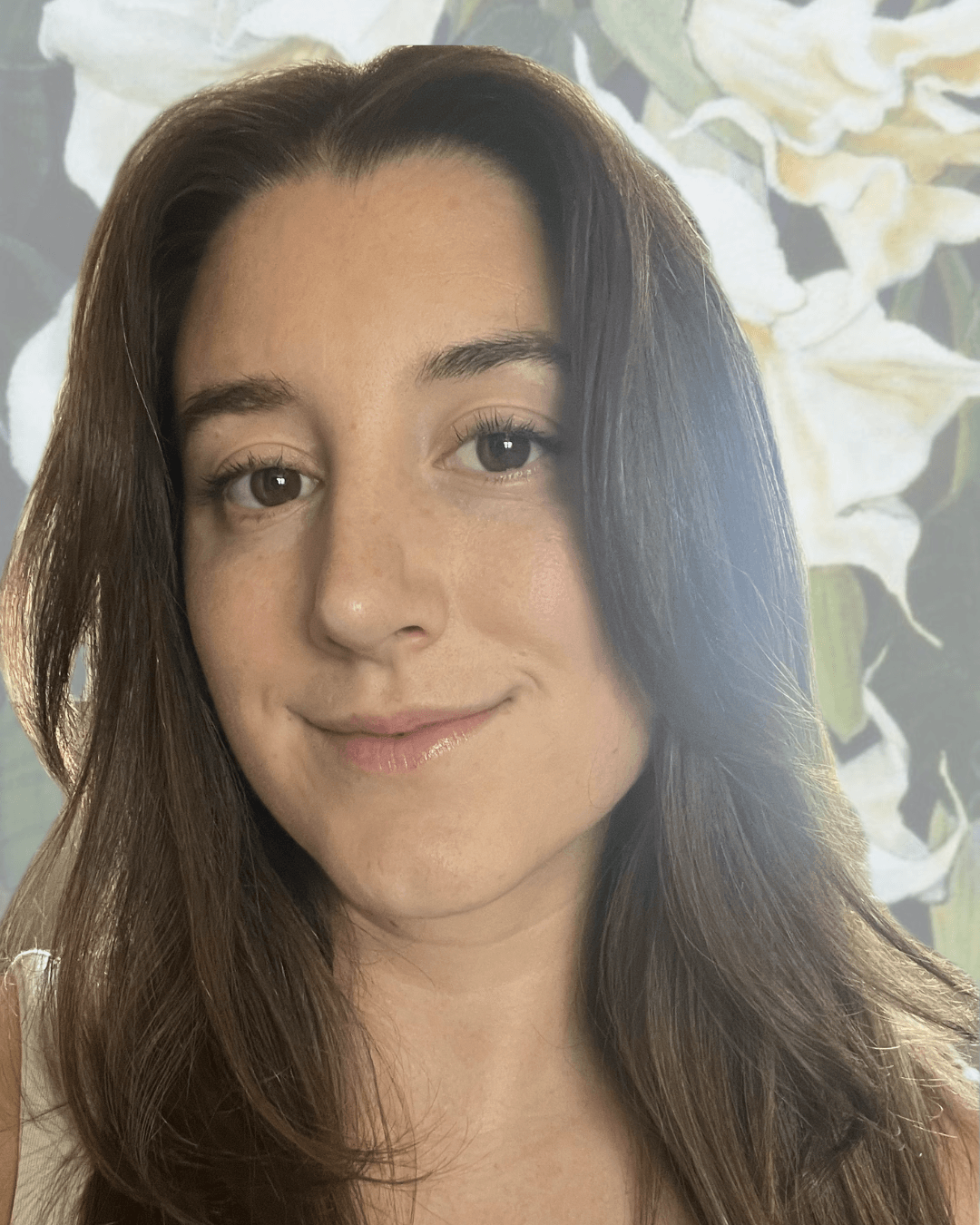
Today we’d like to introduce you to Valerie Victor.
Hi Valerie, so excited to have you with us today. What can you tell us about your story?
I think most of us spend a lot of time trying to figure ourselves out from the outside in. We think about who we are, what we want, what we should do next, and how we’re supposed to feel. For me, the biggest shift happened when I started realizing that I could also look to my body for those answers.
I didn’t set out looking for that. My journey actually began with tarot, which opened me up to spirituality and eventually led me to astrology. I spent several years exploring those practices and learning more about myself through them before I ever came across somatics. And when I did, it opened up a completely new way of understanding myself.
I found a free online workshop with the woman who would eventually become my teacher during my somatic practitioner training. At one point, she guided us to breathe into our vaginas. I remember thinking, “Oh wow, is this allowed?” I had never really connected with that part of my body outside of sex or a medical context. The idea that I could simply breathe into that space, expect nothing from it, and start to notice what was there felt completely new.
The exercise was centered around confidence, and I remember realizing that I could actually connect with confidence through my body. I had this moment of, “Oh wow, there is a whole world here that I haven’t explored.”
That experience opened a door for me, and over the next several years I kept going deeper into somatics, the nervous system, the pelvic bowl, sexuality, and feminine embodiment.
There was another piece of my story that made this work feel especially personal. Before I ever found somatics, I had spent years dealing with unexplained pelvic pain. I went to doctors over and over again and eventually had exploratory surgery, but nothing really gave me an answer. Pelvic floor therapy helped and was the first time I understood that my muscles were actually contracting so intensely that my pelvic floor was almost like a wall inside of me.
I remember thinking, “Okay, we finally know what’s happening, but why is my body doing this?”
That question stayed with me. During my somatic practitioner training, I started learning about the ways our bodies can protect us, the patterns we hold physically, and how symptoms can sometimes be a form of communication. It wasn’t one huge breakthrough where everything suddenly made sense. It was more like slowly putting pieces together and becoming more aware of what was happening inside of me.
As I started unraveling those things from within, my pelvic pain eventually went away.
More than anything, that process changed my relationship with my body. I went from feeling like my body was just the thing I lived in, almost like a vessel I had to manage, to feeling like I was actually in a relationship with it. I began to understand my body as an ally and as a source of information, rather than something that was working against me.
Eventually, I realized I wanted to help other women experience that relationship for themselves.
I don’t think this work should feel like something strange or taboo, or something you only explore when something is really wrong. So many women are disconnected from their bodies without even realizing it. We’re taught to push through discomfort, override our intuition, prioritize everyone else, and stay in our heads. I wanted to create a space where women could slow down, get curious about themselves, and reconnect with the parts of themselves they may have been ignoring for years.
I’m sure it wasn’t obstacle-free, but would you say the journey has been fairly smooth so far?
I wouldn’t say the path here was exactly straightforward. One of the biggest challenges has actually been helping people understand what somatic work is in the first place.
There can be an assumption that you have to have experienced major trauma, be extremely spiritual, or have some huge problem you’re trying to fix in order to benefit from this work. That really isn’t how I see it.
You can be a woman who looks like she has it all together and still feel disconnected from yourself. You can be successful and functioning and still feel burnt out, numb, anxious, disconnected from your sexuality, or unsure of what you actually want.
I think a lot of us have gotten very good at listening to everything outside of ourselves. We listen to what we should do, what other people need from us, what looks good on paper, what our minds tell us is logical. We don’t always stop to ask what is actually happening inside of us.
That’s one of the reasons I care so much about making this work feel approachable. You don’t have to come in knowing anything about somatics. You don’t have to be comfortable talking about sex or spirituality. You don’t have to know how to meditate or be particularly “in touch” with your body.
You can literally just show up as you are and get curious.
Thanks – so what else should our readers know about your work and what you’re currently focused on?
I’m a women’s somatic practitioner, and my work is really centered around helping women reconnect with their bodies, their sexuality, their intuition, and ultimately themselves.
The simplest way I can describe it is that coming home to your body means coming home to yourself.
A somatic session is very experiential. I guide women through things like breath, sound, movement, and words to help them connect more deeply with what is happening inside of them. In some ways, it’s like an active guided meditation, but you don’t need to know how to meditate or do anything “right.” There’s no performance involved.
My job is really to create a safe, grounded space where a woman can slow down enough to actually hear herself. We go at her pace, and I’m not there to tell her what she should feel or what her answers are supposed to be. I’m there to help her discover what is already there.
For women who want to go deeper, I also offer The Portal, which is a three or six month one-on-one journey. We can focus on a particular area of life, whether that’s relationships, sexuality, confidence, pleasure, or simply feeling more connected to yourself, and then tailor the work around what she actually needs.
What I’m most proud of is seeing what happens when women start coming back to themselves. I’ve watched women reconnect with their sexuality, feel their confidence come back, move through relationship patterns that weren’t serving them, experience changes in physical pain, and just get that spark back in their eyes.
And honestly, that’s probably my favorite part of the work. I’m not the one giving a woman the answer. I’m just the guide. She is always the one finding it for herself.
I also think that’s what makes this work so exciting to me. There is so much living below the surface and behind the noise of the mind. Sometimes you don’t realize how far away from yourself you’ve gotten until you finally slow down enough to feel the difference.
What do you like best about our city? What do you like least?
I’m originally from Columbus, Ohio, but I moved to Nashville in 2015, and at this point it really feels like home. My family is primarily here, I met my husband here, I’ve built some of my closest friendships here, and I feel like I’m really building a life in this city.
One of the things I love most about Nashville is the sense of connection. Southern hospitality really does feel like a thing here. I’ve found that people are often quick to help, make an introduction, or be a bridge between two people who should know each other. That has been really meaningful to me, both personally and professionally.
I do think Nashville can sometimes feel a little more traditional and conservative than some of the other places I’ve spent time in or imagined building this kind of practice. Because my work involves women’s sexuality, embodiment, and having more open conversations about our bodies, I sometimes wonder if a city like Nashville is quite ready for that conversation to be at the forefront.
But I also think that’s part of what makes it exciting to build here.
I don’t want to wait until these conversations are completely mainstream before creating space for them. Nashville is changing, and I want to be part of that change by creating spaces where women can talk about their bodies, sexuality, intuition, and inner lives in a way that feels normal, safe, and empowering.
Pricing:
- 60-minute Somatic Session: $90
- Inner Oracle: $297
- The Portal: 3- or 6-month one-on-one somatic container
- Complimentary discovery meetings to explore whether The Portal is a good fit
Contact Info:
- Website: https://valerievictor.com
- Instagram: @valerievictor_vv