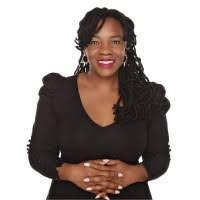





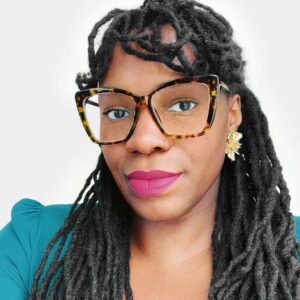
 Today we’d like to introduce you to Ingrid Cockhren.
Hi Ingrid, so excited to have you with us today. What can you tell us about your story?
Although I’ve been in Nashville for over 20 years, I was born and raised in Clarksville, TN. A part of the first generation of my family not raised on a farm. I’m a military brat. 101st Airborne. Very much a Tennessee girl.
I am also a survivor of child sex abuse. I am not alone in this. Unfortunately, estimates indicate that approximately 25% of Americans will be sexually abused before the age of 18. I suffered my abuse at age 5, and, like many other child sex abuse survivors, I spent my young adult years dealing with depression, anxiety, and aimlessness. Eventually, I landed a job with the state of Tennessee’s Dept. of Children’s Services. I needed a job, and I needed some stability.
This job would change my life. In 2003, I began working as a Children’s Services Officer at a juvenile detention center, at that time, known as Woodland Hills in Nashville, TN. For a child to be sentenced to Woodland Hills, they had to be between the ages of 12-18 and have committed either 3 felonies, rape, or murder. What can I say? I needed a job. The first thing I did after my benefits kicked in was to start counseling at what is now known as the Sexual Assault Center, or SAC. The services I received there began a process of healing my inner child. It also introduced me to the transformative power of counseling and mental health care.
Workwise, my experience at Woodland Hills was not what I expected. The children there were children. Typical teenagers. Annoying, funny, sweet. The girls, in particular, reminded me of myself. From my interactions with these children and the stories they confided in me, I understood that they were also child abuse and neglect survivors. As time passed, I became morbidly interested in how a child could have committed such crimes at such a young age. I thought about my childhood and how, due to abuse, I could have easily been in the same place if it were not for my strong family ties. I was also struck by how many of these children were Black, like me.
At the time, nearly 80% of the children housed at Woodland Hills were African American. Between my experiences with the youth at Woodland Hills and my healing journey through counseling, my curiosity led me to take advantage of the partnership between the Dept. of Children’s Services and Tennessee State University. I enrolled in psychology courses and began studying incarcerated youth. I wanted to know the root causes behind the disproportionate amount of Black youth in our state’s juvenile justice system.
My journey of understanding transformed my career and my life. Despite being a non-traditional student, I graduated summa cum laude at Tennessee State and continued my studies at Vanderbilt University’s Peabody College. By the time I was accepted at Vanderbilt, I had deepened my studies to focus on preventing juvenile incarceration. My master’s thesis focused on African American parenting practices. I had determined, based on the onslaught of deficit-focused research on Black children and families in academia, that the reason why Black children were more likely to be incarcerated was due to poor parenting practices. I had no idea how wrong I was.
My time at Vanderbilt shed light on the systems impacting parents. It was at Vandy that I encountered two bodies of research that would change my understanding and my life. First, I learned about historical trauma, and second, I found the adverse childhood experiences study. I learned that trauma had a significant impact on development during childhood and could lead to poor mental, cognitive, and physical health throughout life. The adverse childhood experience study provided evidence that people who experienced trauma, especially during childhood, were more likely to develop mental health issues and chronic disease.
As someone who had experienced childhood trauma myself, this was very impactful. I immediately thought of the children at Woodland Hills and the abuse and trauma they had experienced. Then, I learned about historical trauma, also known as intergenerational trauma. Historical trauma is backed by a body of research that indicates that individual trauma can be passed along through generations. Passed from parent to child. This meant that traumatic experiences like slavery, genocide, and other widespread events not only traumatized those who experienced them firsthand but could negatively impact generations to come.
In both cases, the science was clear. Parents are not the issue. The systems impacting parents, like racism and poverty, are the issue. Our history of terrorizing people based on the color of their skin is the issue. Since encountering this information, I have dedicated my professional life to investigating and educating the public about the link between early trauma, early adversity, Adverse Childhood experiences (ACEs), and possible negative outcomes across the lifespan. I have become a collective & historical trauma and trauma-informed practices consultant who works with schools, hospitals, universities, and other institutions to address trauma and social determinants of health, mitigate the impact of racism, and foster resilience.
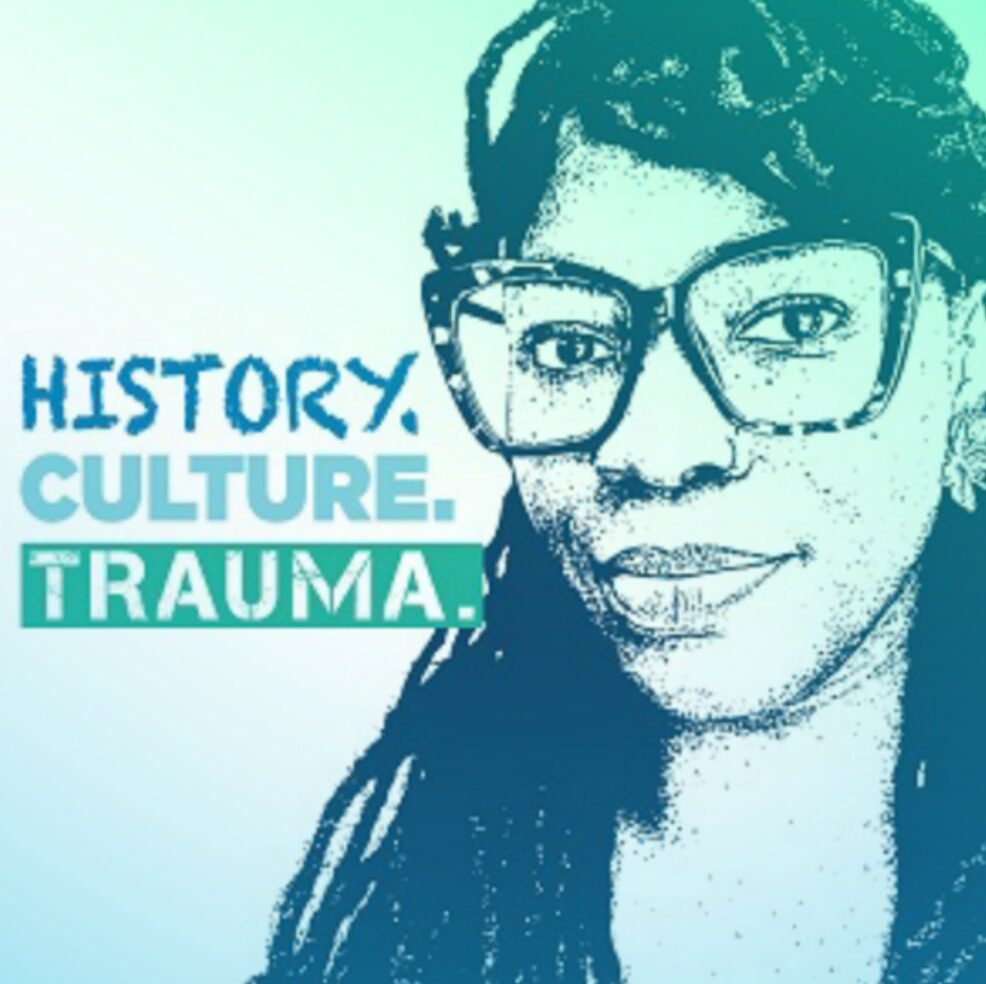
In 2020, I was uniquely positioned to help hospitals and other institutions prepare and address the collective trauma of the COVID-19 pandemic. In 2022, I became CEO of PACEs Connection, a social network dedicated to raising awareness of the impact of trauma and adversity. I’m currently writing a book for Harvard Education Press focused on reducing stress in schools. I’m the host of a very popular podcast, History. Culture. Trauma. I can’t wait to see what’s next for me. I understand now that the trauma I suffered as a child has been transformed, and I have experienced post-traumatic growth.
I also understand that trauma is pervasive in our society. It is my hope that all trauma survivors can experience collective healing and liberation from oppressive systems, like racism and poverty, that make trauma more likely to occur. The children of Woodland Hills changed my view of the world. They helped me to recognize my own bias and see the truth. They helped me to find my purpose. I am so thankful.
Would you say it’s been a smooth road, and if not, what are some of the biggest challenges you’ve faced along the way?
In these politically and culturally polarized times, I constantly struggle with people who are set on not dealing with our collective history. Those who oppose efforts to recognize the impact of trauma or push back against efforts to be a more equitable society are lacking in empathy and, ultimately, preventing our shared healing and shared prosperity. We keep coming to the same stalemate. Power and profits over people. We refuse to prioritize the well-being of the people in this country.
This manifests in many ways. The public health sector recently declared racism a public health threat. We are collectively grappling with the opioid epidemic. We are also in the midst of a mental health crisis brought on by social media that is particularly impacting our children. At every turn, instead of addressing the systemic issues, we blame the victims. I know because I was there, too. I blamed the parents. This singular focus on personal responsibility goes against research and is a constant threat to my work.
Thanks – so what else should our readers know about your work and what you’re currently focused on?
I specialize in providing historical context. My understanding of history and systems sets me apart. I know how we got here and where we are going.
I can see the big picture and the larger trends impacting us as a society. It also allows me to work in a way that honors my ancestors and that is a great source of pride for me.
Do you have any memories from childhood that you can share with us?
My favorite childhood memories are of my grandmother, Daisy. I loved visiting her farm in East Texas as a child. It is there that I feel the most connected to my ancestors and recognize their efforts to create a better life through education.
Daisy was a powerful woman who was tall in stature and presence. She was determined that my mother and her siblings would have a better life and she succeeded. All of her children left home and went to college. As someone who did not graduate high school in rural Texas, this was a challenging feat. She made the local paper for this accomplishment which was unheard of in her time.
Contact Info:
- Website: www.pacesconnection.com
- Linkedin: https://www.linkedin.com/in/acesingrid/