



Today we’d like to introduce you to Joseph Morgan.
Hi Joseph, so excited to have you on the platform. So before we get into questions about your work-life, maybe you can bring our readers up to speed on your story and how you got to where you are today?
As the Executive Director of Music City Review, I think a lot about the role a publication like ours can play in a city. At its most basic, I believe we are here to pay attention—to the artists, performances, exhibitions, ideas, and conversations that make up Nashville’s cultural life, and to create a record of some of that work as it happens–to document the culture. I don’t pretend that MCR can capture everything, or that our perspective is the only one that matters. But I do think there is value in having someone take the time to look closely, ask questions, and document what is happening around us.
Before I came here, I lived in Boston, where I studied musicology and wrote criticism for the Boston Musical Intelligencer. When I came to Nashville in 2014, I had the opportunity to write a column for Nashville Arts Magazine, edited by the great Paul Polycarpou. I loved having a place to think and write about what was happening in Nashville’s arts community. More importantly, it opened my eyes to just how much was happening here outside the city’s familiar identity as “Music City”—meaning, of course, Country Music City.
There were extraordinary musicians, painters, dancers, actors, writers, galleries, and arts organizations doing meaningful and often adventurous work. I became increasingly interested in the stories that weren’t always being told and in the conversations that weren’t always happening.
When Nashville Arts Magazine closed in 2018, I felt that something important had disappeared. I didn’t have the time, skills, or finances to start a magazine, but I did know that I wanted that conversation to continue. So, in 2019, I started Music City Review as an online publication.
In the beginning, it was essentially me and a website. I wrote, edited, figured things out as I went along, and tried to build something that I would want to read myself. The idea was fairly simple: take Nashville’s arts seriously and provide a place for criticism—not simply publicity or announcements, but writing that engaged with the work, asked questions, and considered why the arts matter. With that format, I began to find writers who shared my ideals.
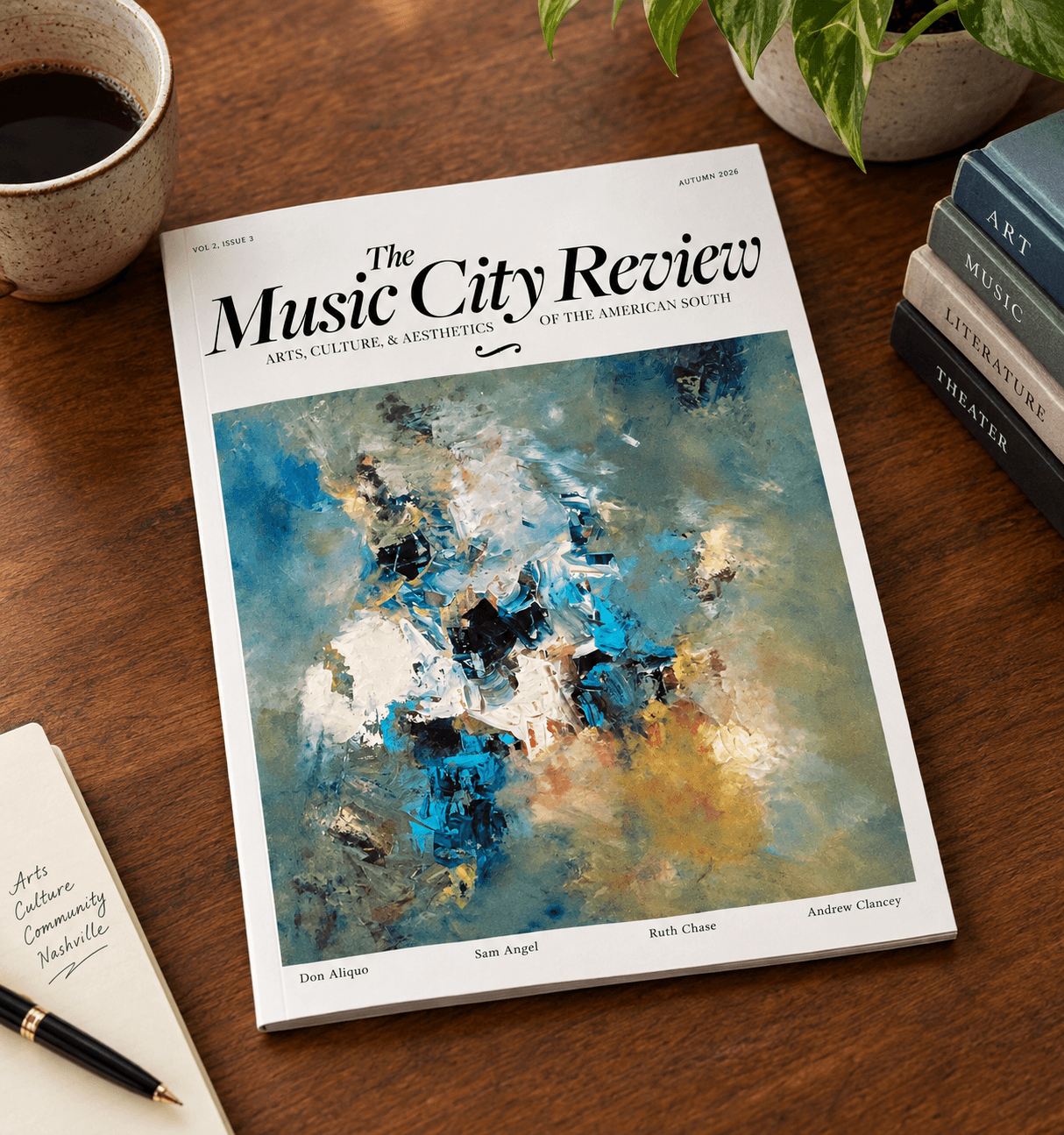
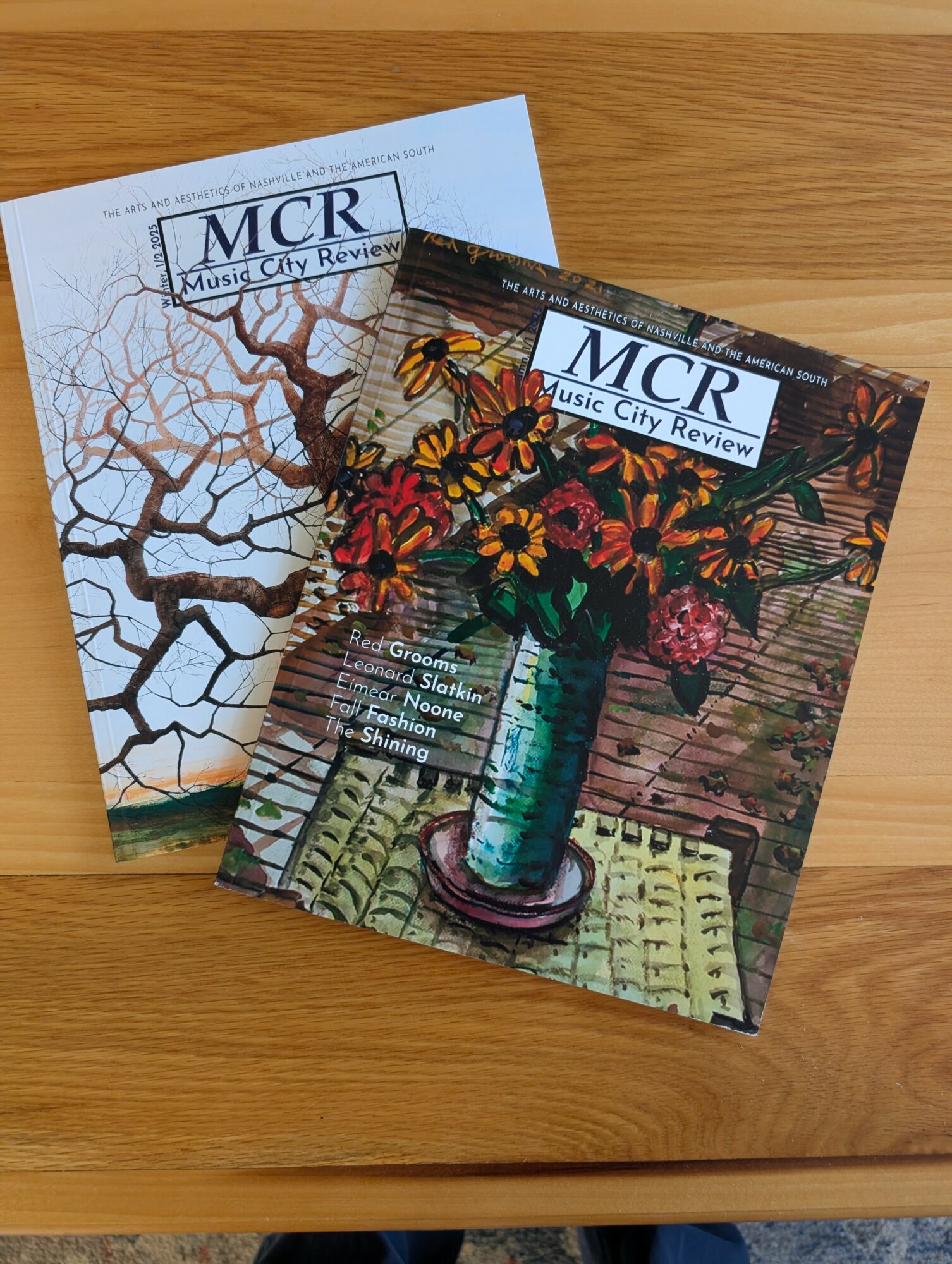
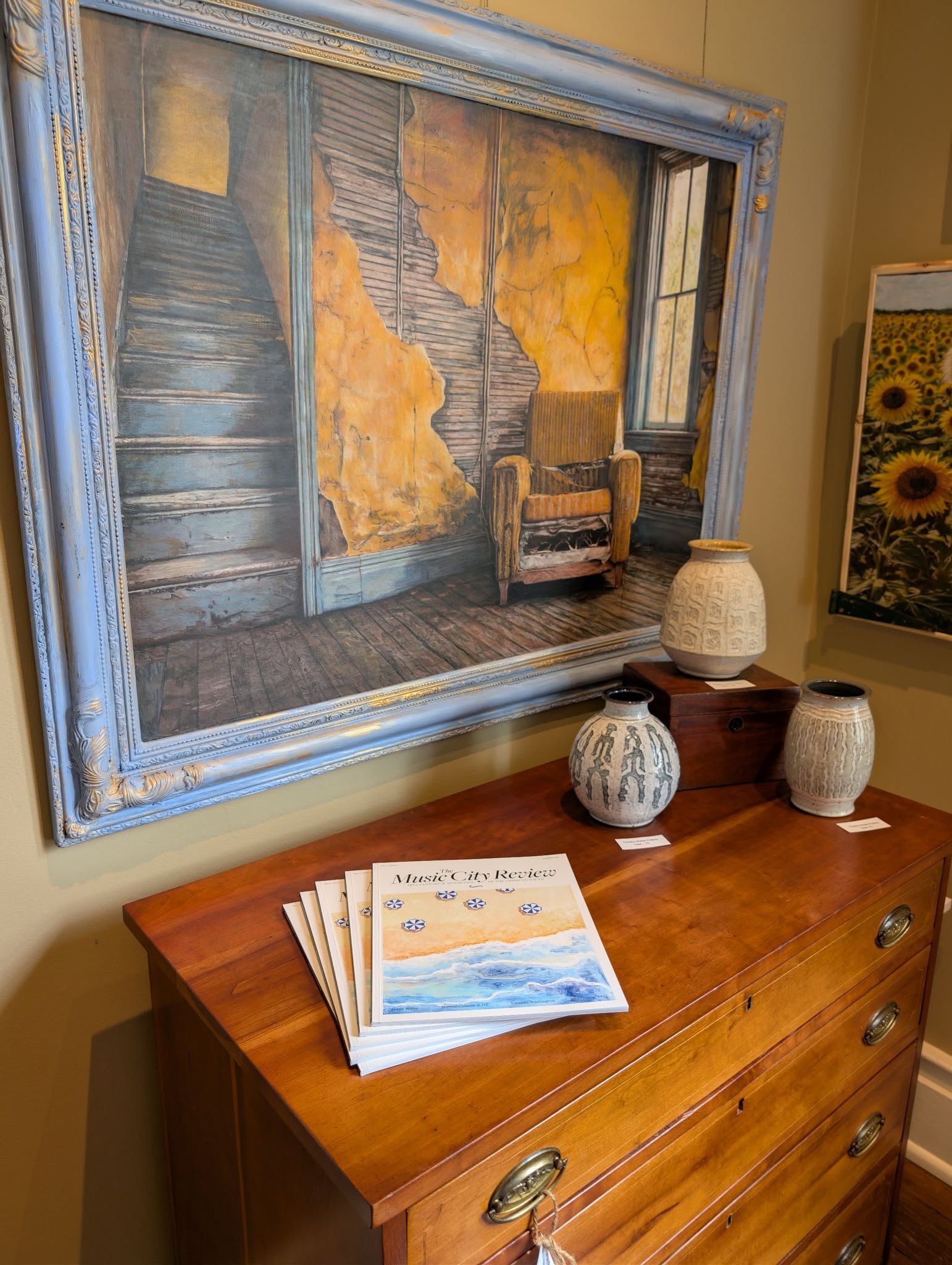
Over the years, MCR has grown into something much larger than I imagined. We are now a 501(c)(3) nonprofit with roughly fourteen writers, a drama editor, Grace Krenz, and an art director, Matt Green. We have an amazing board made up of artistic and intellectual leaders of this fine city. In 2025, we added a quarterly print magazine, and by December we will have published our sixth issue.
But what makes me happiest is that Music City Review is no longer just my voice. It has become a community of people who believe, as I do, that the arts matter—and that Nashville deserves to have its cultural life beyond Broadway documented, discussed, challenged, and remembered.
That, ultimately, is what I hoped MCR could become: not simply another publication, but part of the cultural record of this city. Please note, we are here for the community, if you would like to participate in the discussion, please contact me.
We all face challenges, but looking back would you describe it as a relatively smooth road?
Goodness, it has not always been smooth. Like everything else in Nashville, COVID brought everything to a halt. But strangely enough, that was also when I really began to see the heart and soul of this city.
I remember Chatterbird, the contemporary music ensemble, putting on an open air concert right in the middle of the pedestrian bridge. OZ Arts found ways to present dance while keeping audiences socially distanced, and even put on an amazing production of Sloppy Bonnie in its front parking lot. Artists and arts organizations were constantly figuring out ways to keep doing what they do, even when the normal ways of doing things had disappeared.
We lost a lot of the progress that was made in the years leading up to 2020, and rebuilding afterward was not easy. But I also came out of that period with a much deeper understanding of Nashville. I saw just how creative, resilient, and resourceful the people who make up this city’s arts community really are. In many ways, COVID made me appreciate Nashville more—not less—and it reminded me why the work of Music City Review matters in the first place.
Can you tell our readers more about what you do and what you think sets you apart from others?
I’ve got a bunch of hats: I’m a musicologist, educator, professor, writer, editor, publisher, and arts critic. (Also, father, husband, guitarist…) I suppose all of those things have found their way into what I do with Music City Review. At the heart of it, though, I’m someone who believes that the arts deserve to be taken seriously. I started Music City Review because I felt Nashville needed a place where people could actually stop and think about the art being made here—not simply promote it, but engage with it, question it, and put it into a larger cultural context.
My background as a musicologist and educator has probably shaped the way I approach all of this. I started out writing primarily about classical music (I’ve published two books on opera) but over time Music City Review grew into something much broader. We now cover classical music, jazz, opera, contemporary music, visual art, literature, theater, dance, and interdisciplinary work. We have a group of about fourteen writers, along with an editor and an art director. Several of our writers hold Ph.D.s and faculty positions at colleges and universities around Nashville. This brings a real depth of knowledge and experience to what we publish. At the same time, I want the writing to remain accessible and engaging—we’re writing for people who love the arts, not just for academics.
What I’m most proud of is that we’ve tried to build on the wonderful model of Nashville Arts Magazine, but perhaps with a little more critical focus on the individual works; we are a little more analytical and “wordy.’ Nashville has an enormous amount of artistic activity, but so much of it can come and go without anyone really stopping to write about it or put it into context. I wanted Music City Review to be part of that conversation—to give artists and audiences a place to think about what is happening around them.
I think what sets us apart is that we’re independent, and we’re genuinely interested in the parts of Nashville’s arts community that can sometimes get overlooked. We’re not trying to compete with the entertainment industry. We’re interested in looking beyond it. And because the magazine is freely available in Nashville’s libraries (although you can subscribe!), we can make that conversation available to anyone who wants to be part of it.
Ultimately, I’m proud that Music City Review has become a community. It started with me, but it certainly isn’t just about me anymore. That’s probably the thing that makes me happiest about it.
Is there any advice you’d like to share with our readers who might just be starting out?
I hate to sound like Dr. Seuss, but here goes:
“Do it now. Stop daydreaming and do it.”
I’ve probably given myself that advice more times than I can count. I’m a great believer in ideas, but I’ve also learned that ideas don’t amount to much if you never act on them. At some point, you have to stop thinking about what you might do and actually do it.
It hasn’t always been easy—the important stuff never is. There have been plenty of moments when I’ve wondered whether I was being completely unreasonable. (I hear that voice right now.) But I’ve found that the things that matter most usually require you to get past that voice in your head telling you that something is too difficult, too ambitious, or that someone else could do it better.
My education in the liberal arts has been a huge part of my ability to do this. The liberal arts taught me to listen carefully, ask questions, recognize patterns, understand context, and look at a subject from more than one perspective. But they also gave me something even broader: the ability to communicate, think critically, research, write, adapt, and keep learning. Those skills have served me far beyond the classroom. They have made it possible for me to teach, write, edit, publish, and build something worthwhile.
I don’t think you always know where a liberal arts education is going to take you—and that’s part of its value. It gives you the ability to land on your feet wherever you find yourself, and maybe even to discover that where you landed is someplace you never expected to be.
And somewhere along the way, I’ve learned that you have to have some fun with it. If you’re going to spend your life chasing ideas, solving problems, making things, and occasionally doing things that seem a little unreasonable, you might as well enjoy the ride. Not everything has to be serious. Sometimes the unexpected detour is the best part. The work matters, but so does laughing, taking chances, being curious, and enjoying the people you meet along the way.
And sometimes you’ll fail. I certainly have. Some ideas don’t work, some risks don’t pay off, and some things you pour yourself into simply don’t turn out the way you imagined. That’s part of doing something rather than just thinking about doing it. Failure can be disappointing, but it can also teach you something that success never could. You learn, you adjust, you get back up, and you keep moving. I’ve come to think that failure is less frightening when you understand that it isn’t the opposite of doing something—it’s often just part of doing it.
Sometimes you just have to begin—with whatever you have, wherever you are. Follow your talent and your interests; your place lies just beyond. Oh, and you have to hustle. And, obviously, surround yourself with people who dream too.
Most importantly, don’t spend so much time thinking about doing something that you forget to actually do it.
Pricing:
- $50 Annual Subscription
Contact Info:
- Website: https://www.musiccityreview.com
- Instagram: https://www.instagram.com/musiccityreview/
- Facebook: https://www.facebook.com/Musiccityreview#
- Youtube: https://www.youtube.com/@MusicCityReview