




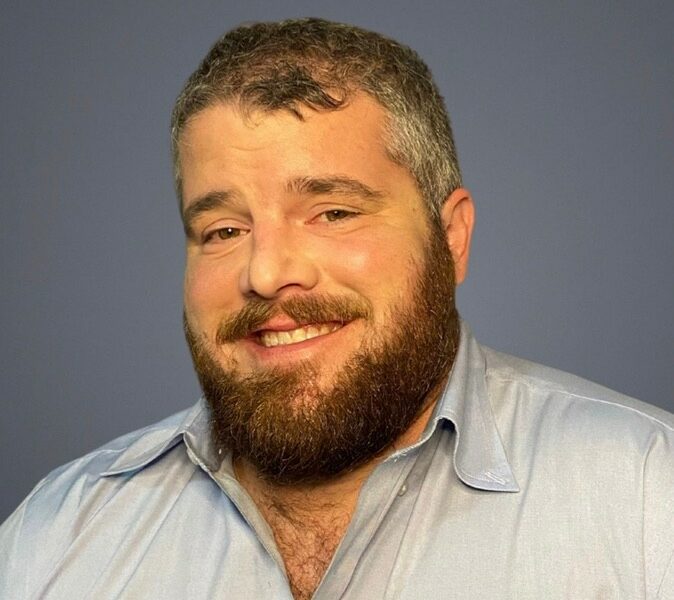
Today we’d like to introduce you to Matthew Horsnell.
Alright, so thank you so much for sharing your story and insight with our readers. To kick things off, can you tell us a bit about how you got started?
Lifelong Nashvillian, born at Saint Thomas Midtown (then Baptist Hospital). Attended Williamson County schools through my junior year of high school when I transferred to Hillsboro High. After graduation, I attended Belmont University where I studied Exercise Science—honored as major of the year in 2002. It was at this point that my struggles with sleep went from challenging to debilitating.
This struggle began in adolescence. Looking back, my sleep needs began to become intrusive around age 12. At that point, my sixth-grade day began with a shower and breakfast, followed by a 20 min nap on the couch, a second nap on the car ride to school, and one or two naps in classes throughout my day, followed by an afternoon nap on my ride home. After school activities, homework, and dinner were followed by bedtime around 9 PM.
I originally didn’t realize I was different, because I saw my peers nap at school, but lacked the realization they were staying up late at night. I did talk with my pediatrician, but my sleepiness was treated as situational depression (resulting from my parent’s divorce). In college, my GP referred me to a psychiatrist and my diagnosis of misadventure continued for years.
After the birth of my daughter in 2005, I began managing at a local pet products store. We welcomed our second daughter in 2006 and my life unraveled into a strange existence between sleep and wake. That is when I took it upon myself to find a sleep doctor. It was at the same hospital where I was born that my sleep study revealed I had type 1 narcolepsy, narcolepsy with cataplexy. The secondary diagnosis at play was periodic limb movement disorder. Seven years later I was diagnosed with obstructive sleep apnea.
After 13 years of looking for answers, I had one. While it was comforting to name the condition, that was merely the beginning of learning to navigate life with a rare neurological condition. It would take another ten years of challenges, lost jobs, the birth of my son, and a destroyed marriage, to begin to accept that while I had to grieve lost dreams, I had the power to dream new ones. Sitting on the floor in a cataplexy puddle of grief, tears, and despair I decided to say a four-letter word that would change everything: “help.”
So I reached out to the leading voice for people with narcolepsy and ask “how to live with N1 what could I give back?”
I decided to connect my passion for strength alongside my life with narcolepsy. After a chance encounter with a former three-time World’s Strongest Man in 2008, I decided to fully embrace my self-anointed moniker: World’s Strongest Person having narcolepsy with cataplexy. It’s a ceremonial title that reflects the principle that any day I am able to get out of bed and pursue fitness, I am flexing strength that deserves recognition.
Embracing narcolepsy and the strength it takes to live with this condition is my foundation for advocacy. It’s not about physical strength, it’s the mental and emotional strength to persevere that deserves recognition.
After surviving for a few years as a single dad and primary residential parent of three, I began to look for a loving partner. In April of 2022, I had the honor of marrying my best friend, Heather. Heather is the only licensed professional counselor in our rural town
Alright, so let’s dig a little deeper into the story – has it been an easy path overall, and if not, what were the challenges you’ve had to overcome?
Tremendous struggles along the way. The misdiagnoses were great setbacks.
As challenging as a rare and chronic disease can be, life doesn’t stop because of my disability.
In May of 2010, my family and I lost everything in the Nashville floods when we lived in Bellevue. This was three years post-diagnosis. The stress and trauma of the loss resonated for years. Between that event and my own divorce, my children and I moved 11 times in 11 years. My children were five and almost four in 2010. Three times over the next decade we were homeless.
The FT employment I was barely holding on to in 2010 only lasted two more years. In 2012 after finding my friend/coworker deceased in his home I lost that job. Two months after that my son was born, and two days after bringing him home my best friend passed away from brain cancer.
I was able to maintain PT employment off and on, but my family and I depended on SNAP benefits and government housing to survive.
In 2018, I began my journey as a single primary care parent of three. Every day, every bill, every unexpected expense seemed insurmountable.
Every day my biggest struggle is getting out of bed.
Living with narcolepsy is analogous to waking up and feeling as if I haven’t slept for 48 hours, with sleepiness bouts throughout the day where it is equivalent to no sleep for 72 hours.
Thanks for sharing that. So, maybe next you can tell us a bit more about your work?
I am a leading advocate for people with narcolepsy and sleep disorders. When reinventing myself, I decided to embrace living with narcolepsy. If I could create a way for narcolepsy to work for me, then I would take away some of the power it held over me. I embarked on a journey to learn how to advocate and share my story.
Many people and organizations along the way have helped me along this journey. Julie Flygare was the first person I reached out to. Julie is a rockstar in our community. She is a published author and founder/CEO of Project Sleep. Julie inspired me and offered me opportunities to engage in legislative advocacy. Her introductions served to amplify my voice through pharmaceutical companies.
In 2018, I began sharing my story with Harmony Biosciences, the Know Narcolepsy campaign. A year later I went to Washington DC to advocate alongside Project Sleep. Later that summer in 2019, I graduated from the PS Rising Voices of Narcolepsy program.
In the summer, I began attending support groups through Wake Up Narcolepsy. Today I facilitate two of these weekly groups spreading the “gospel of sleep” to 8-20 people with narcolepsy. I have been featured or hosted nine podcasts and been a presenter or panelist at in-person non-profit events, and on 10+ webinars. Including an event here in Nashville for Project Sleep in 2022: Innovations in Narcolepsy Advocacy and Awareness
Where do you see things going in the next 5-10 years?
There is a significant trend in empowering and incorporating the patient voice in sleep medicine.
The American Academy of Sleep Medicine and Sleep Research Society has been great at including patient voices and perspectives. Diversity and inclusion in nonprofit efforts and research are the future of sleep medicine. Diverse experiences socially, economically, racially, and geographically are helping to shape the future of sleep medicine to be representative of the population.
In narcolepsy we have been fortunate to have made strides in treatment options, the future likely includes an option that could revolutionize the field. People with N1 lack a neurotransmitter, orexin/hypocretin. In the future, we could see multiple orexin/hypocretin receptor agonists make it through the FDA approval process. My hope is that the use of patient perspective will continue and the FDA will be more receptive to patient-centered outcomes for approval.
Contact Info:
- Website: https://project-sleep.com/
- Instagram: @mhorsnell
- Facebook: https://www.facebook.com/matt.horsnell
- Twitter: @matthorsnell
- Other: www.wakeupnarcolepsy.org


 Image Credits
Eden Jeffers