





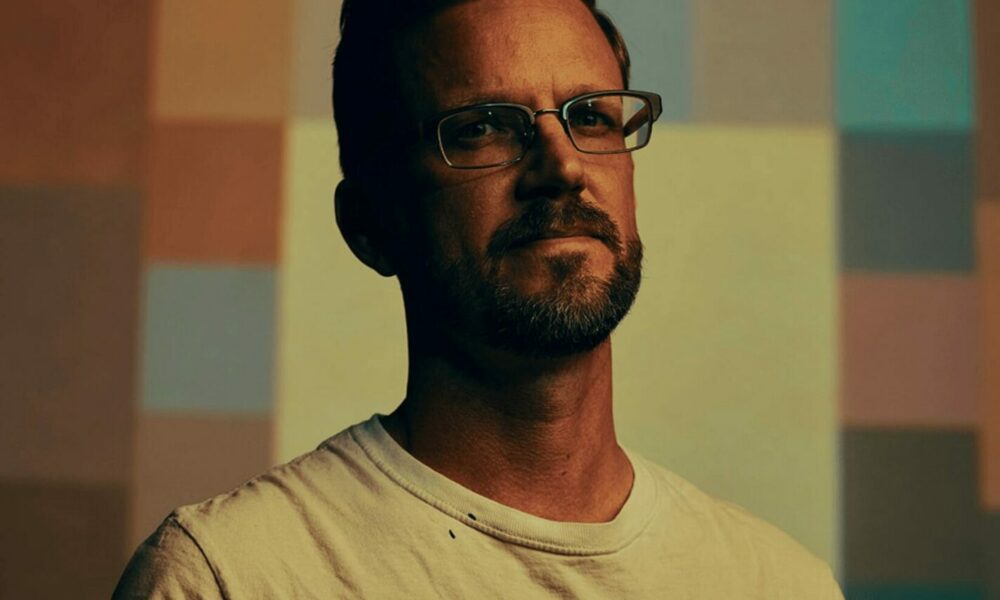
Today we’d like to introduce you to Tony Sobota.
Hi Tony, thanks for sharing your story with us. To start, you could tell our readers some of your backstory.
Twenty years ago, I dropped out of grad school (in another field) to pursue art full-time. I typically wouldn’t advise this 1-2 career suicide combo! But I felt an irresistible calling into art and had the support system around me to move forward. Those early years were fraught with financial and emotional instability, but I found my way by adopting a “seasonal” mindset to my career. This meant working a job (still art-related) half the year, so I could take the rest of the year “off” to paint and teach what I was learning. Not relying on painting for income at first allowed me to develop naturally, even if much slower than I would have wanted. Eventually, I took some classes to fill in gaps in color theory, paint handling, etc., and after about 10 years of painting, my work started to get traction in sales and opportunities. All these years later, I still have a seasonal workflow, moving between drawing faces at parties and events, taking on limited painting commissions, and putting together large bodies of paintings for shows and exhibitions.
Would it have been a smooth road, and if not, what are some of the biggest challenges you’ve faced along the way?
One of the main struggles of an art career is needing a map to show you the way. Sure, every artist who wants to stay in the game long-term must do the basics of honing their craft while developing sustainable business practices, but there are so many different paths to take, and it can be overwhelming. There’s the question of how you will sustain yourself. Do you take the academic route through an MFA to teach? Or go commercial and focus on art fairs? What about just courting corporate clients as a goal? What about galleries? Get a job and paint part-time? Then there’s the work itself—what will it look like? Finding your unique voice is slippery because inspirations and values constantly shift. And we have so much input now that it’s nearly impossible to avoid being derivative somehow. Even if bold steps are taken in a seemingly new direction—we find out someone already does that, and you’re at least five years behind them. I’ve struggled—often—with this aspect of finding direction. Perhaps it’s because artists are perennially curious. Not sure. I have realized that getting there is hard if you don’t know where you’re going. Some degree of decisiveness is key. They say, “The only wrong decision is not making one,” in art, this is the absolute truth.
I appreciate you sharing that. What else should we know about what you do?
I have done many different things throughout my career and worked in many other venues, from illustration to caricature to large-scale painting and public art. I widely regarded this point, and some of them are internationally notable. I’m focusing on my strengths of style and medium. But I’m not defined by any of this. I want to stay curious, which may mean morphing genres again. Who knows? I do know that what defines me and my work as different is how much I care. I’m not saying others don’t, but it’s deep for me. If a person or organization asks for a custom piece, I genuinely care that they get the best possible thing in their mind, and I exceed expectations. When someone buys a piece—big or small—I’m still blown away. I care that they loved it enough to spend the rest of their lives with a piece. Perhaps I care too much. Sometimes it’s terrifying! I’m learning to let the fear part go. But I care very much. This isn’t a game to me or something I’m trying to be clever about or with an ultimate goal of making tons of money on. I care a lot.
Please talk to us about happiness and what makes you happy.
For me, the ultimate joy is found in my studio, with some uninterrupted time to create. It could be an hour or turn into a marathon 17-hour session before an installation. The duration doesn’t matter. The moment I step into my studio, connect to my playlist, and start creating, it’s pure bliss. This is a feeling that I can’t quite explain, but it’s a joy that is eternal and deeply fulfilling.
Pricing:
- Start small. Getting the work out first is more important than making massive “important” paintings.
- Stay consistent, and raise prices a little each year with demand.
- The most significant barrier for some is knowing your value. Take the time to understand your intrinsic worth, and the value of your work will naturally follow, validating your artistic journey. An effective way to factor in time is having a day rate (or what you would need to earn in a day to survive) and adding these up.
- Lastly, it is Art. Feel free to throw out all the rules and charge whatever you want.
Contact Info:
- Website: www.tonysobota.com
- Instagram: @tonysobota


Image Credits
Headshot by Jeremy Cowart