



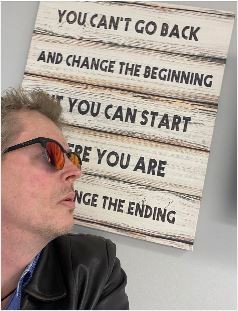
Today, we’d like to introduce you to William Tribell.
Hi William, please kick things off for us with an introduction to yourself and your story.
I act some, stand in the background more often, and I like to make my own films. I have a short film named “Girl in the Red Dress” that I’d like to see completed in time to submit to Tribeca this year, and I have two collections of poetry to be released ” ” /ˈampərˌsand/” ”, and “The Songbird.” I’m still working that out as to how I got to now. Heartbreak and the pursuit of happiness seem to preempt the pursuit of understanding most of the time. A long, strange trip for everyone, I think.
Can you talk to us about the challenges and lessons you’ve learned? Looking back, would you say it’s been easy or smooth in retrospect?
It’s been a lot of roads, that’s for sure. Don’t they say hard roads lead to the best places? Something like that. I don’t know, but smooth or rough, it’s been interesting, like the fortune cookie said it would be. I always accepted that the trip was mostly what life was about, and I guess I’m still hip to the trip, but I found that the destination, or destinations, are pretty important. I don’t remember my mother to much, my father shot and killed her in the Cumberland Gap. He always swore it was an accident. She was a painter.
My father went to prison, of course, and I sort of did too. My grandparents raised me, my mother’s parents and my grandpa was a prison warden, so I lived at a few of Kentucky’s big penitentiaries in my formative years. Not too many school friends’ parents would let them come over to play, right? It was a pretty good life, all told, but Grandpa worked a lot, and I had a lot of time on my hands. A convicted bank robber named “Tennessee” taught me how to fish, a woefully failed safecracker named Bandit with one arm and a cleft pallet taught me how to make wine and smoke cigarettes, and a man doing time for murder taught me how to play basketball, ride a bike and he gave me my first guitar.
I have always read a lot and written creatively. I guess since I learned to write, I never stopped doing either. I started leaving home at sixteen; my grandpa called me the prodigal son. I packed a guitar and a couple of harmonicas around the country for many years. I settled in New Orleans in 2001, and the guitar got heavy. A pen and a harmonica fit in your pocket. I got poetic, political, some kind of spiritual, and drunk.
In those years, I played music, painted, started writing poems on bar napkins and leaving them behind, busking, I played a lot with Grandpa Elliot, who became a part of Playing For Change, I sat in a lot with a band called Morning Glory and co-wrote a song that sometime later made an album called “Waiting For Those Strippers to Get Off Work,” a more wholesome activity than one might think; the ladies we were referring to made a lot more money than we did and would buy my friend and I breakfast, help out a bar tab, or whatever and were good company. I managed a few extra roles in films and bartended sometimes, even getting my license.
I eventually tried to be more grounded, more or less. I worked as a photographer for a New York studio that required travel to many places and a lot of Texas, and I became a book scout, dealing with rare books and ephemera for bookstores like Faulkner’s Bookstore in Pirate Alley in New Orleans and private collectors. I started dealing with and meeting many authors, who helped me, and taught me things. Elmore Leonard, Ray Bradbury, John Trudell, and Bobby Jameson were like tutors, like a big brother program to me and I started seeking publication in poetry. Hurricane Katrina happened and its aftermath.
I served as state campaign director of Louisiana for Senator Mike Gravel of Alaska in the 2008 US presidential election. I stayed in NOLA until 2008, lived in New York for a very short while, almost bought an Amish farmhouse in Intercourse, Pa., and worked with Russell Means and the Republic of Lakotah. 2008, I moved to Europe and spent the next five years mostly in Eastern Europe.
Living in Budapest, Hungary, my short film and poem “Budapest” was brought into the growing protests against the curbed civil liberties, human rights, and restricted freedom of speech and artistic expression legislated by the Hungarian government. I was in an ice cream shop when my work was specifically mentioned in a national address by the prime minister broadcasted on the radio. Things got kinda weird after that. Angie Bowie helped me with media from the States when the circumstances became “pressured” until I returned to the US. The piece still finds its way onto bootleg and pirate sites in Hungary, Ukraine, and around Eastern Europe, and it’s on YouTube, of course. Angie became a frequent guest on my radio show, and when David passed we had a really beautiful conversation and premiered songs from “DarkStar”, that’s one of those profound moments for me that happen to us.
Life is a struggle, my most recent traffic accident would be my ride-or-die deciding forever was five years, and she kept the flat, the cats, and my only pair of boots. We are the same sizes, so we shared clothes too. My luggage got very confused, and the band broke up, or at least the version with me. Cycles and seasons ebb and flow. I’m tired of my lifestyle of wild and undue chaos, and I stopped trying for stimulations years ago, or mostly anyway. I’ve learned that patterns are hard to change, like grooves worn into the universe that make direction correction a bit hard, like no power steering, or how raindrops follow raindrops down the windshield.
Thanks – so, what else should our readers know about your work and what you’re currently focused on?
When I returned to the States, I joined the cast of a paranormal radio show and a TV show called Paranormal Journeys. The TV series ran for seven seasons, and we explored many haunted places in Kentucky and Tennessee. It is on ROKU now. That kept me in that area, and I got pretty busy; I’ll try to list some high points. I was a reporter and photographer for a newspaper group and received the Lighthouse Media Award in 2015.
I played a part in the Hoax of the Century with Tom Biscardi and the infamous Bigfoot suit stuffed with deer parts. I ran the Bell County Kentucky Historical Museum for a one-year term, and I displayed and offered the suit, which was missing until then, for inspection to the press and public. I went on a few Bigfoot hunts with Tom and crew but never saw him.
My first book was published in 2015, a collection of poetry with JL Carey Jr and Tina Twito; I received a Pushcart Prize nomination in 2016 for a poem in “Degenerates: Voices for Peace,” a nomination for 2018 Kentucky Poet Laureate, and was also proposed for induction to the East Tennessee Writers Hall of Fame in 2018. My second book, “A Dukes Mixture & A Hill of Beans,” received sponsorship and submission to the Pulitzer Prize Nomination for 2020 and was accepted. I recorded a piece from it, trying my hand at banjo, called “White Expansive” for Ron Whitehead’s album, “Down and Out in Kentucky”.
My 2018 short film “Returns,” starring Olivia Maxwell and Zephyr the Wolf, was featured in the Los Angeles 2019 Olympus Film Festival. My short “The Day Over to the Belva-Straight Creek Mine,” about an Eastern KY mine explosion read by Appalachian historian Tim Cornett and scored by Nobuo Uematsu, was also featured in the finals of China’s Shanghai Tunnels Project film contest and the connected JUE Arts + Music Festival Portland.
I was featured in the 2015 film “Poetry Is Dead.” I arranged and recorded Ruby Friedman performing “Ain’t No Grave” in a funeral home in Harlan KY for Reveal and The Center for Investigative Reporting’s Emmy-winning documentary film, “The Dead Unknown.”
Sometime along the way, I became an ordained minister courtesy of the Universal Life Church of Modesto, CA.
I guess my first publication was in “Terracotta Typewriter” #3, China’s first English translation lit journal. Far out, right?
I have phases or what ever, like colors, shades of, and right now I’m very interested in what we usually like to leave in the shadows I guess you can say. I’m focused on strong emotion and subdued basics of our reality and perceptions, empathy, base and even irrational fears, love and hate, mono vs stereo, truth and what that actually may be, and as always the human condition. I don’t think it is in anyway a revolutionary thought but it’s ok to not be ok. It’s simple enough but I think we can forget, and try and “fix” not being ok, and maybe it’s just more a coming to terms.
What changes are you expecting to see in your work and the industry over the next five to ten years?
Oh wow, I don’t know. AI is a thing, but it affects all facets of life. As a poet, I often equate it with being a thatcher, so from that point of view, any new application for a poetic expression I’m interested in, and I’d like to think the future is bright.
So far, in my experience, there is at least always a light on. As for film, one day, I guess we can see films with any actor who has ever been. And in performing arts, I mean, Tupac and Michael Jackson are still playing Vegas, right? Strawberry fields forever.
Contact Info:
- Instagram: https://www.
instagram.com/wstribell/ - Facebook: https://www.
facebook.com/WilliamSTribell/ - Youtube: https://www.youtube.
com/channel/UCDQabPgXJDTu_ nK9oQFgezA - Other: https://www.poemhunter.
com/william-stephen-tribell/
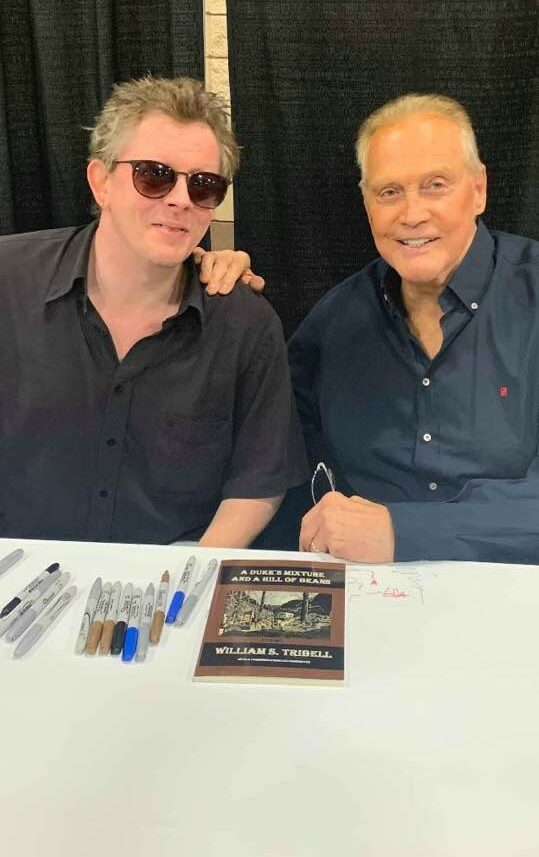
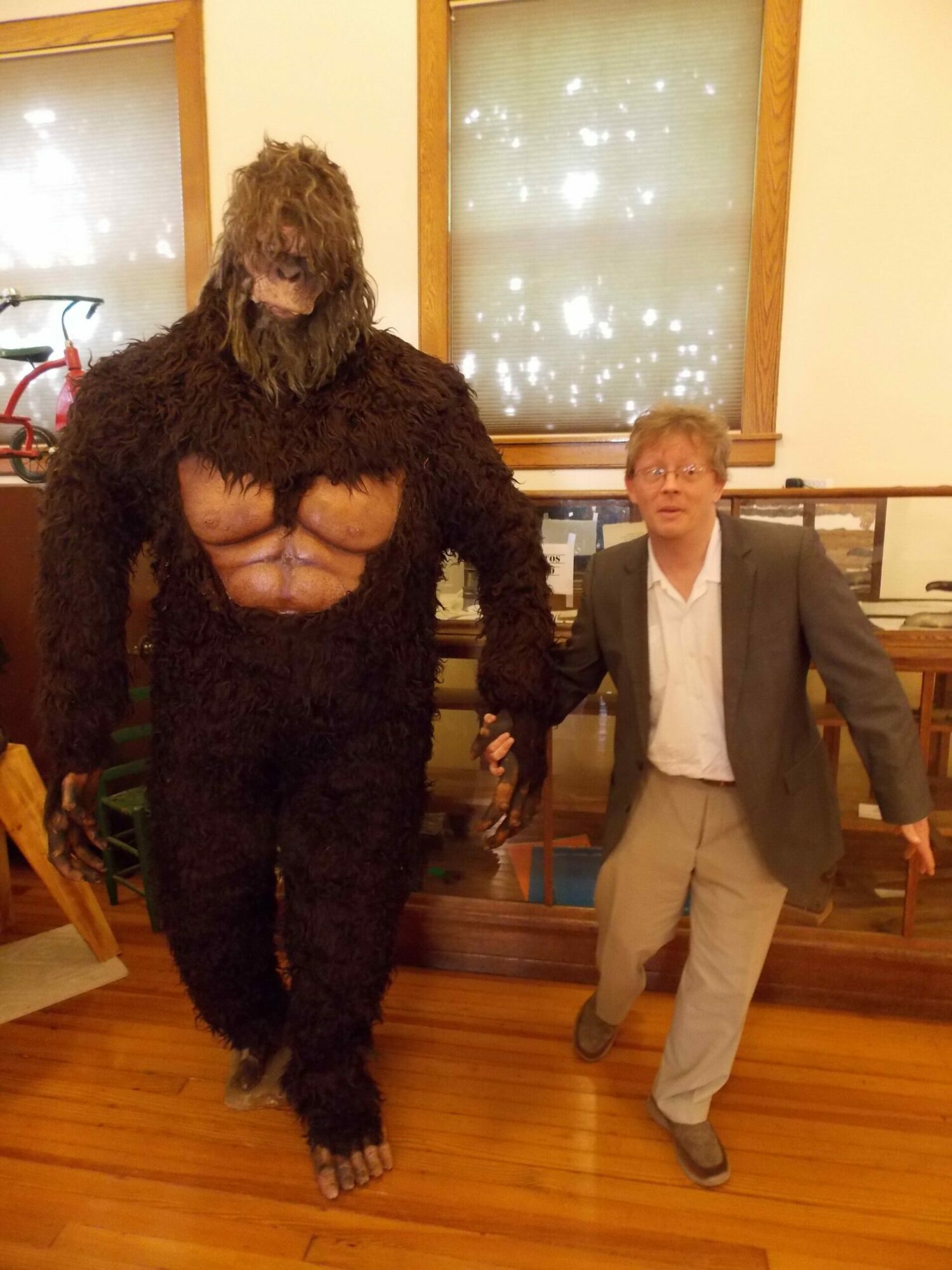 Image Credits
Cilla Fekete and Mel Lynn