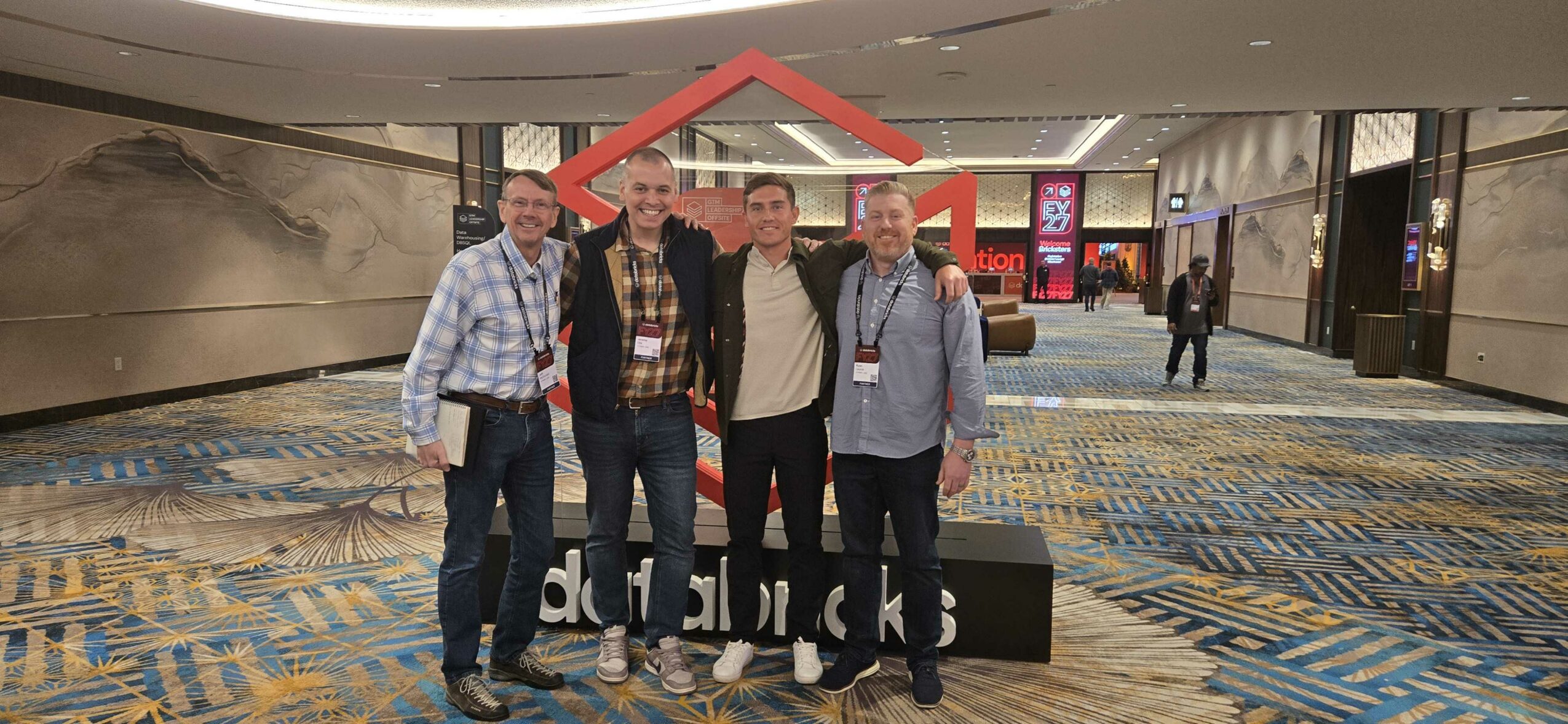






Today we’d like to introduce you to Jeff.
Hi Jeff, so excited to have you on the platform. So before we get into questions about your work-life, maybe you can bring our readers up to speed on your story and how you got to where you are today?
I actually started out with a pretty unlikely college major for someone who now runs a healthcare data technology company: theatre arts and stage design.
At first glance, that seems like a hard left turn, but the older I get, the more it makes sense. Stage design is all about structural reasoning, sequencing, and communication. You have to work within constraints, think temporally about what happens first and what comes next, and design something that makes sense to very different audiences. It turns out those are the same muscles you use when building technology, analytics platforms, and teams of people.
I’ve always considered myself a bit of a serial entrepreneur. Early in my career, I was at a technology rollup, where I was able to learn a lot from some great people and ultimately was able to develop an enterprise strategy for technology and services to healthcare organizations.
I decided it was time for a career change following some major corporate changes and joined a healthcare startup, Evariant. I was responsible for innovation, which really set the trajectory for everything that followed. After I left Evariant, I started Expression Health, where we created unique and novel analytics for providers. Expression Health was merged with two other companies to form Trilliant Health, and Expression’s technology became the primary revenue driver for Trilliant’s products. After that experience, we ended up bringing a team together from both Evariant and Expression Health, where we founded Kythera Labs in 2019. Our fundamental thesis was that there was a data technology problem that was fundamental to all healthcare analytics use cases.
Across all of these companies, the common thread has been using large, complex healthcare data in new ways to make better decisions. In hindsight, it’s not that different from stage design: you’re constantly asking what belongs on the stage, what’s happening behind the scenes, how everything fits together, and how to make the story clear.
People I work with will tell you I’m fond of saying “crawl, walk, run”—though these days, with AI, it feels like we’re sprinting all the time. That means being decisive while still working through ambiguity. The part I enjoy most is doing it with a great team—collaborating, problem-solving, and, ideally, having a little fun along the way. I cannot stress this enough- teamwork is essential because success depends on the coordination of people with diverse skills—from engineering and product design to data science and customer success. Small teams must move quickly, solve complex problems, and adapt to constant change, which requires trust, open communication, and a shared sense of ownership.
We all face challenges, but looking back would you describe it as a relatively smooth road?
By definition, startups are never smooth. No two are exactly the same, but they all seem to come with a familiar set of challenges: what is the idea, how relevant is it to a broader market, can this self fund for some period of time, if and/or when is funding a consideration, how do we craft the funding deck/pitch for a specific set of curated investors. I still remember the early days of Expression Health. We bootstrapped the company and simply didn’t have the resources to buy the technology we needed to build the product the “right” way. So we improvised. We bought (50) fifty used servers, loaded them into the back of my pickup truck, and ran them out of a vacant space behind a beauty parlor. This was at the time a cutting-edge deployment of Hadoop technology on used hardware from a Google data center…one man’s junk was Expressions’ treasure. We had tried to do this in the cloud on Azure, but it was not ready for primetime in 2014. Needless to say, that setup didn’t last long, and we eventually transitioned to something far more conventional—but it got us through a critical moment.
Another moment that stands out was an upheaval in the healthcare data industry following a large healthcare data breach. That event put the entire industry on its back foot. It forced hard questions about trust, risk, and responsibility, often with incomplete information. This was one of those times where decisions had to be made under real ambiguity. Great teams adapt, and this was an example where I really appreciate having a great team to work with.
What ultimately strengthened us was being forced to confront that complexity head-on. We had to rethink how we controlled risk, how we designed for resilience, and how we positioned ourselves for the future. Those experiences reinforced a belief I still carry today: adversity doesn’t just test companies; it sharpens them. If you use the pressure well, you come out not just intact, but better prepared for what’s next.
As you know, we’re big fans of Kythera Labs. For our readers who might not be as familiar what can you tell them about the brand?
Kythera Labs is, at its core, a technology company built to help life sciences and healthcare provider organizations actually use healthcare data at scale, with speed, and most importantly, with trust. Healthcare data is complex, fragmented, and often hard to rely on. Our job is to make it more accessible, more usable, and more reliable.
We do that through AI-supported technology, pre-configured data pipelines, and purpose-built data products. Our platform is powered by Databricks, so we can offer all the features of a multibillion-dollar company, yet tailored to the very specific use cases of the segments we serve. By improving data quality and dramatically shortening time to value, Kythera helps organizations make better strategic decisions, get more out of their data investments, and ultimately support better patient outcomes across both clinical and commercial use cases.
On the provider side, products like DataSync and our Business Development solutions help hospital systems understand their true markets: where patients are going, where opportunities exist, and where value is leaking, so they can act with confidence. For life sciences organizations, our platform accelerates commercialization by turning complex real-world data into insights teams can actually use to inform launch, access, and growth decisions.
What really differentiates Kythera is how we approach AI. We don’t treat it as a layer you bolt on or a pilot you hope will scale. Our multi-agent workflows are designed to move AI from experimentation into production by embedding trust, governance, and explainability directly into how decisions are executed. Healthcare is complex, requiring many different subject matter experts. Our approach doesn’t try to replace expertise; we encode it into systems that scale. By breaking complex analytical tasks into explicit, validated steps, we know organizations can move faster while maintaining rigor.
Ultimately, that’s what allows our customers to use AI confidently, responsibly, and repeatedly in the real world.
Contact Info:
- Website: https://www.kytheralabs.com
- LinkedIn: https://www.linkedin.com/in/jeff-mcdonald-6b605b2/