

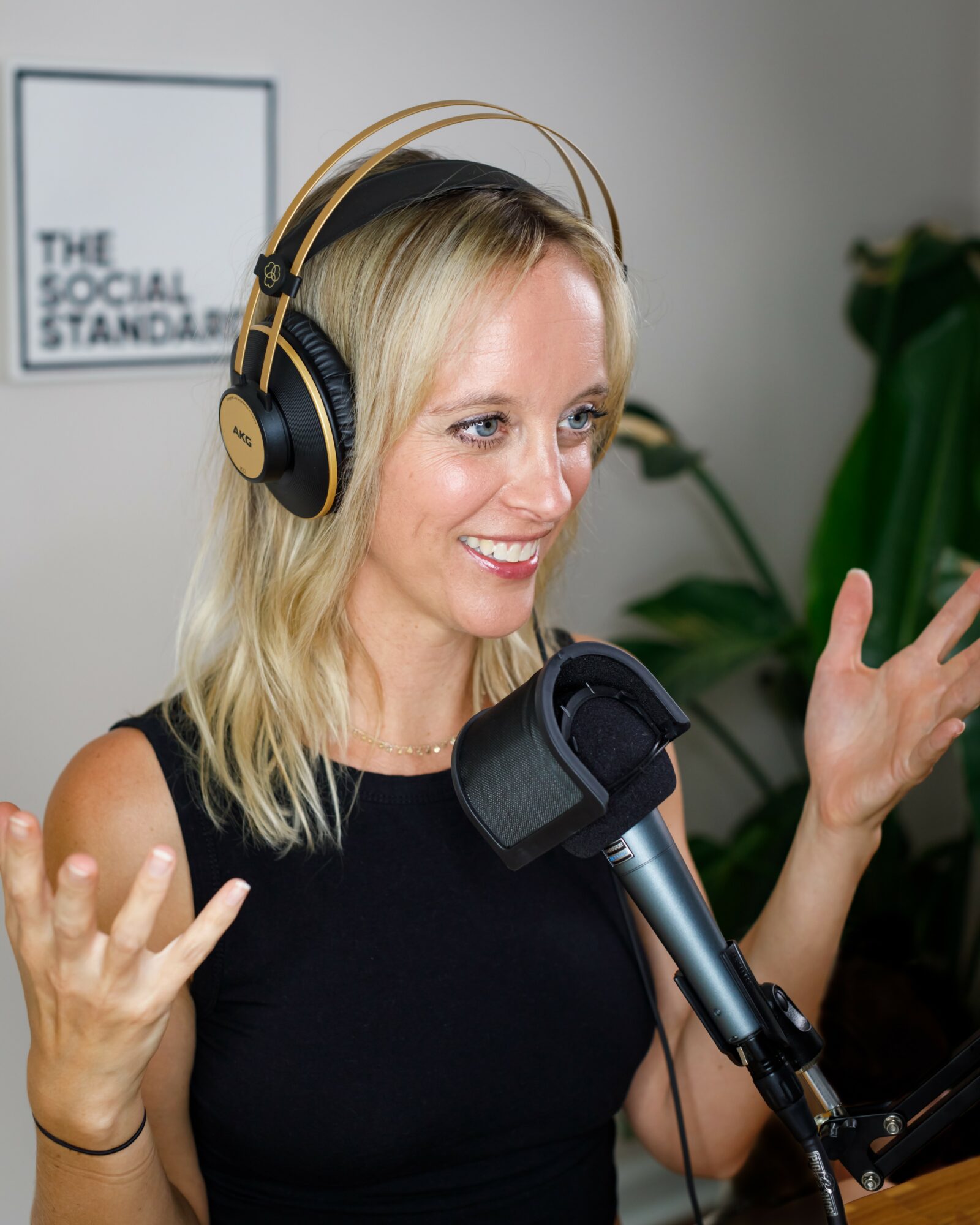
Today we’d like to introduce you to Jess Phillips.
Alright, so thank you so much for sharing your story and insight with our readers. To kick things off, can you tell us a bit about how you got started?
I come from a family of entrepreneurs, so starting a business was always when, not if. I had one specific goal: do it before I turned 30.
Before The Social Standard, I was employee number two at a Pinterest influencer agency, joining as COO and running sales from day one. I built that company into a multi-million dollar agency. The New York Times acquired it six months after I left. Watching something you built from nothing get acquired by a 170-year-old institution is surreal — but I didn’t leave searching for something. I left because I was ready, the timing was right, and I had been planning this for years.
It was 2014. The influencer marketing space was new and genuinely chaotic, and that chaos was the opportunity. I named the company The Social Standard because the industry had no standard — not in how brands ran campaigns, not in how the creator ecosystem functioned. I wanted to define what good looked like.
So I started from zero. One-bedroom apartment, no team, no clients. Nine hours a day, five days a week, cold outreach. When I needed to get in front of people in New York, I flew out with no revenue and slept on my girlfriend’s couch to make the budget work. Those trips had an energy I still think about — something about being that scrappy and that focused on building that you just cannot manufacture later.
The Equinox meeting is one I’ll never forget. The account manager at their agency had me running around New York in the rain, hitting multiple stops for the right sandwiches, the right smoothies, signing in with everything balanced in my hands. This was before DoorDash existed. I didn’t complain. I didn’t push back. I just did it. The following week, a $30,000 contract landed in my inbox.
That was relief. Pure relief. Then my second client came in: L’Oreal, at $500,000. That’s when I knew I was on to something big.
Today The Social Standard works with brands like Adobe, Fiat Chrysler, Seiko, and Hinge. Our average client tenure is four years. In this industry, 18 months is the norm.
We all face challenges, but looking back would you describe it as a relatively smooth road?
Anything I’ve ever built that’s been worth it has been hard to build. This was no different.
The first real wall I hit was deciding to start a family. I wanted to be both a growing entrepreneur and a fully present mother, and figuring out how to hold both of those things without dropping either one took real intention. I took ten weeks completely off with my first child. Before I left, I trained my account manager to take over my accounts and put my sales lead in position to handle the bigger decisions. We built a structure, and it held.
What that time away actually taught me was that I had been holding on to things I didn’t need to hold. It was a trial by fire for my team — they had to figure out how to operate without constantly relying on me, and they did. Stepping back forced me out of founder-and-executor mode and into founder-and-leader mode, and that shift changed everything.
Six months after my first baby, Adobe came in. Adobe became our largest lines of revenue for the next seven years. I think that’s the universe confirming what I should have understood sooner.
After that first child I also made a decision I’ve never walked back: I don’t work Fridays. From that moment on, Fridays were off. I built flexibility into my schedule for baby classes, doctor’s appointments, all of it — because being present for my family was never going to be something I negotiated away. I have three children now, and I’ve run that same handoff process three times. Each time the structure has been sharper and the business has come out stronger on the other side.
Beyond that, the struggles most entrepreneurs know well — hiring, the bad egg, the employee who takes more than they give, the complexity of managing a growing team of humans — we’ve had our share. Finding the right people as you scale is never easy. But by and large, we’ve built something with genuinely good people, and that makes the hard parts workable.
The through line in all of it is structure. Every time something felt fragile, the answer was a better framework, not more hustle.
We’ve been impressed with The Social Standard, but for folks who might not be as familiar, what can you share with them about what you do and what sets you apart from others?
The Social Standard is a full-service influencer marketing agency. We build and run influencer marketing programs for brands like Adobe, Fiat Chrysler, Seiko, Hinge, and Zendesk — strategy, creator identification, campaign execution, and paid social integration, all under one roof.
What we specialize in is closing the gap between where a brand’s influencer program is and where it needs to be to actually move the business. That gap is almost never about budget. It’s about foresight, the right creator relationships, and a team that operates like it has skin in the game.
Three things set us apart.
We are fully agnostic. We don’t represent creators and we aren’t beholden to proprietary technology. Every creator we recommend is right for the campaign, full stop. No talent roster conflicts. No platform investments to recoup. Just the best recommendation for the brand in front of us.
We evaluate creators with a precision that takes 15 years to develop. We look at the full picture — the engagement, the community, the content, the relationship a creator has built with their audience over time — and we identify exactly how and where to deploy them for maximum impact. It’s a human process, built on pattern recognition no tool can replicate, and it’s one of the reasons our campaigns perform the way they do.
We embed. We don’t manage campaigns from the outside. We operate inside our clients’ teams, at their cadence, inside their workflows. A client champion brought us from Adobe to Zendesk to a third company — that relationship has now spanned nearly ten years across three organizations. That’s not a vendor relationship. That’s a partnership.
What we’re most proud of is our average client tenure: four years. The industry average is 18 months. That number says everything we need it to say.
Any big plans?
One of the things I love most about this industry is that there is always something new. Never a dull moment in influencer marketing, and the next few years are shaping up to be some of the most exciting we’ve seen.
Podcasts are a big one for us. The audio market has exploded over the last five years and we’re watching genuine communities flourish there in ways that are hard to ignore. The role of influencer marketing inside that space is still being defined, and we intend to be at the front of that conversation.
B2B influencer marketing is another area where we see enormous growth coming. We’ve been building in this space for years — on LinkedIn, on YouTube, at conferences — and what was once a niche is becoming a real priority for brands trying to reach professional audiences. We’re already seeing the shift accelerate and we’re well positioned for it.
AI is the one I find myself thinking about the most. What we’re seeing right now is algorithms pushing the highest-performing video content, which is great for reach but not always great for building deep community. Deep community gets built through daily interactions and real conversations — which is exactly why podcast audiences are so strong. AI is about to change that equation in a significant way.
Creators already have enormous libraries of content. They’re going to train AIs to sound like them, interact with their followers, and build the kind of ongoing community that the current algorithm doesn’t reward. For brands, that means stronger communities and audiences that are far more ready to buy. That’s a very big deal for influencer marketing.
We see this playing out especially powerfully in B2B. A lot of B2B experts have spent years being interviewed, writing blogs, publishing on Substack — that’s a deep archive of written text, and AI pulls from text as its primary source. Those creators are about to have an outsized advantage in building their online presence, and the brands that get in front of those communities early are going to benefit enormously. Meta is already signaling where this is headed — they’re one of the biggest AI investors in the world right now, and they didn’t get there by accident.
On the business side, we moved from California to Tennessee five years ago and we’re looking to grow the team over the next 12 months.
The short version: we started this agency to set the standard in influencer marketing, and the industry keeps giving us new ground to set it on. That’s not a problem. That’s exactly where we want to be.
Contact Info:
- Website: https://www.sostandard.com
- Instagram: https://www.instagram.com/socialstandard_/
- LinkedIn: https://www.linkedin.com/in/jessica-n-phillips/
- Youtube: https://www.youtube.com/channel/UCVNU8pBE7ZgkQA9ybgkw6Gw
- Other: https://open.spotify.com/show/4FBGwm80c09kbJaVlWPht2?si=3qJfFZoWRoikzySVNrBPQw&nd=1&dlsi=a3c5e03d818043eb