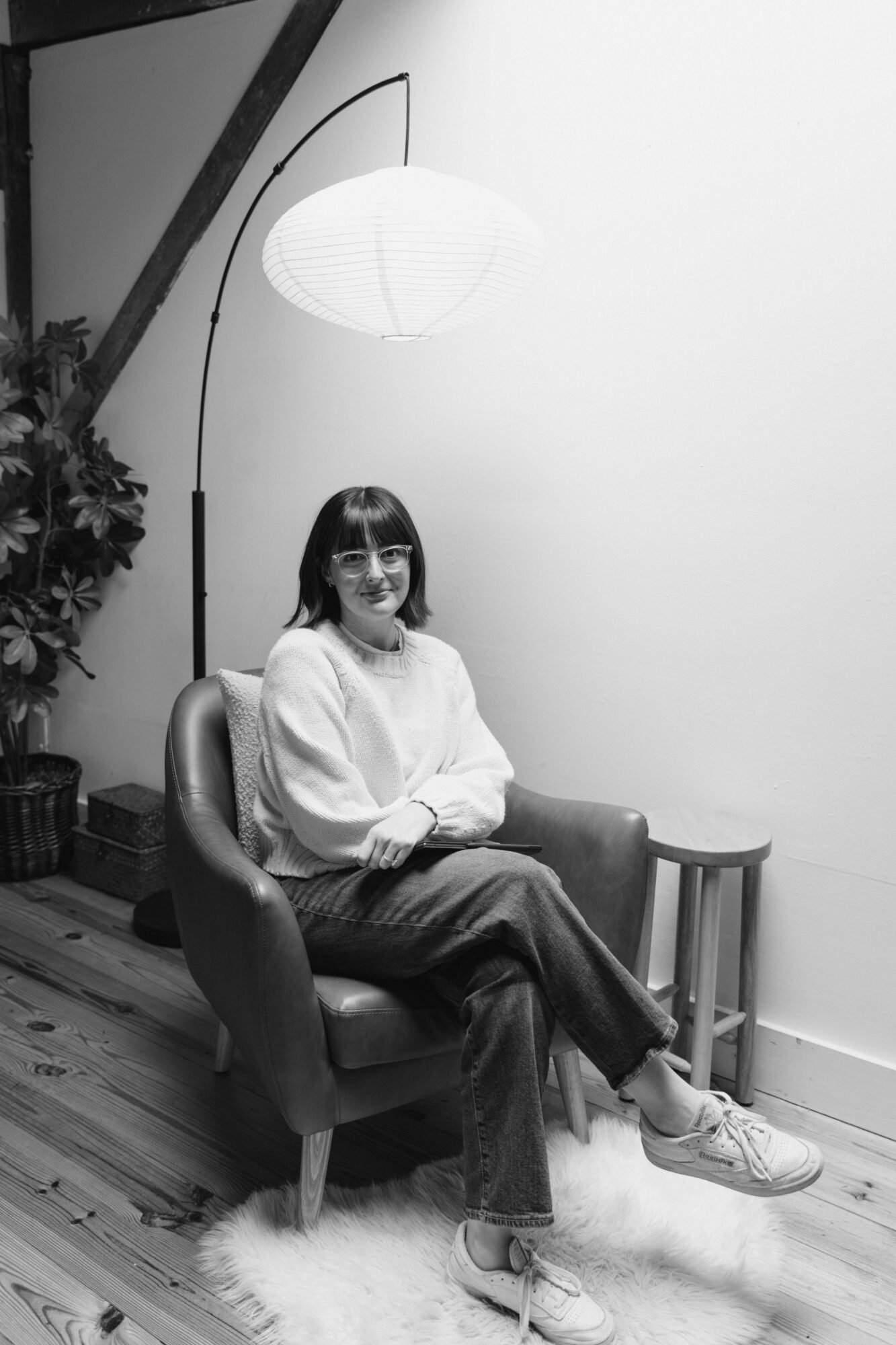






Today we’d like to introduce you to Marlow Mowery.
Hi Marlow, please kick things off for us with an introduction to yourself and your story.
I’ve always been a sensitive, intuitive, and curious person. Growing up, the unspoken information people shared felt as important, sometimes more important, than the things they said out loud. I remember being enthralled in my high school psychology class and wanting to understand what made people think and perceive things the way they do. My own experiences with chronic illness, loss, and exploring the beliefs I grew up with made me even more interested in how people make sense of themselves and what shapes the patterns they carry.
I completed a bachelor of science in Psychology at Belmont University in 2019, then returned to graduate school in 2021 for my master of arts in Clinical Mental Health Counseling. I began my career in community and group practice settings here in Nashville, with an interest in adults who have experienced trauma and loss. Over time, I noticed I was especially drawn to working with reflective, deep-feeling people who had learned to be capable, accommodating, or “easy” in order to feel accepted. For some, the pain came from a specific event; for others, it came from years of quieter, cumulative hurts. Many experienced a blend of the two. As I recognized how meaningful this work felt for me, I chose to center my practice on supporting these clients.
After becoming fully licensed in 2025, I opened my solo practice, Marlow Mowery Counseling, in East Nashville. My work centers on attachment therapy, EMDR, schema therapy, and narrative approaches. I help clients understand the origins of their patterns and reconnect with parts of themselves they’ve quieted or questioned. Building a practice that aligns with this kind of work has been a dream of mine for many years and I’m grateful to support people on their quest to better understand themselves.
Alright, so let’s dig a little deeper into the story – has it been an easy path overall and if not, what were the challenges you’ve had to overcome?
When I first graduated, I felt a strong desire to learn everything all at once. I wanted to be the most effective therapist I could be, and I worried that if I didn’t know enough, I wouldn’t be able to serve my clients well. So, I threw myself into books, trainings, and any resource I could find. It didn’t take long for that sense of urgency to turn into feelings of overwhelm and burnout.
Another challenge I faced was gaining confidence in the type of therapist I wanted to be. There are so many different ideas out there about what “good therapy” should look like, and early on I felt a lot of pressure to fit into those various molds. In some settings, I was encouraged to adopt a very structured, educational style, even though that didn’t really match my strengths or the way I naturally connect with people. I worried that if I didn’t practice that way, I wouldn’t be seen as competent or effective.
These two challenges were really connected. Over time, I’ve learned to trust my curiosity and focus my energy on the areas that genuinely excite me, rather than trying to be everything to everyone. There are many meaningful ways to do this work, and clients tend to be drawn to the approach that feels right for them. Embracing what I do best has ultimately helped me provide better, more authentic care.
Great, so let’s talk business. Can you tell our readers more about what you do and what you think sets you apart from others?
Marlow Mowery Counseling is my solo private practice in East Nashville. My work centers on supporting reflective, deep-feeling adults who carry patterns that began in early relationships. Many of the people I work with grew up needing to be accommodating, good, or without needs to feel accepted. Others come in with long-standing self-doubt, people-pleasing, perfectionism, or a sense of being disconnected from their own needs and identity.
My approach draws from attachment-based therapy, schema therapy, EMDR, and narrative work. I help clients understand where their patterns originated, what those patterns protected, and how they continue to show up in the present. I am not a very directive therapist and I do not rely heavily on protocols or one-size-fits-all techniques. I focus on depth, curiosity, and building insight that can create meaningful and lasting change.
One of the things that feels most important in my practice is the attention I give to meaning-making and inner narrative. I work with clients to explore not only what happened in their lives but how they learned to interpret those experiences and what those interpretations taught them about their worth, identity, and relationships. I am especially drawn to clients who feel they have lost touch with themselves or have shaped themselves to be more acceptable to others. Helping people unlearn those patterns and reconnect with who they truly are is a central part of my work.
Brand-wise, I am most proud that my practice feels like an extension of the therapy itself. I hope that it feels steady, reflective, warm, and grounded. My intention is for clients to feel deeply seen and understood, and to have the space to explore the deeper layers of their lives without feeling rushed or pushed into quick fixes.
At its heart, my practice is about helping people understand who they became in order to feel safe, and supporting them as they uncover who they have been all along.
Networking and finding a mentor can have such a positive impact on one’s life and career. Any advice?
One of the most meaningful sources of support in my early career was the supervisor I worked with while earning my licensure hours. Having someone who could reflect with me, challenge my thinking, and help me develop my clinical voice made a big difference in those first years. Her guidance helped me trust my instincts and reminded me that there are many ways to be an effective therapist.
I also think there is a lot of value in paying attention to people whose work you admire. Sometimes that includes those who specialize in similar areas, and other times it’s clinicians who work in entirely different spaces but approach their work in a way that feels aligned with you.
For anyone looking to build community in this field, it can be helpful to stay curious about who resonates. Notice whose perspective feels grounding or inspiring. Attend networking events and trainings, and reach out for a cup of coffee when it feels right. Even informal connections or brief conversations can offer their own form of mentorship. There is so much we can learn from each other.
Contact Info:
- Website: https://www.marlowmowery.com
- Instagram: https://www.instagram.com/therapybymarlow/