




Today we’d like to introduce you to Kim Coker.
Alright, so thank you so much for sharing your story and insight with our readers. To kick things off, can you tell us a bit about how you got started?
I never really set out to own a business. It honestly wasn’t something I had ever pictured for myself.
When the previous owner of The Pottery Room first approached me about buying the business, I was completely caught off guard. I remember thinking, “How does someone even buy a business? There’s no way I could afford to do something like that.” But my husband at the time ended up talking with her, and when he came back and told me the number she was asking, I realized it was actually possible. It wasn’t some completely unattainable dream. It was something I could potentially make work. And I remember thinking, “Well… why not?”
At the time, I had this three-year plan. I was going to continue teaching full-time while slowly transitioning into running The Pottery Room. Three years seemed like plenty of time to figure everything out and make the switch. Of course, life had other plans. Instead of three years, I ended up spending six and a half years doing both. I was teaching full-time and running The Pottery Room, trying to balance two completely different careers and somehow make it all work. It was exhausting at times, but I also learned so much during those years. Then, in the fall of 2022, I finally made the decision to resign from teaching and run The Pottery Room full-time. And honestly, I’ve never been happier with a decision.
Being a business owner definitely comes with its own unique set of challenges. There are days when I wonder why I ever thought this was a good idea. Owning a business takes far more time, energy, and mental space than I ever imagined. And then there are the completely random emergencies you never think about when you picture yourself owning a pottery studio. Power outages. Electrical problems. Plumbing issues. Severe weather events. Flooding in the middle of the night. All the glamorous parts of business ownership that nobody puts in the brochure.
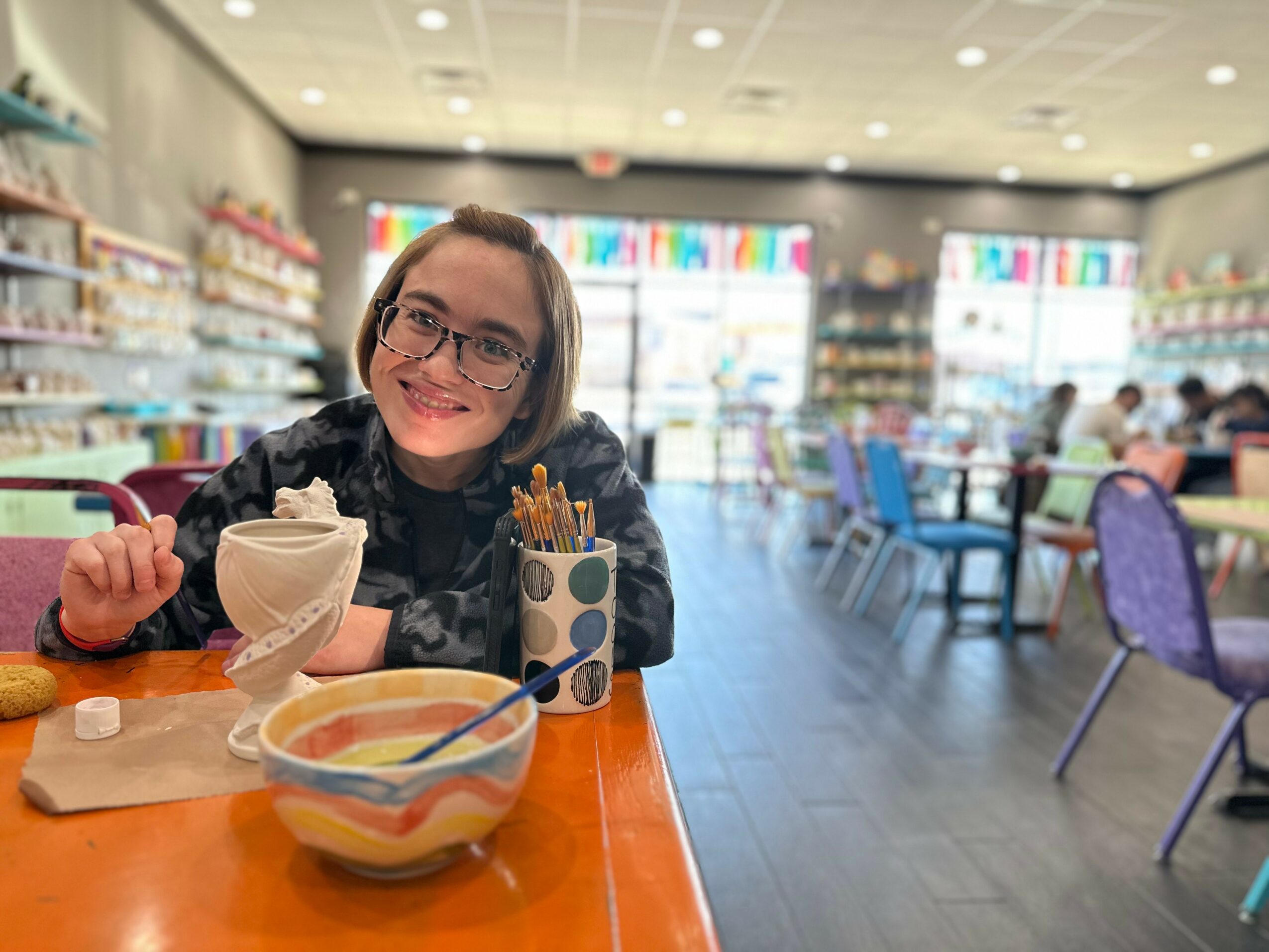
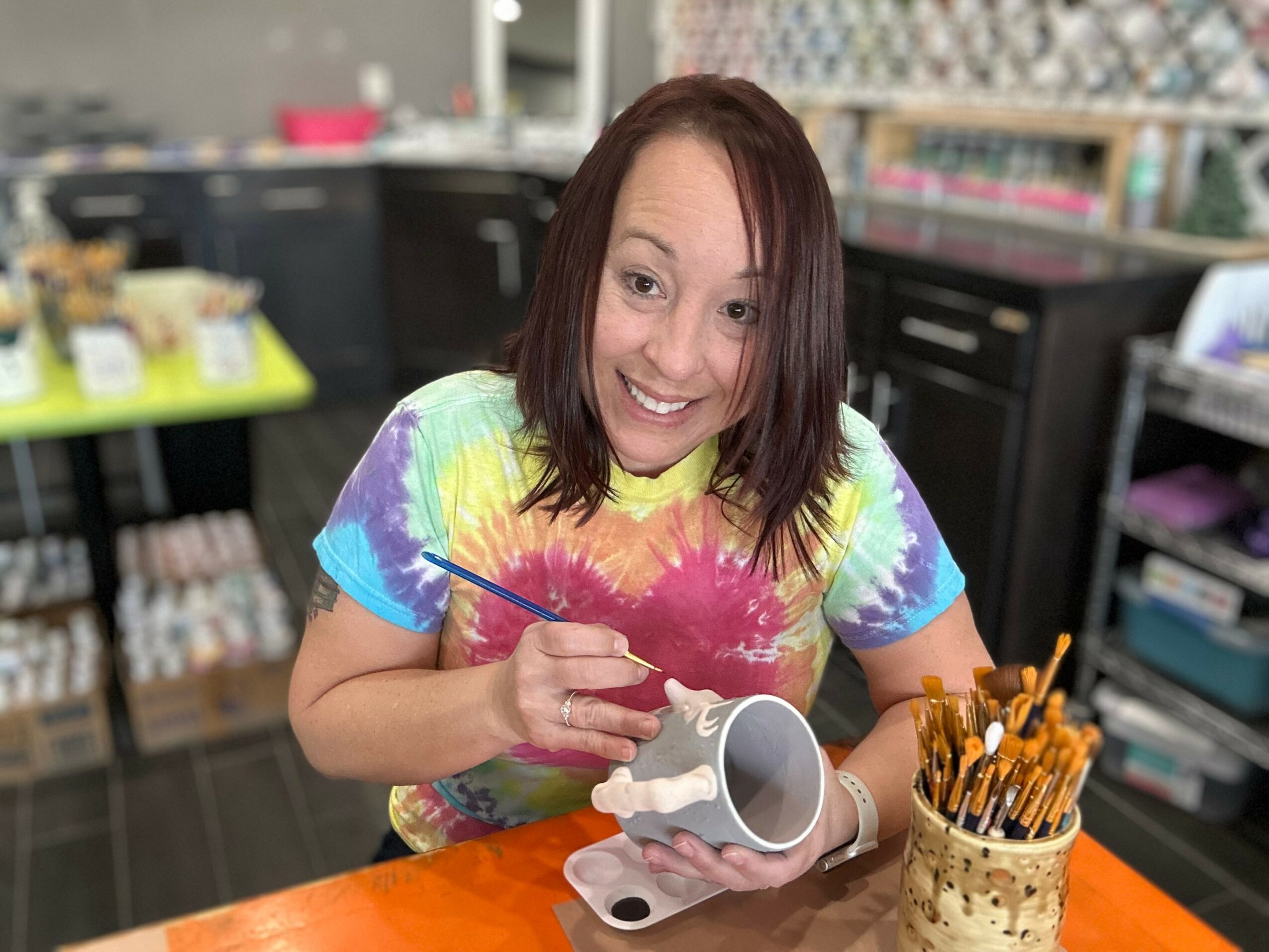
But even with all of that, I genuinely love what I do. I love being able to create. I love being surrounded by creativity every day. And probably most of all, I love being able to share something that I enjoy with other people. Watching someone come into the studio with an idea, sit down with a piece of pottery and some paint, and then leave with something they created themselves is incredibly rewarding.
When I look back, it’s kind of funny to think about that first conversation and how surprised I was by the idea of owning a business. I didn’t have some lifelong dream of becoming a business owner. I just had someone give me an unexpected opportunity, a thought that it might actually be possible, and a moment where I decided to take a chance. And that one “why not?” ended up changing my life.
I’m sure it wasn’t obstacle-free, but would you say the journey has been fairly smooth so far?
I think one of the biggest struggles for me has been realizing that I was never actually trained to own a business. I went to school to become an elementary teacher and a science teacher. I knew the science behind clay and glazes. I understood chemistry, I understood what happens inside a kiln, and I knew how to teach. But none of that really prepared me for the business side of owning a pottery studio.
I had to figure out how to rent a location. I had to put utilities in the business’s name. I had to figure out loans and financing so I could pay for different parts of the business. There were so many things where I was basically just sitting there thinking, “Okay… I guess I’m going to figure this out.” And that has pretty much been my experience as a business owner. I’ve constantly been learning as I go. Sometimes I joke that I’m just making it up as I go along, but honestly, there’s a little truth to that.
Even now, I still deal with imposter syndrome. There are times when I look around and think, “Am I really a business owner? Does somebody know that I have no idea what I’m doing?” I think there’s this expectation that once you own a business for a certain amount of time, you’re supposed to suddenly have all the answers. But I’ve learned that you never really stop learning. There’s always something new to figure out.
Another huge challenge has been finding really good staff. Everyone says that hiring good people is difficult, but I think it’s especially challenging when you’re a small business. I don’t need someone who is just there to work a shift and collect a paycheck. I need people who genuinely care about the business and understand what it means to be part of a small, local business. Because every person who works here becomes part of the experience we’re creating. I need people who are willing to give their best every day, who care about our customers, who want people to walk out of The Pottery Room loving the experience they had here.
That’s probably one of the biggest things I’ve learned as an owner. The business isn’t just about the pottery or the paint or even me. It’s about the people who help create the atmosphere and make this place what it is. And I think that’s why finding the right people matters so much to me. I want the people who work here to believe in The Pottery Room and care about it the way I do. Because when you find those people, you know you’ve found something really special.
Thanks for sharing that. So, maybe next you can tell us a bit more about your work?
What makes The Pottery Room unique is actually something that might seem pretty simple at first. We know exactly what we want to be good at.
The Pottery Room is a walk-in, paint-your-own-pottery studio, much like many others you’ll find across the country. And recently, thanks in part to TikTok and social media, paint-your-own pottery has really made a comeback, which has been wonderful to see, especially after COVID. Our industry was hit pretty hard during that time because what we do is so hands-on and personal. You have to be in the same room with people. You have to help them choose a piece, pick their colors, figure out how to paint it, and then get it glazed and fired. It’s an experience that really depends on that face-to-face interaction.
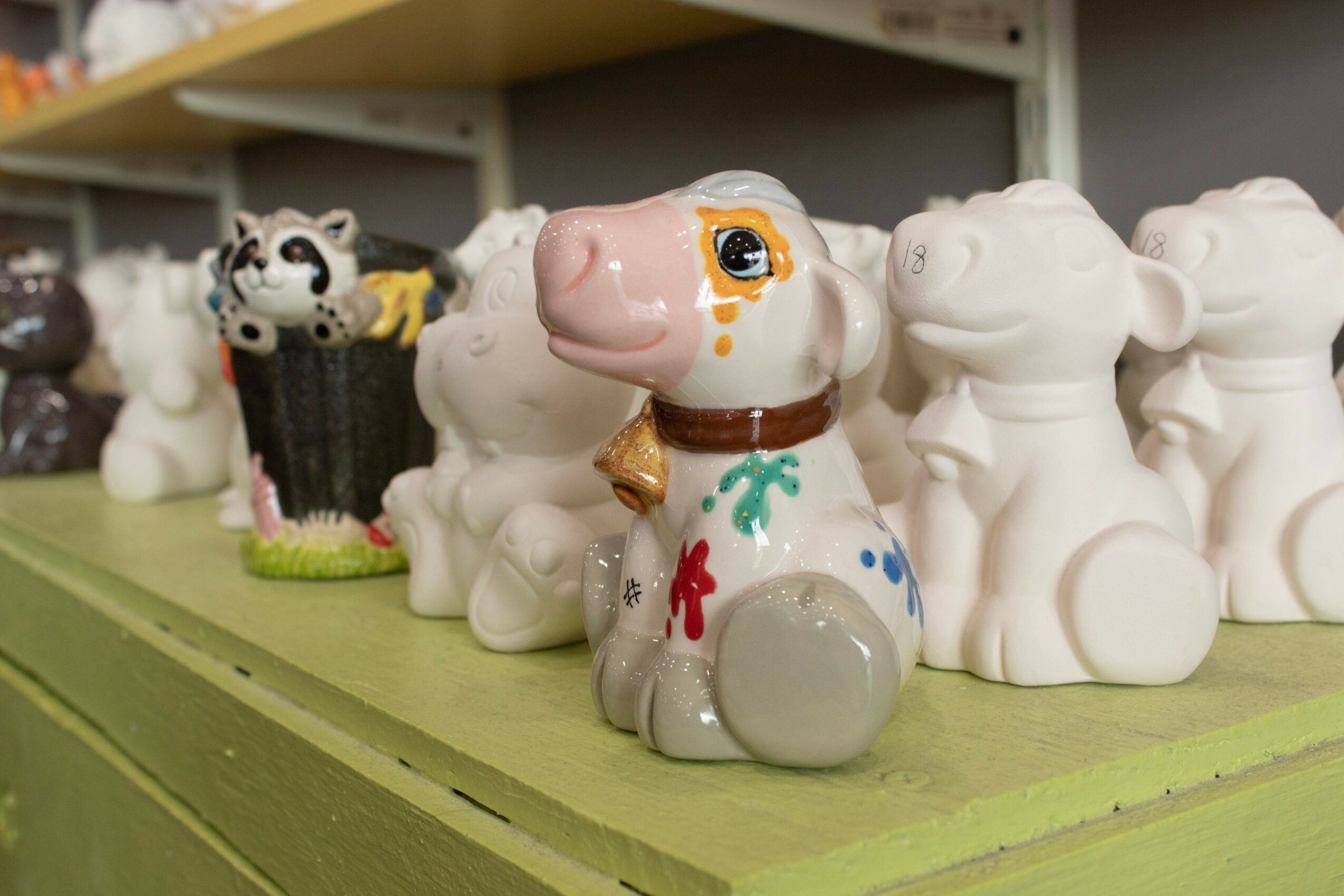
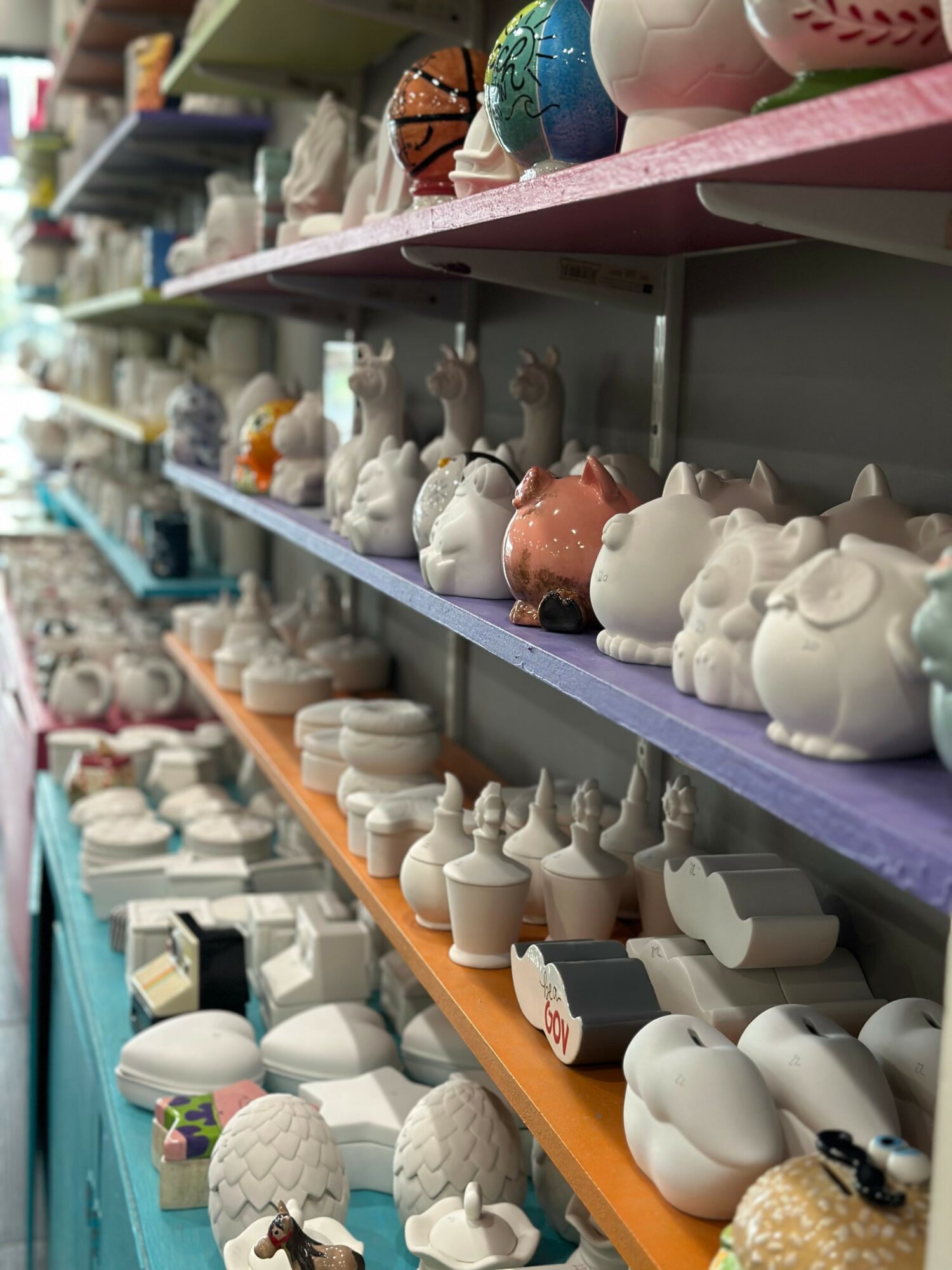
One of the things I’ve always wanted The Pottery Room to be known for is our selection. We focus entirely on paint-your-own pottery. We don’t try to be everything to everyone by adding canvas painting, wood signs, glass fusing, or a dozen other types of crafts. Those are all great activities, but I’ve always felt that if we focus on ceramic arts, we can really do it well. That means we can offer a huge and constantly changing selection of bisque pieces for people to choose from. You can walk into the studio and see hundreds of things you could paint, from really simple pieces to more elaborate projects.
We also try very intentionally to have pieces at a wide range of price points. That part is actually really important to me personally. I grew up in a large family, so I know what it feels like when an activity sounds fun but you have to think about whether you can afford to participate. I never wanted The Pottery Room to feel like something that was only accessible to certain people. I want families, kids, teenagers, adults, grandparents, everybody, to be able to find something they can enjoy without feeling like they have to spend a fortune.
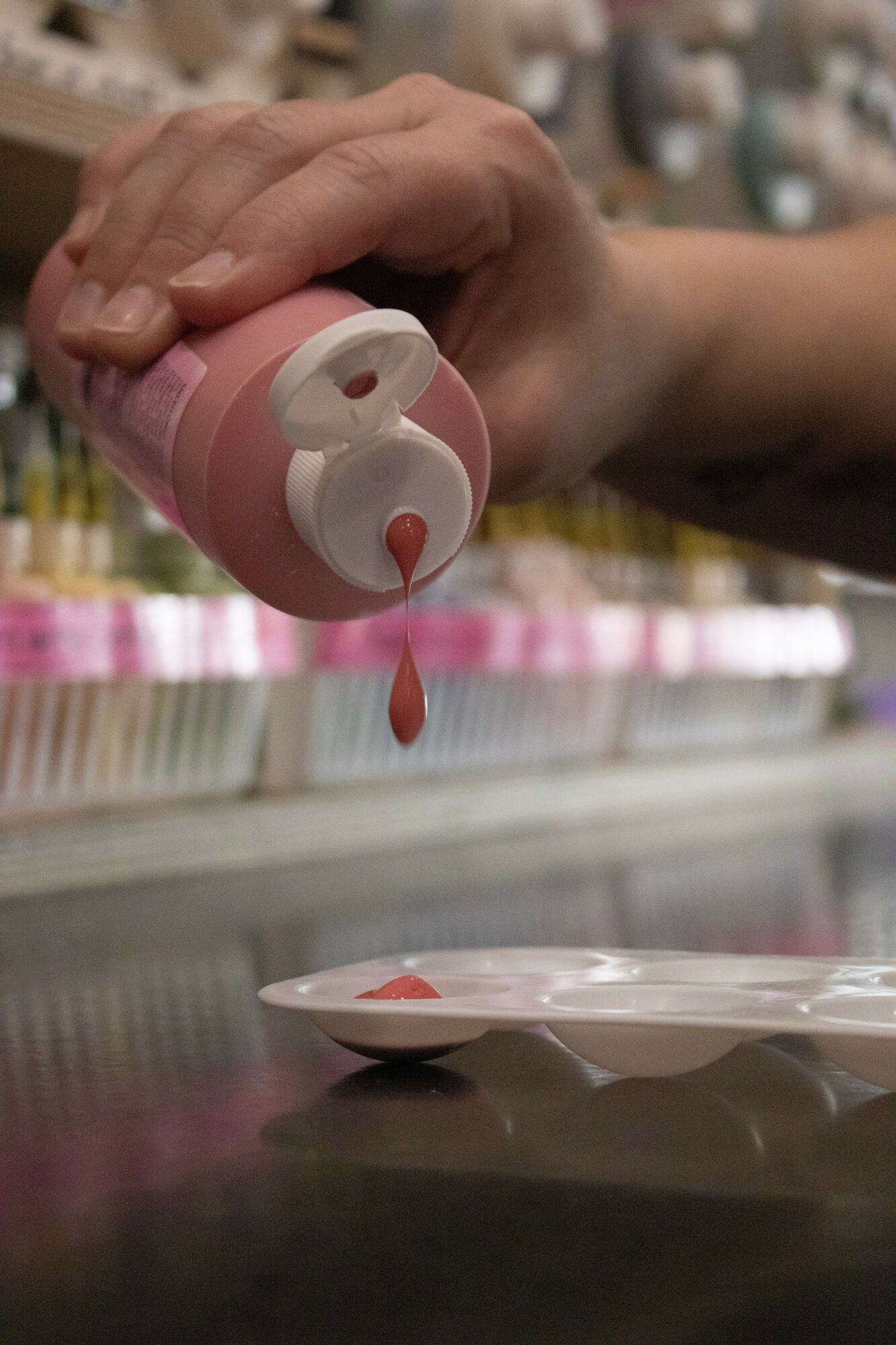
And then there’s the color. We have close to 200 different glaze choices, which is kind of ridiculous in the best possible way. So you can walk in and have hundreds of pieces to choose from, and then you get to the paint station and suddenly you have this enormous collection of colors and finishes to choose from, too. Our staff helps guide people through that process, but ultimately, they get to create something that is completely their own.
We also work really hard to get pieces processed quickly. There’s something really exciting about painting something, handing it over, and then coming back a week later to see what happened in the kiln. I love that moment when someone sees their finished piece for the first time.
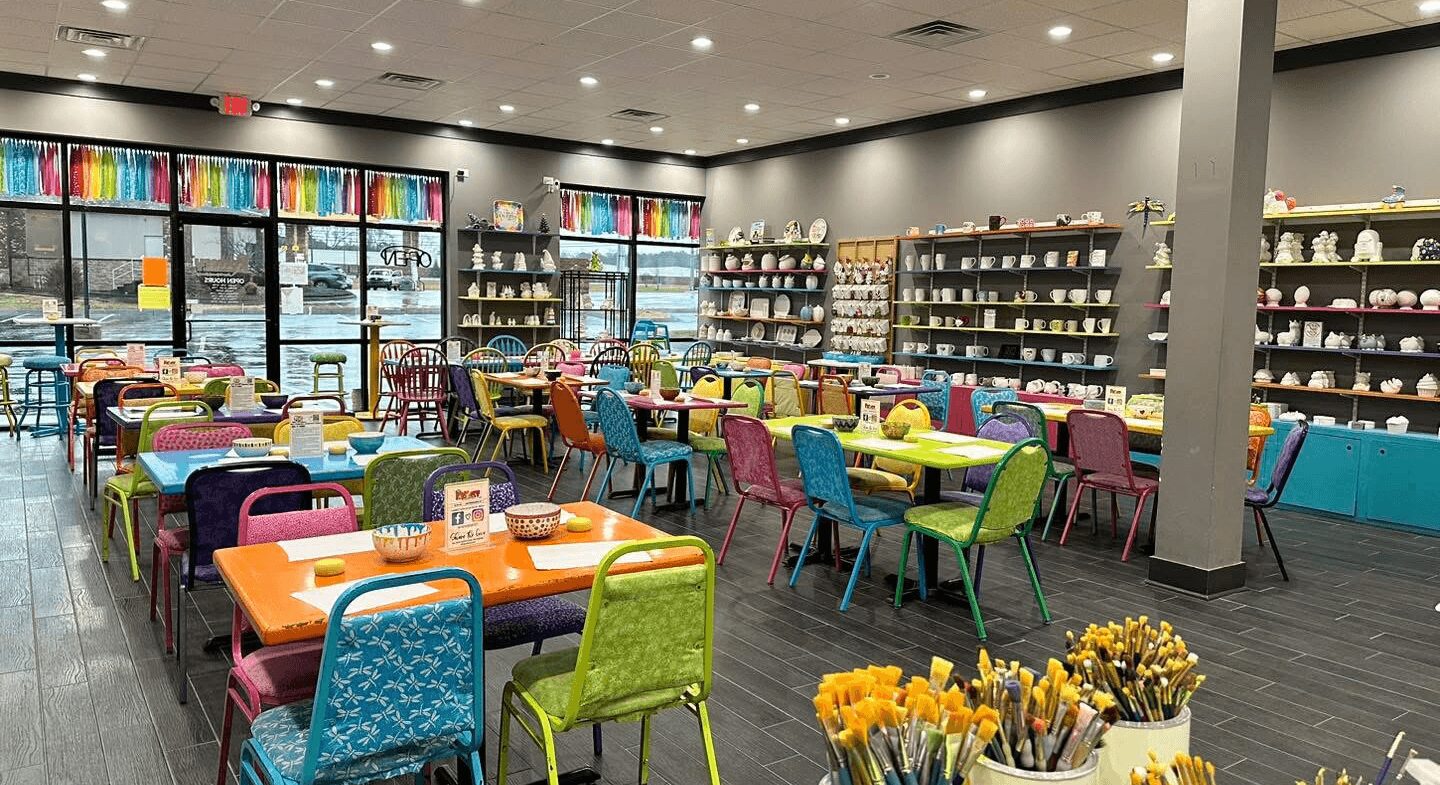
But I think what I’m most proud of has less to do with the number of pieces we carry or the number of glaze colors we have. I’m most proud of the environment we’ve created. I wanted The Pottery Room to feel warm, welcoming, colorful, and fun. I want people to walk through the door and immediately feel like they can relax, get creative, and just enjoy themselves for a little while. For me, the best part of owning The Pottery Room is seeing people come in as customers and leave with something they created themselves. It doesn’t have to be perfect. It doesn’t have to look like anything anyone else has made. It just has to be theirs. And knowing that I’ve created a place where people can come in, be creative, make memories together, and leave excited about something they made with their own hands is probably the thing I’m proudest of as a creative owner.
What sort of changes are you expecting over the next 5-10 years?
It’s actually kind of hard for me to imagine exactly where The Pottery Room will be five or ten years from now, because when I look back at the last ten years, I’m amazed by how much has already changed. I just celebrated my 10-year anniversary of owning the studio in June, and when I think about the person who first walked into this business ten years ago, I don’t think I could have predicted what The Pottery Room would become. A lot of what we’ve done has been shaped by what people are asking for, what my staff comes up with, and honestly, what we see happening around us.
Our foundation will always be the walk-in experience. I really don’t want to lose that feeling that you can walk through the door on a random Thursday because you’re in the mood to make something, look around the shelves, find a piece that inspires you, and just sit down and create. There’s something really special about that spontaneity, and I think that’s a big part of what makes paint-your-own pottery different from a lot of other creative activities. But I would love to see The Pottery Room continue evolving into more of a destination for relaxation and self-care, too.
We’ve had people come in and tell us that the studio is almost therapeutic for them. They’ll come in during the week, put their phone away, pick out a piece, and just spend a couple of hours painting. They’re not necessarily there for a birthday party or a special occasion. They’re just there because they need some time to themselves. I love that. Our weekends can be incredibly busy, but during the week, we have this whole other group of people who are coming in because they want a quiet, creative space where they can just decompress. I think there’s a real opportunity there as people continue looking for ways to unplug and do something with their hands.
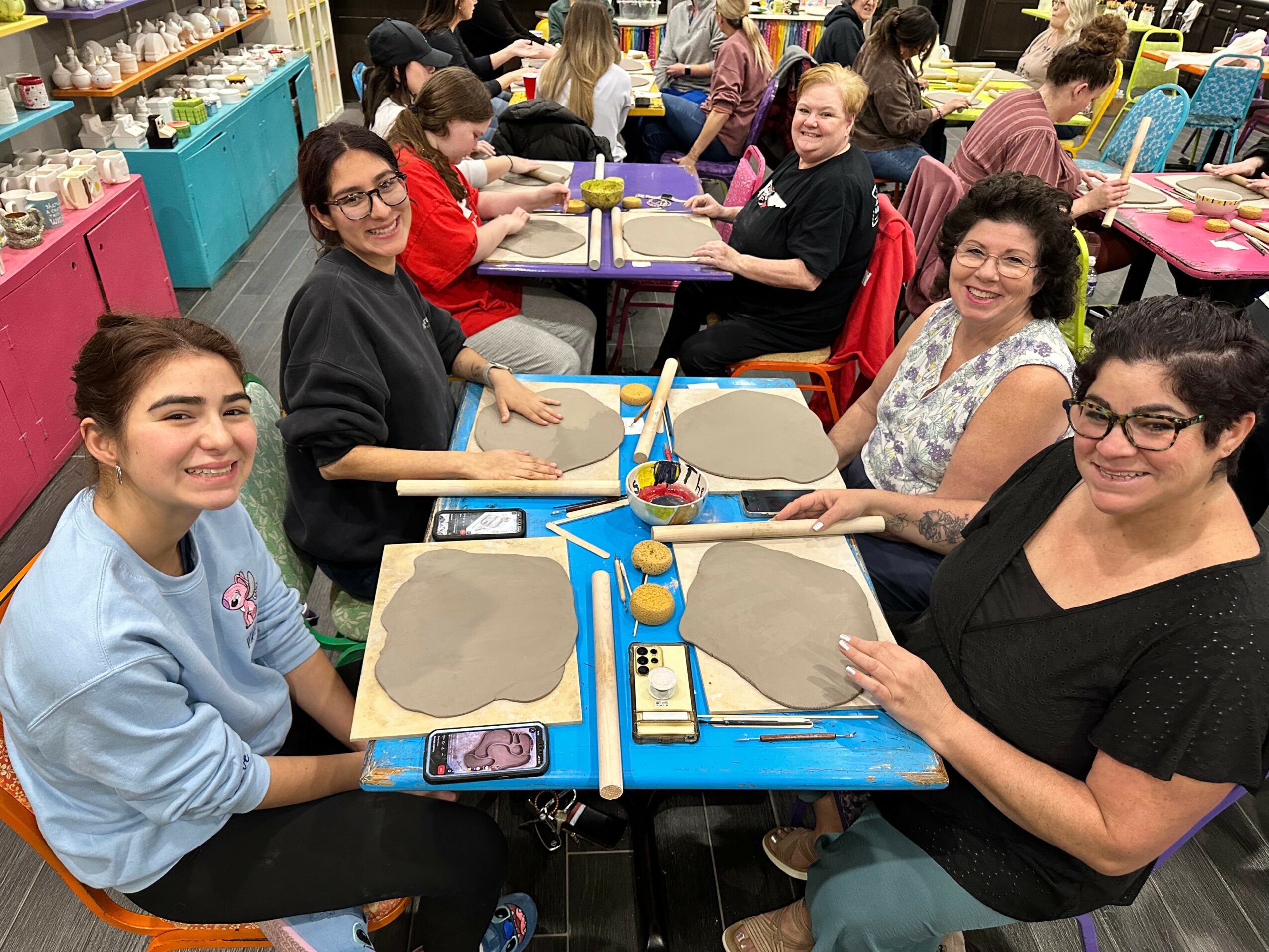
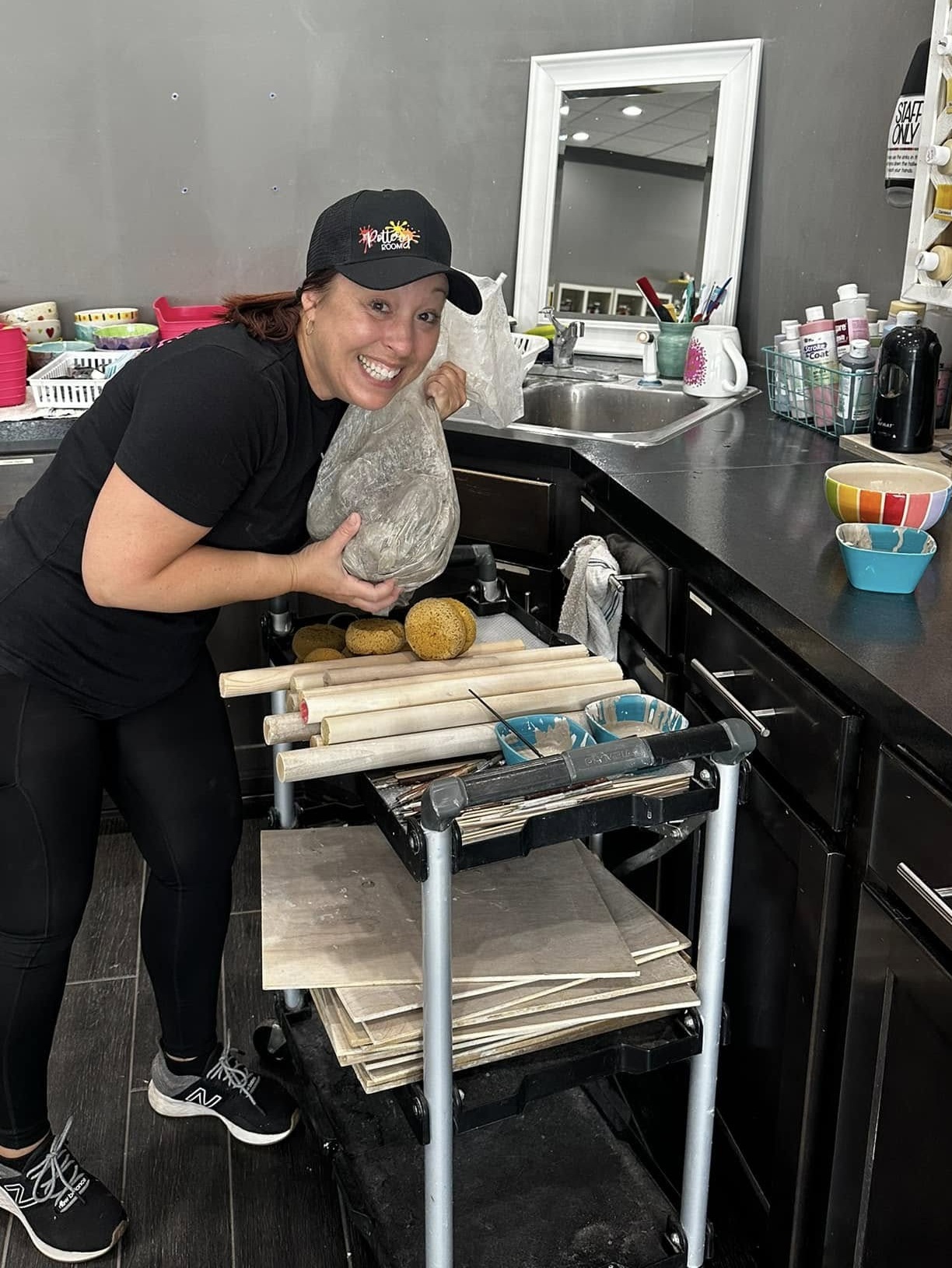
I’d also love to expand more into themed events and experiences. Things like girls’ nights, daddy-daughter date nights, team-building events, school groups, and charity events. We’ve actually had people ask us about doing a paint late night for years, so that’s something I’d love to finally try. We’ve recently started branching out into more hands-on clay experiences. We offer hand-building workshops where people actually start with raw clay, make their own piece, and then come back after it’s been fired to paint it. I teach those workshops myself, and I absolutely love seeing what people come up with. There’s something really rewarding about watching someone start with a lump of clay and turn it into something completely personal.
I think the next five to ten years will probably be a lot of experimenting. That’s really how I’ve approached the business from the beginning. Sometimes an idea comes from my staff. Sometimes it comes from a customer who says, “You should totally do this.” Sometimes I see something another studio is doing and think, “That could be really fun here.” And then we try it. Some things work beautifully, some things don’t, and that’s okay. I think there’s a lot of trial and error involved in running a creative business because you’re constantly trying to figure out what people want next. But even as we evolve, I don’t want to lose the heart of The Pottery Room. I want it to continue being a place where you don’t necessarily need a plan. You can walk in, wander through the shelves, find something that catches your eye, and think, “I want to paint that today.”
If we can continue growing the experiences we offer while still keeping that simple, spontaneous, creative feeling, I think that’s where I’d love to see The Pottery Room go. After ten years, I’ve learned that I don’t need to know exactly what the next ten years will look like. I just want to keep creating a place that gives people a reason to come in, slow down, and make something.
Pricing:
- All inclusive pricing ranging from $10-150 per item. Most popular pieces are in the $15-40 price range. The price is clearly listed on each piece and includes our wide-range of color choices as well as glazing and firing each piece in our kilns.
Contact Info:
- Website: https://thepotteryroom.com
- Instagram: https://www.instagram.com/thepotteryroom/
- Facebook: https://www.facebook.com/ThePotteryRoom/