


Today we’d like to introduce you to Jenna Brevig.
Hi Jenna, so excited to have you on the platform. So before we get into questions about your work-life, maybe you can bring our readers up to speed on your story and how you got to where you are today?
My story starts in South Florida. I was born in Coral Springs and grew up in Weston, Florida, in a family where creativity and performance were simply a part of everyday life.
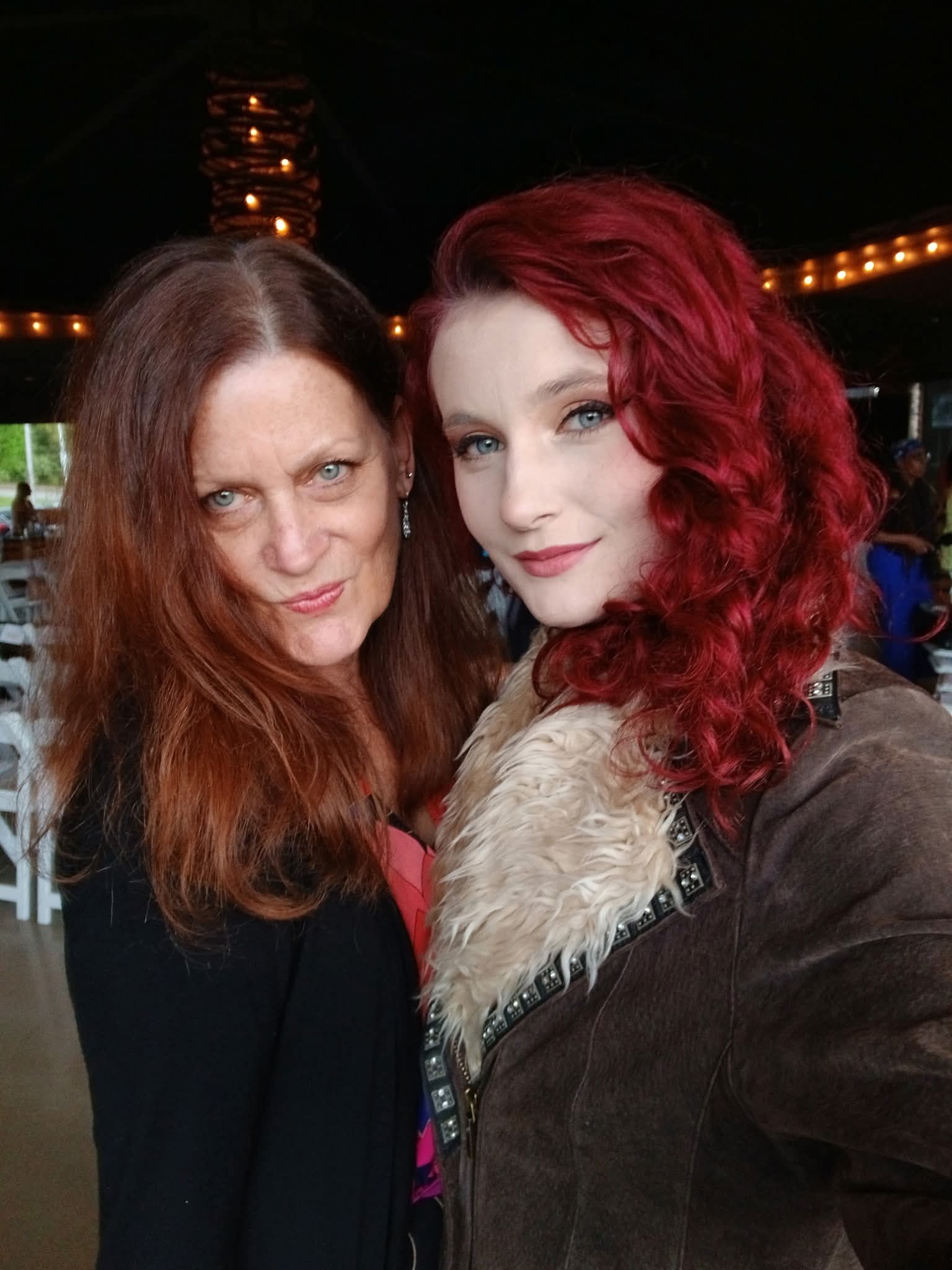
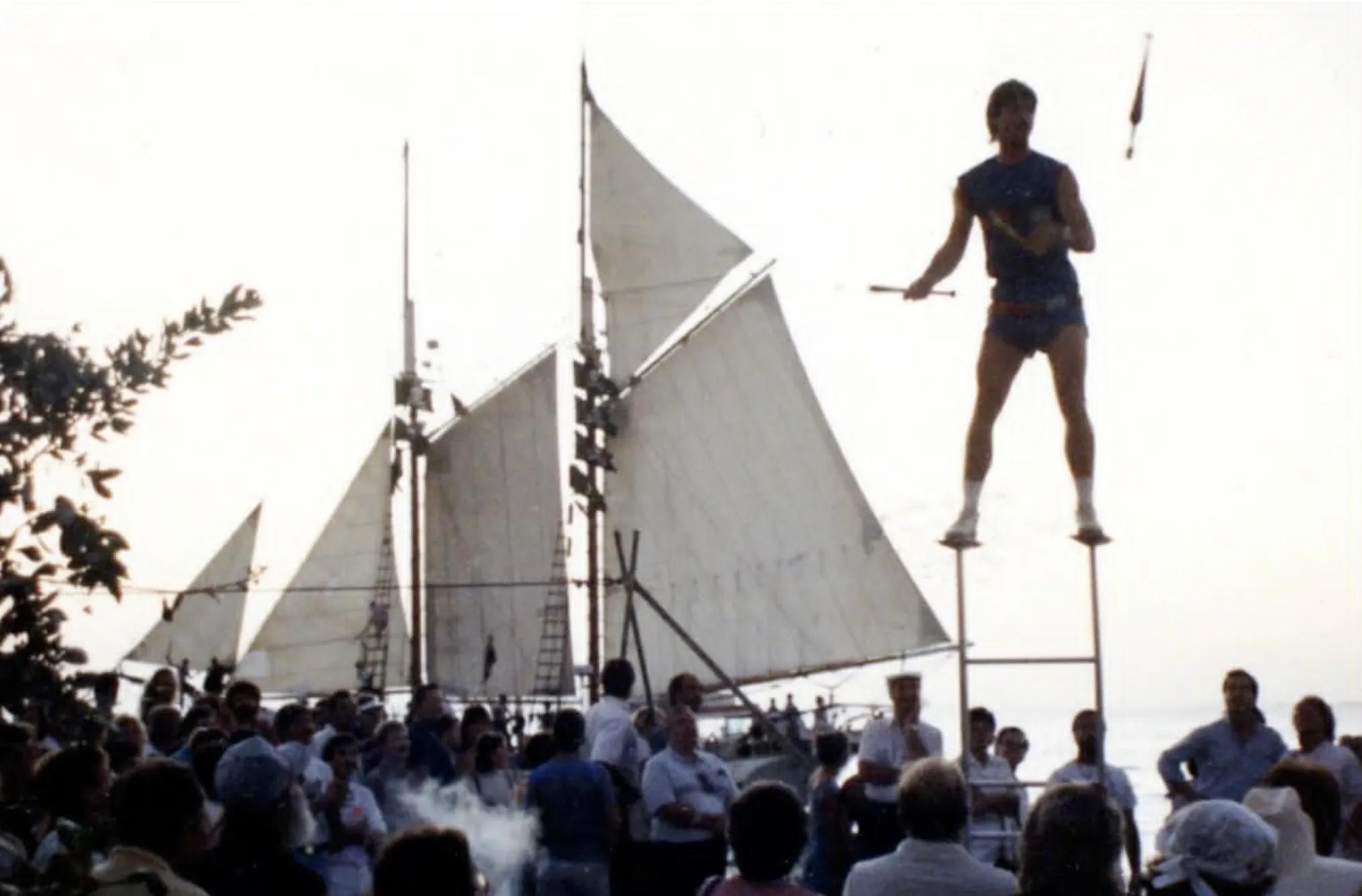
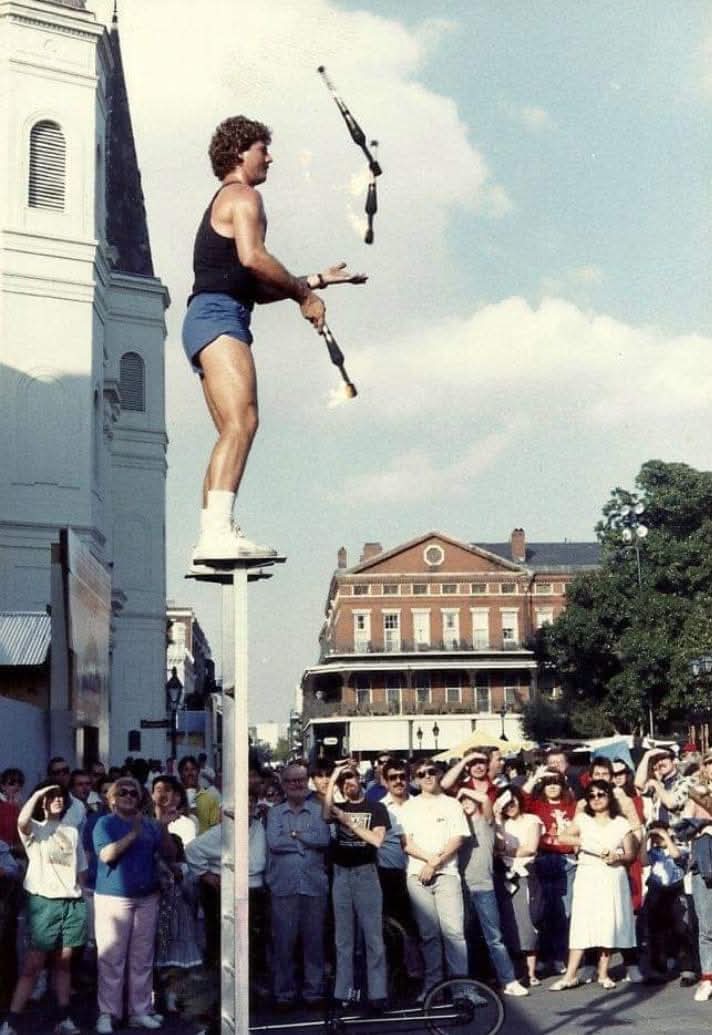
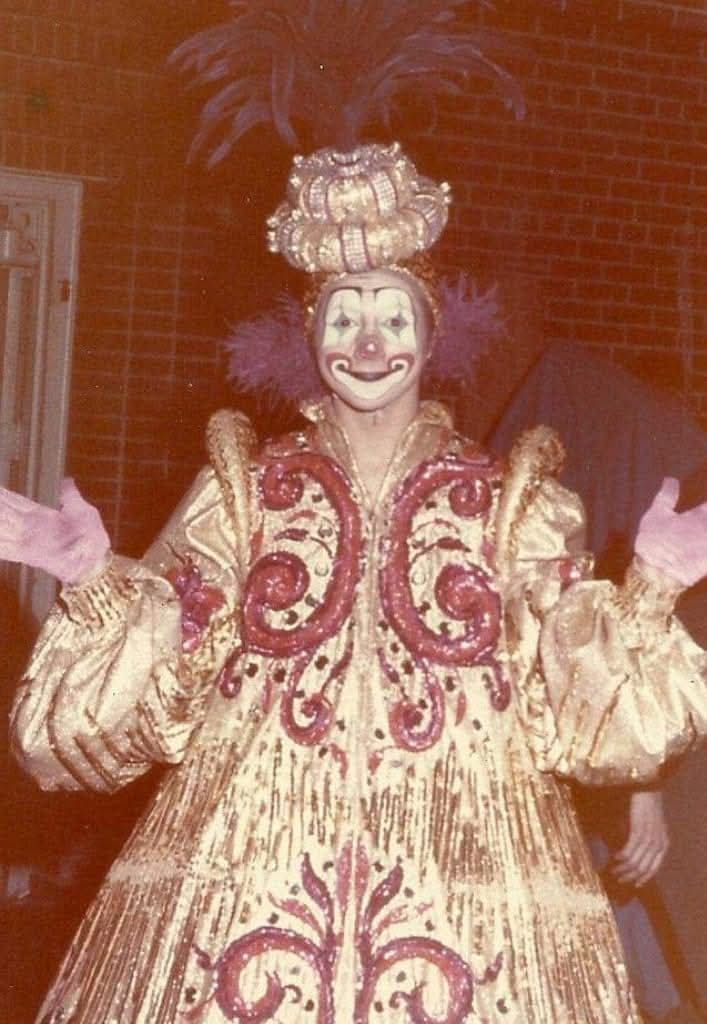
My dad, Michael James Brevig, was a professional performer. He traveled the world performing a juggling, free standing ladder and comedy act on cruise ships, and my mom, Sally Brevig, was also a dancer on cruise ships. That’s actually how my parents met. So before I ever understood what it meant to have a “career” in art or entertainment, I was already growing up surrounded by performers, artists, costumes, stages, travel, and audiences.
My brother, Michael Brevig Jr., and I spent a huge part of our childhood on and off the cruise ships with our parents. It was an incredibly unusual way to grow up, but it gave me an appreciation for performance and different cultures from a very young age. I was constantly watching my parents create something out of nothing and seeing firsthand how much joy they could bring to other people.
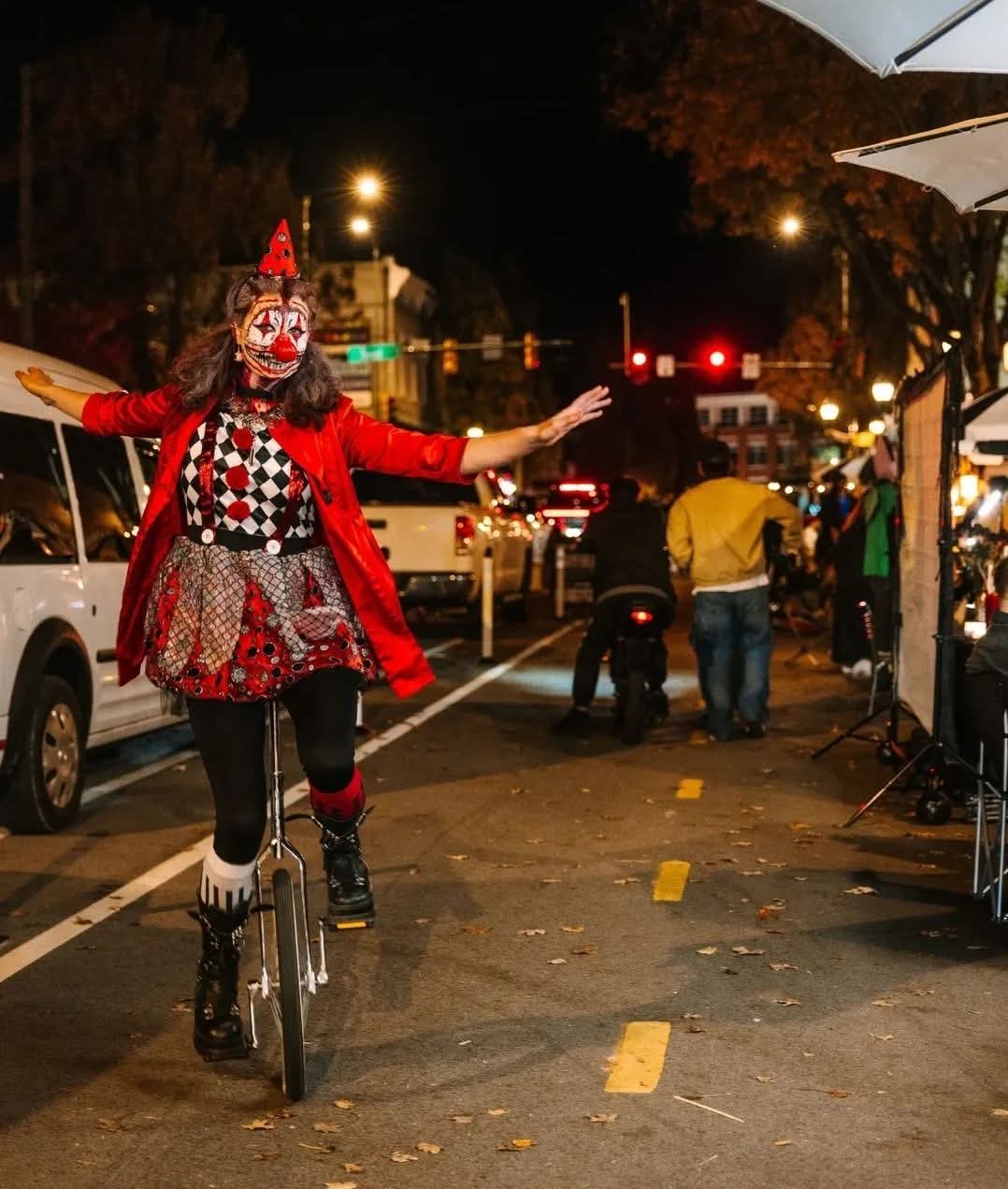
My dad was one of my biggest influences. He taught me how to juggle, unicycle, face paint, make balloon animals, perform, and overcome stage fright. He taught me that you don’t have to be afraid of being a little weird or different—you can actually make that your strength. I even used to ride my unicycle to elementary school, just like my dad had done when he was a kid.
My parents were incredibly encouraging of creativity. They never made me feel like art was something I had to grow out of. They encouraged me to experiment, make things, perform, and figure out what made me happy.
As I got older, though, I went through a very difficult mental health crisis. I ended up dropping out of school. I was skipping most of my classes and spending as much time as I could with my art teacher. While other parts of my life felt like they were falling apart, art became the place where I could actually focus, process things, and feel like myself.
My mom and my brother supported me tremendously during that time. They bought me art supplies, and I would spend hours in my room painting. I painted constantly. Eventually, painting stopped being just something I did because I enjoyed it. It became something I needed.
I never really stopped painting after that.
For me, art has been a form of survival. It has saved me over and over again. Whenever life has felt overwhelming, I’ve always been able to come back to creating something. I think that’s a huge part of why my work has become so personal. I’m not interested in creating art just to make something pretty. I love creating things that make people feel something, that invite people into another world, or that make them stop and wonder.
As I got older, I realized that I didn’t have to choose between the two worlds I’d grown up with. I had inherited performance from my parents, and I had found visual art on my own. Eventually, I started blending them together.
That’s really where my career began to take shape.
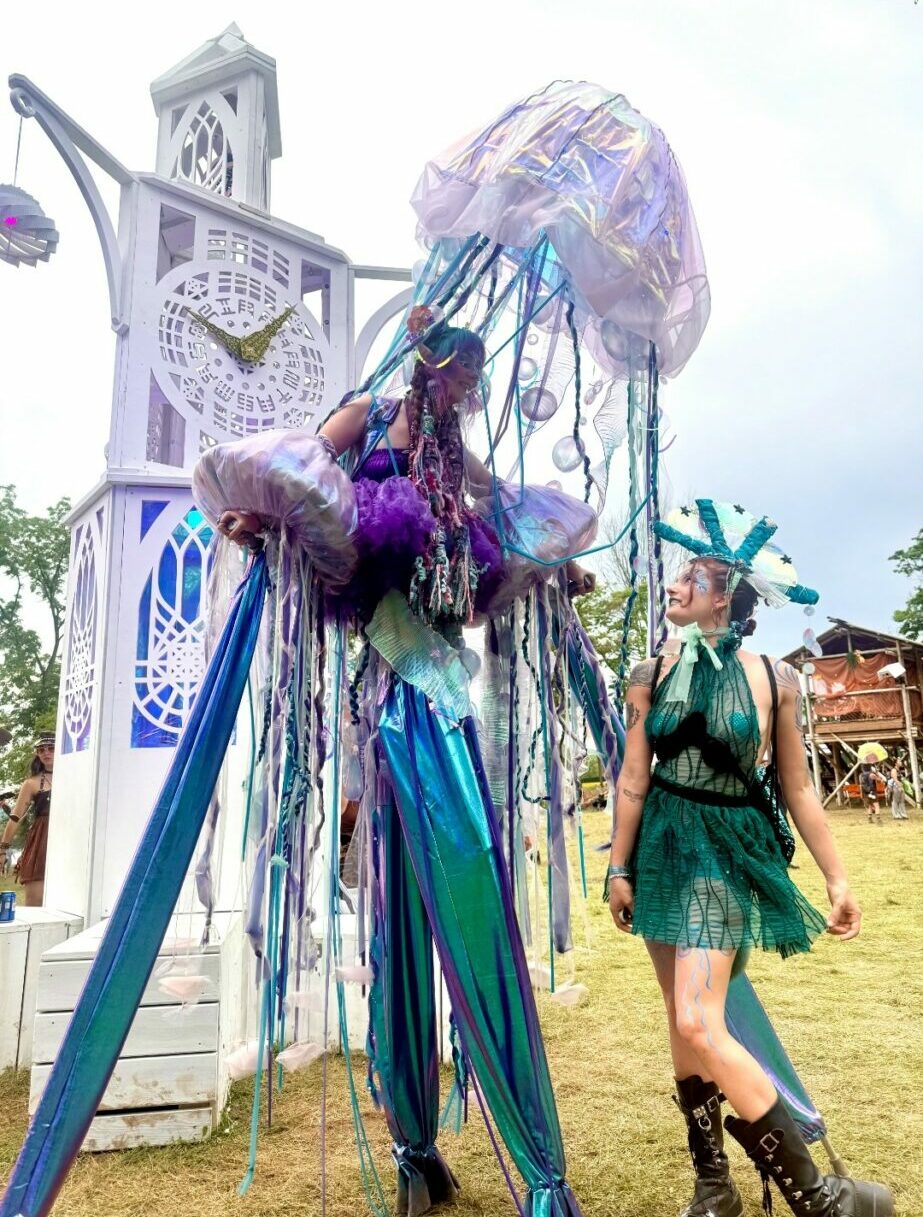
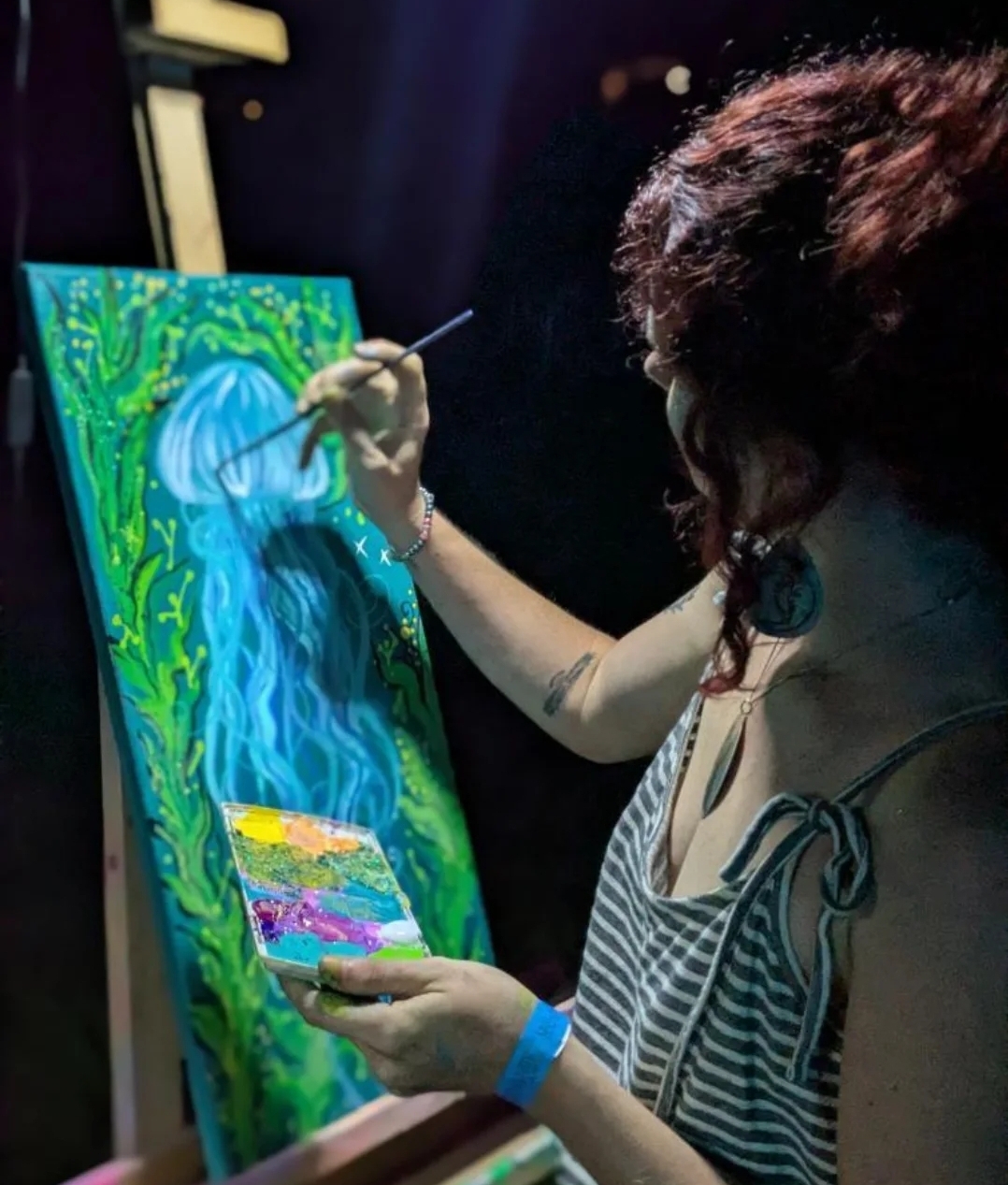
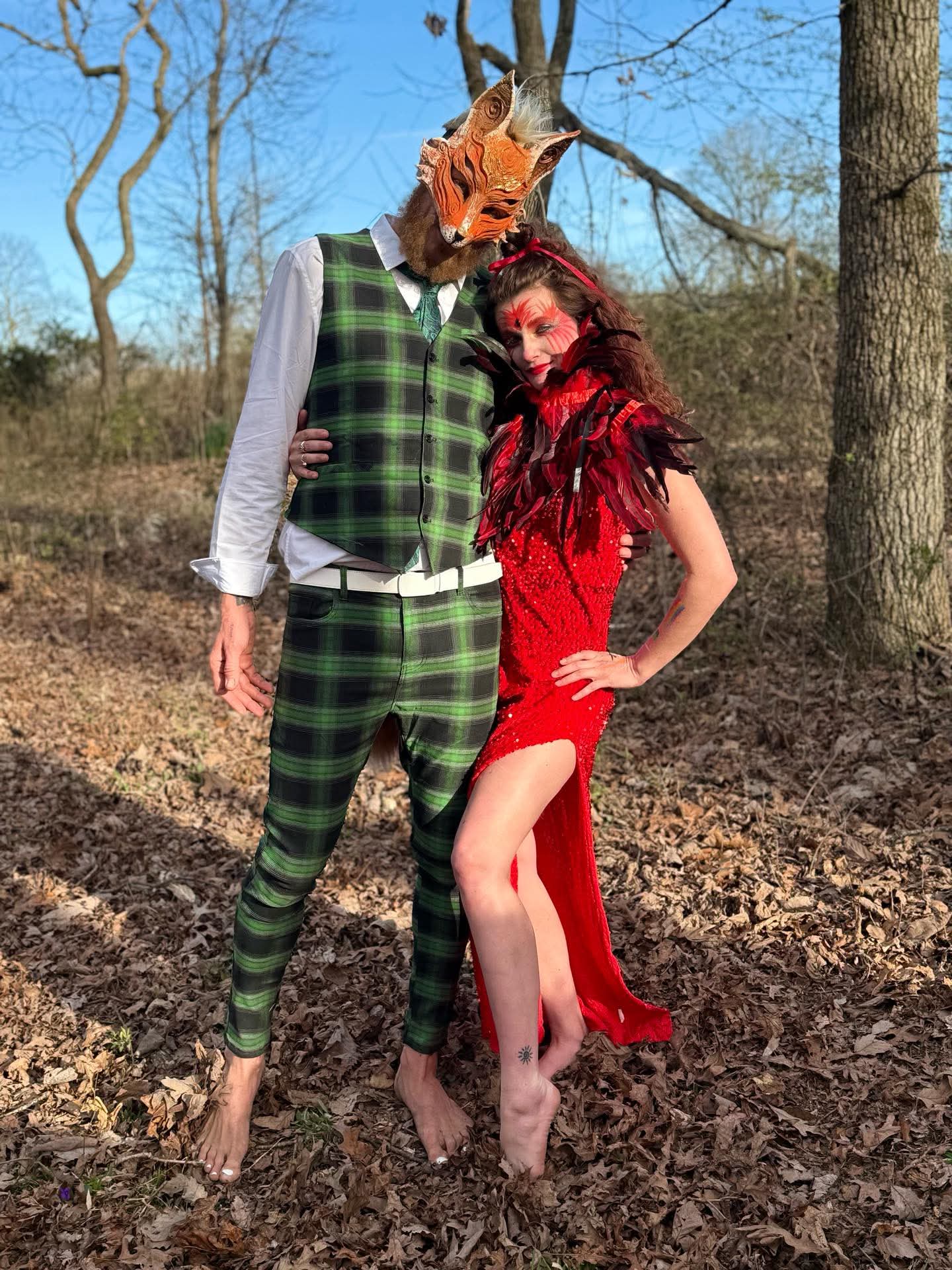
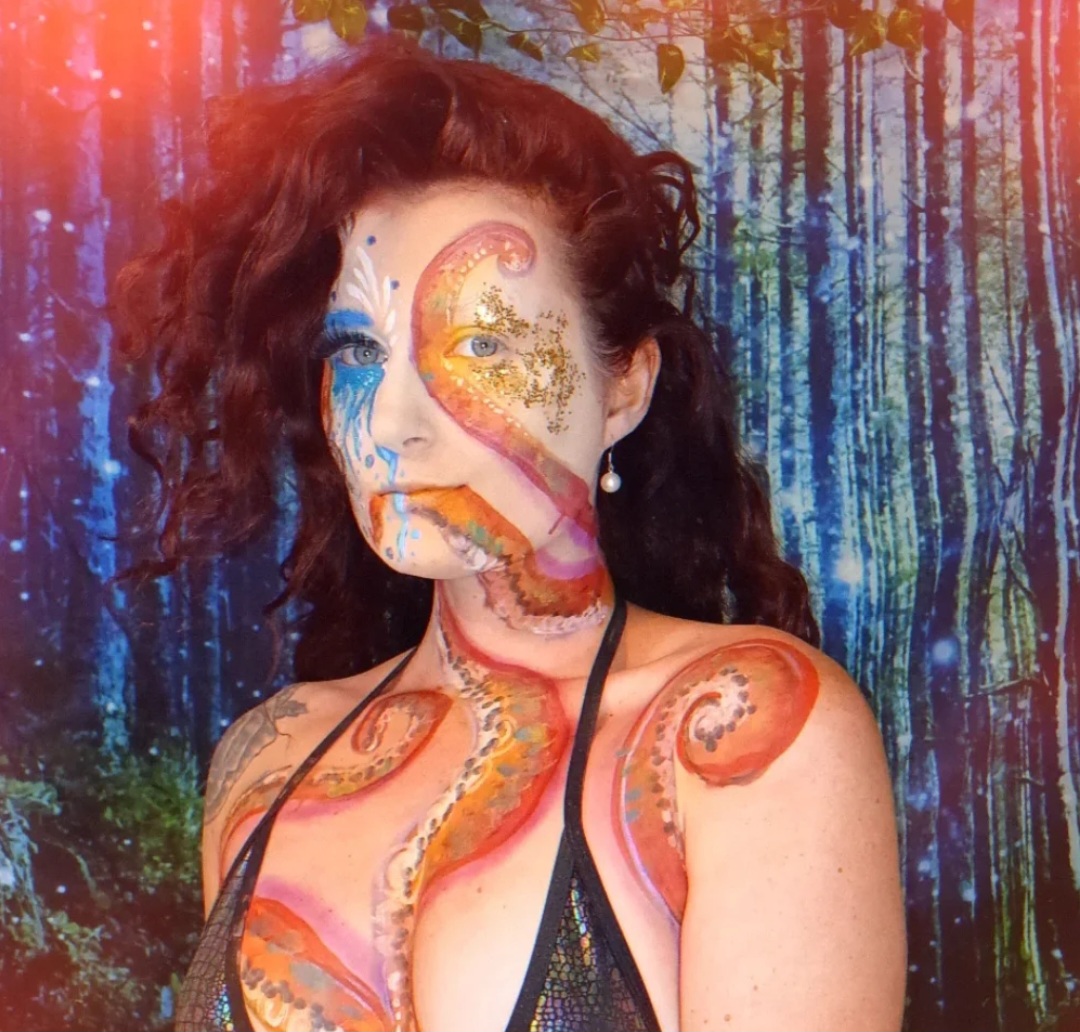
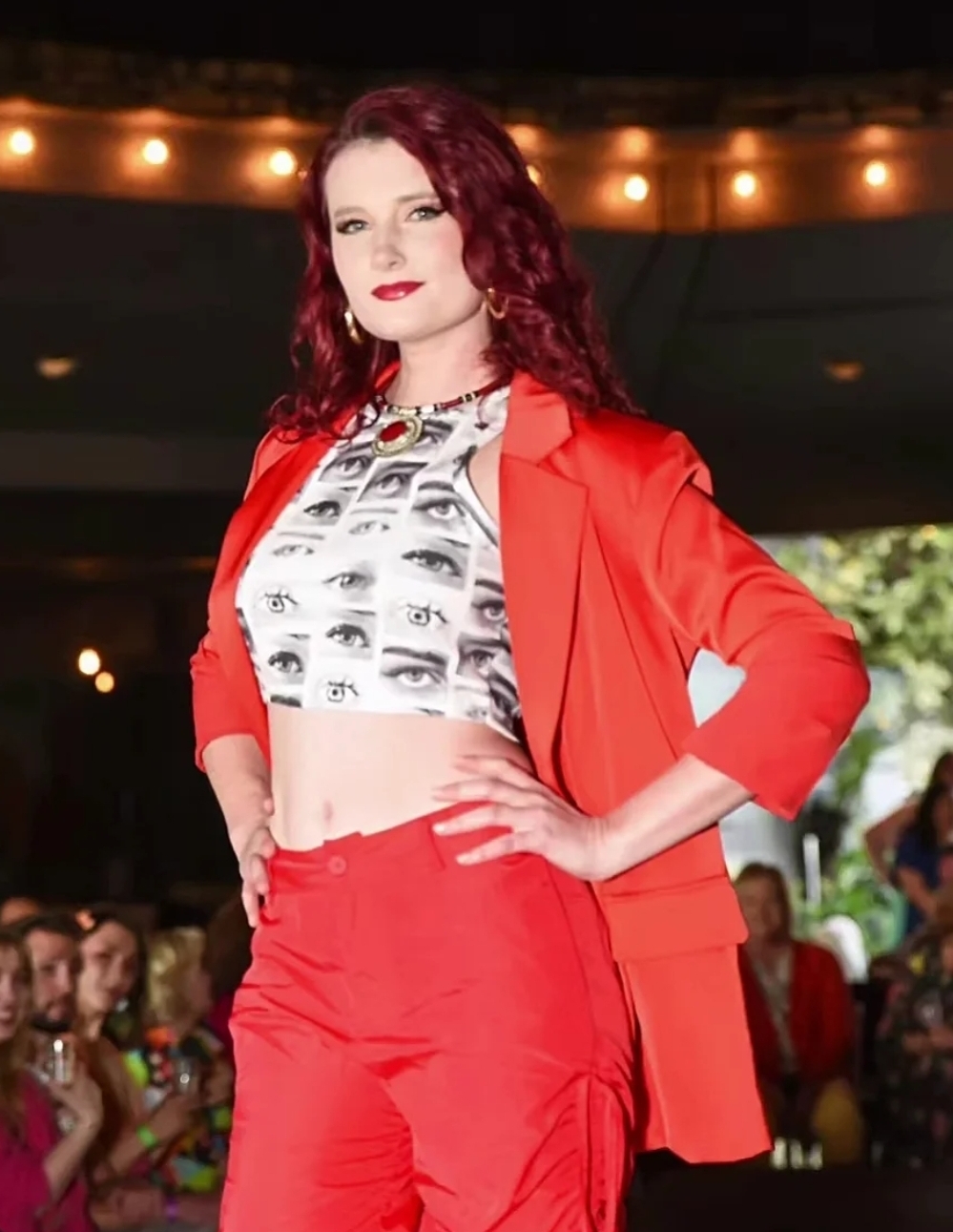
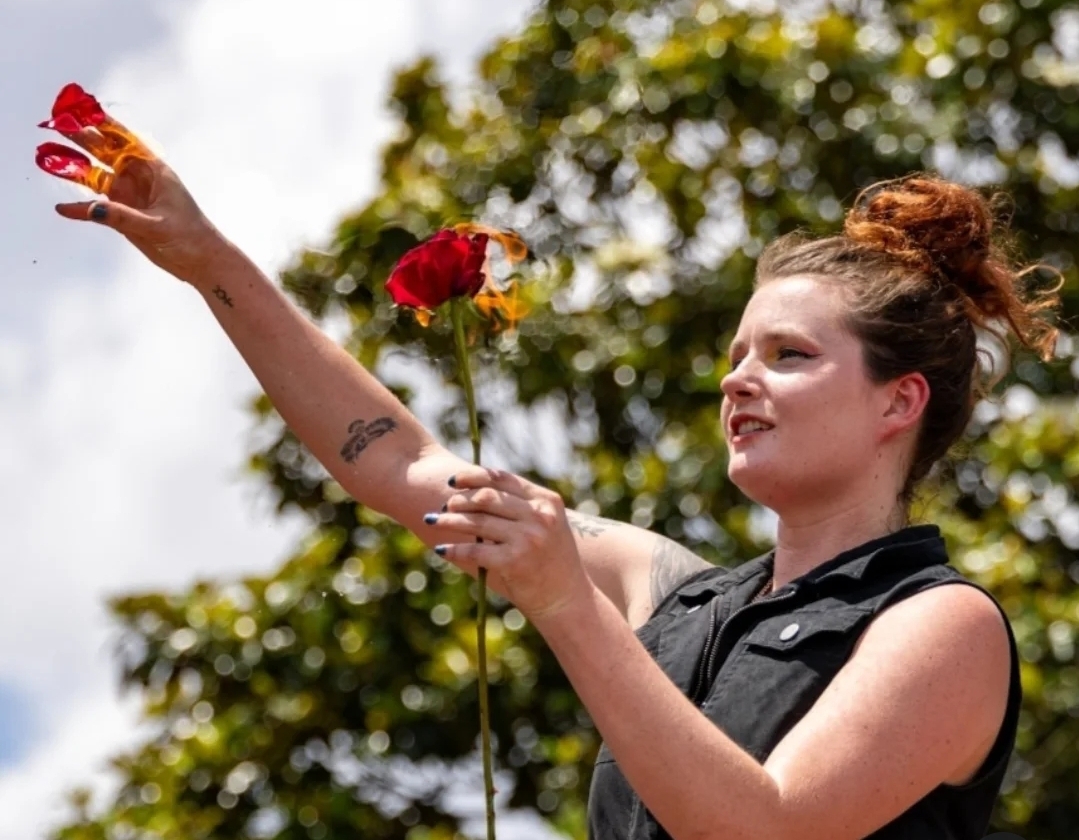
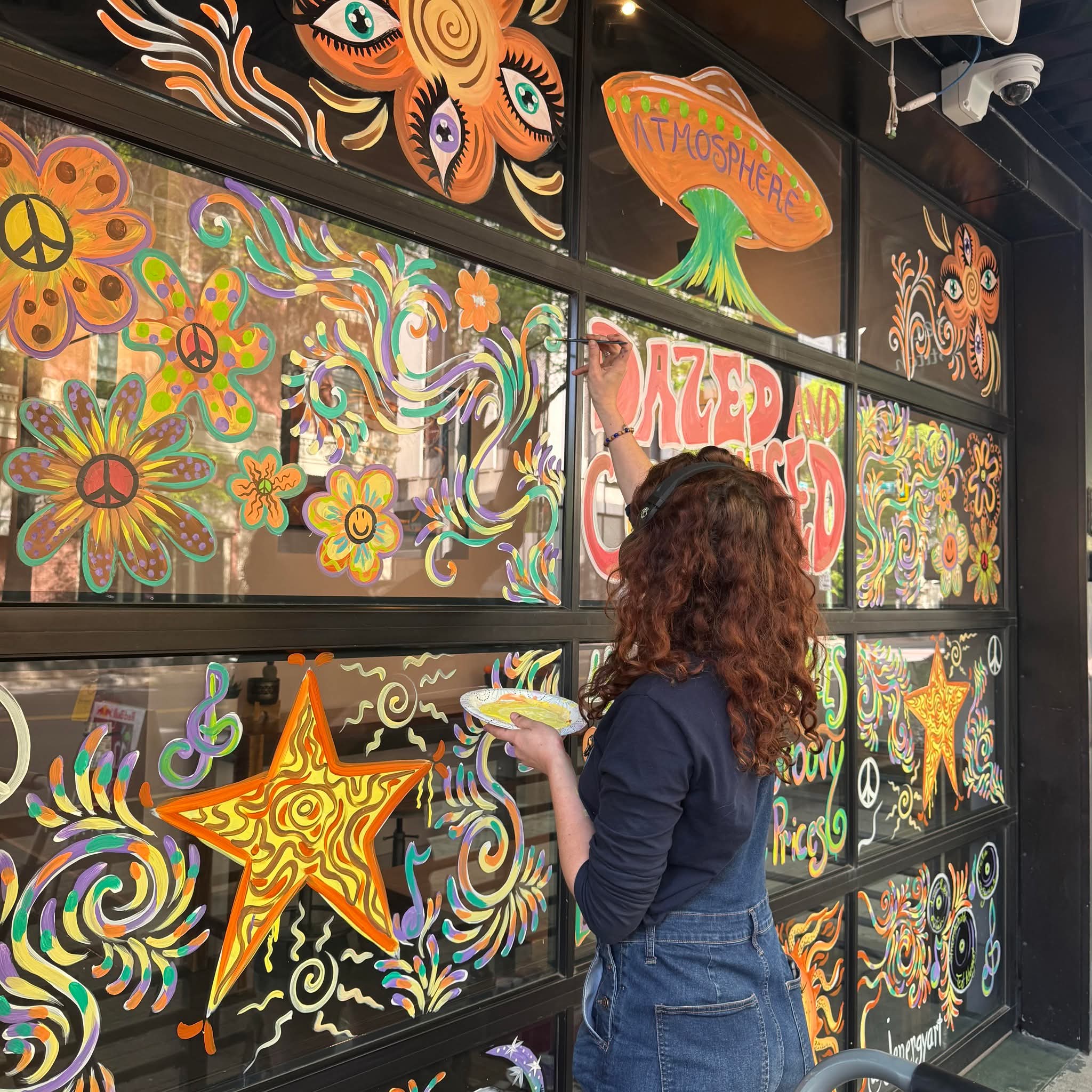
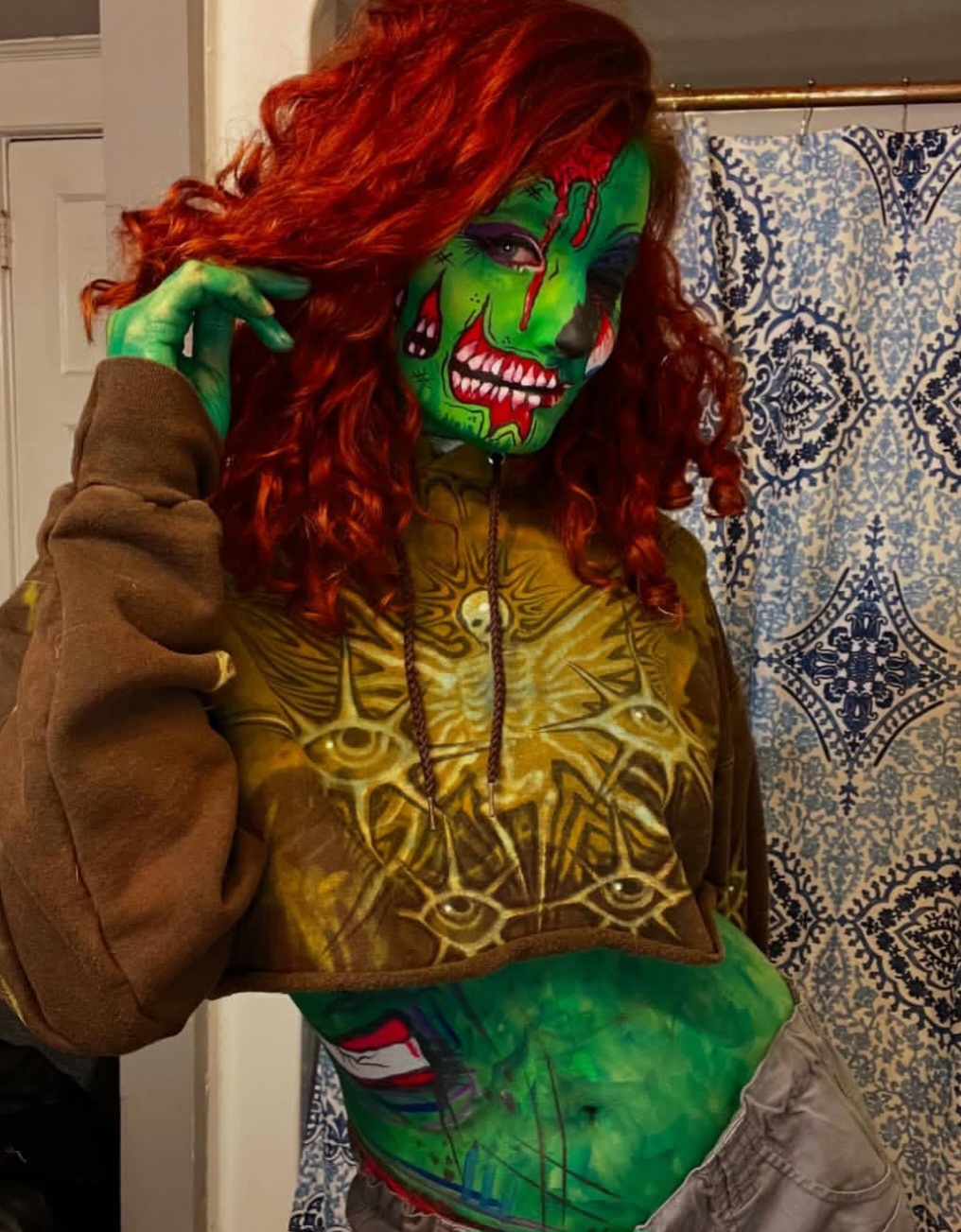
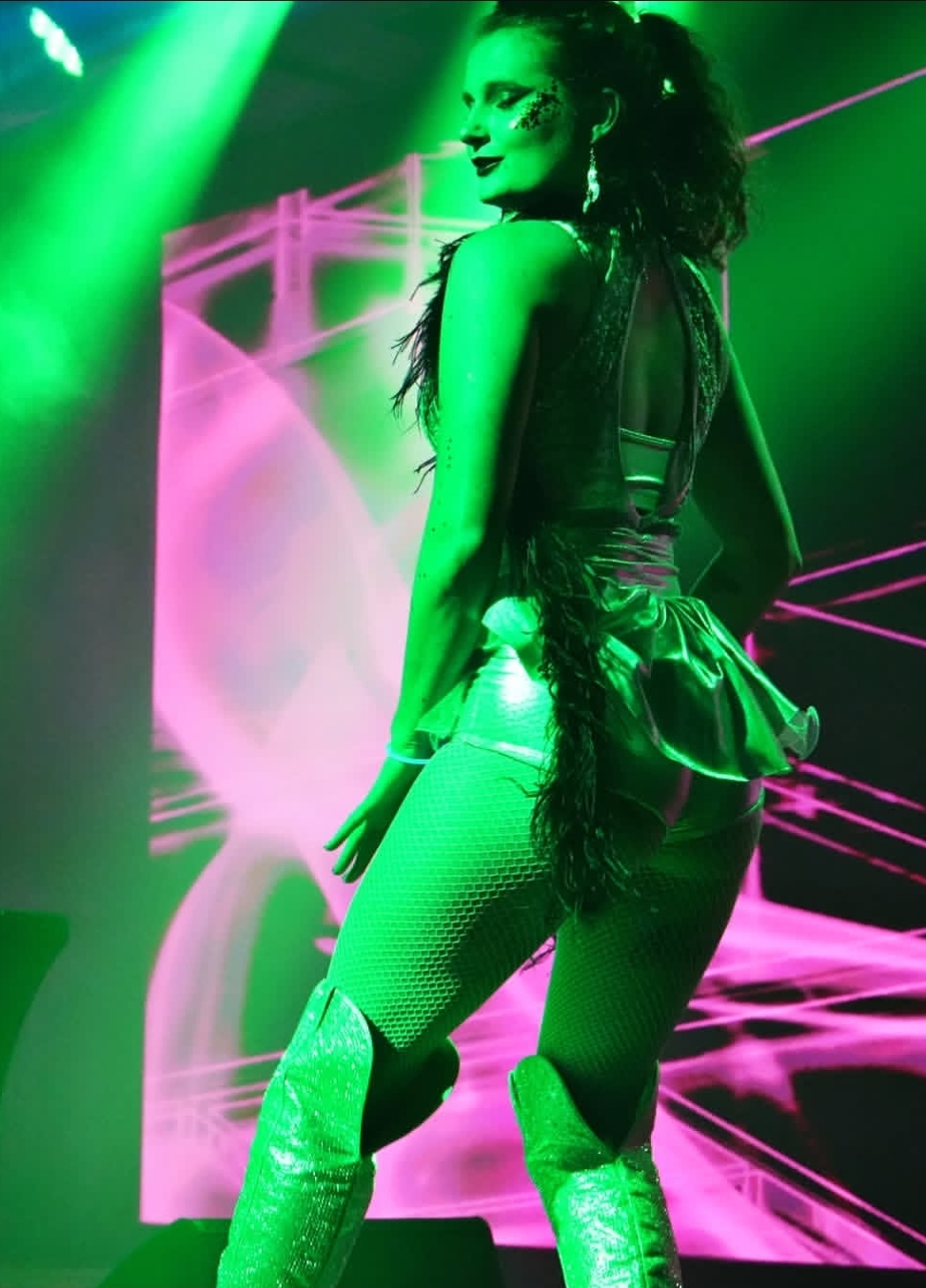
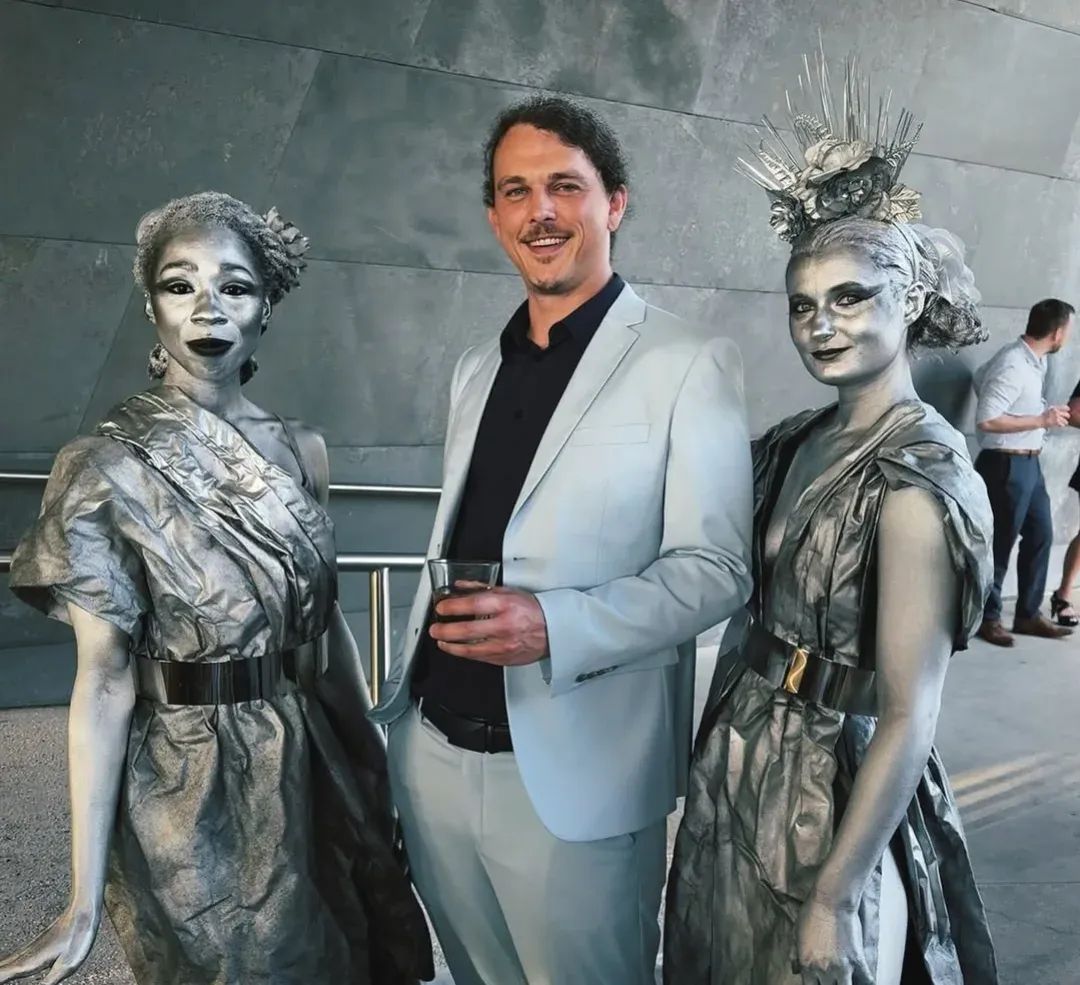
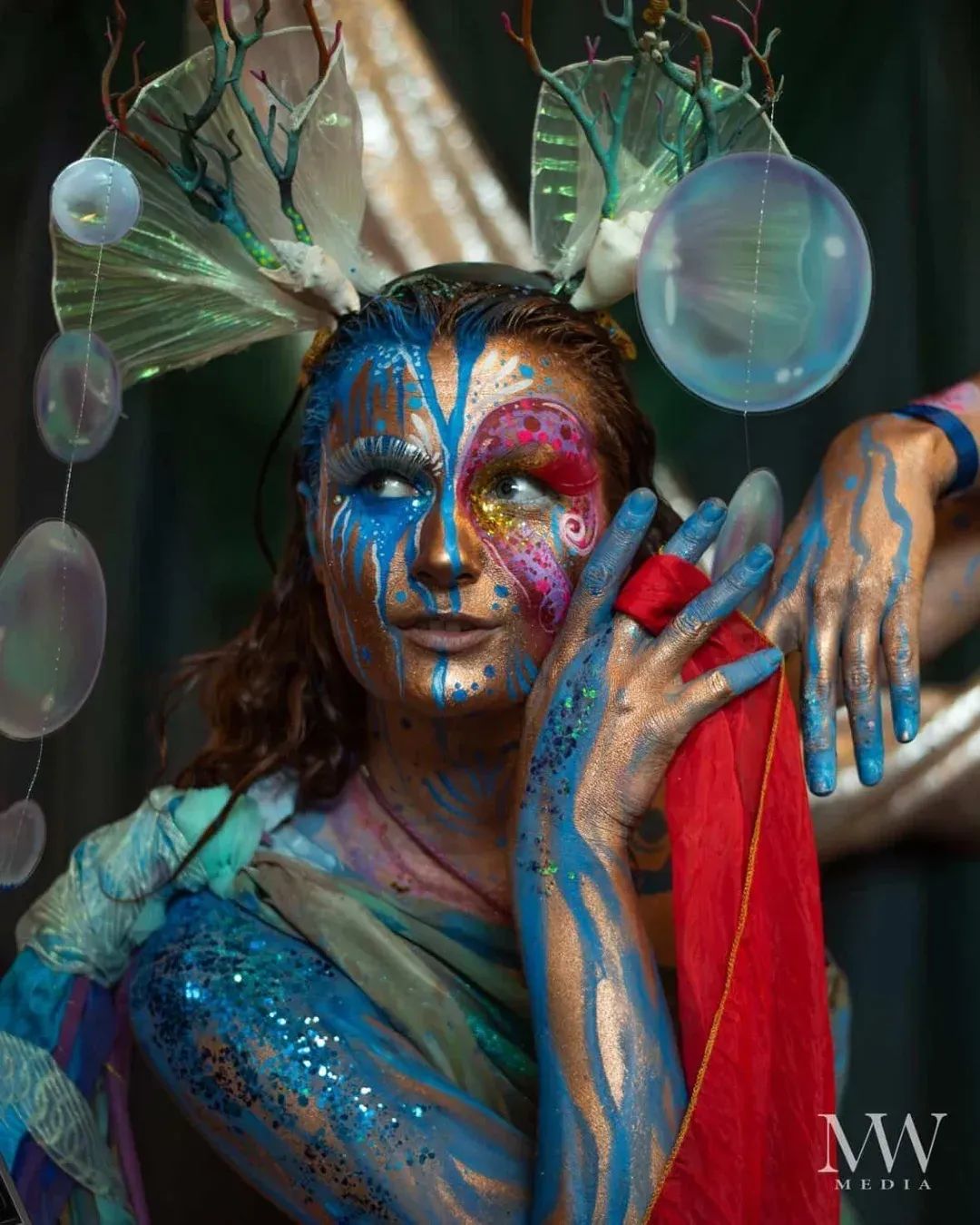
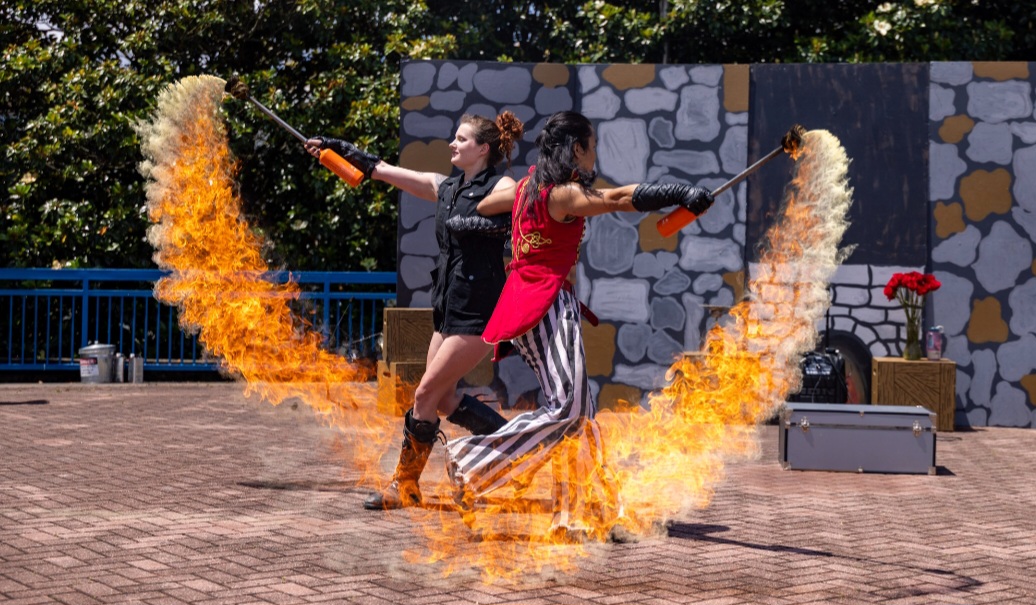
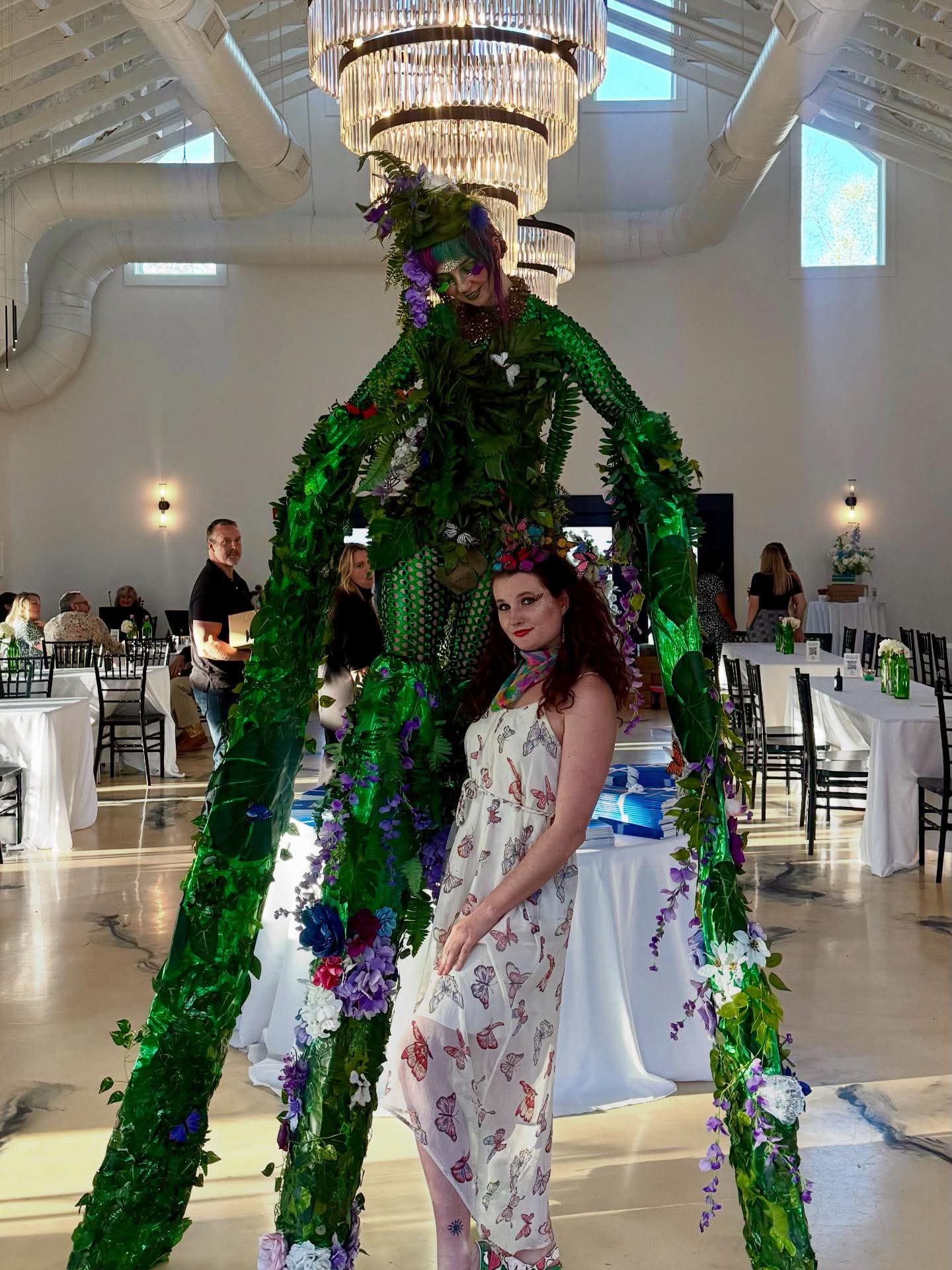
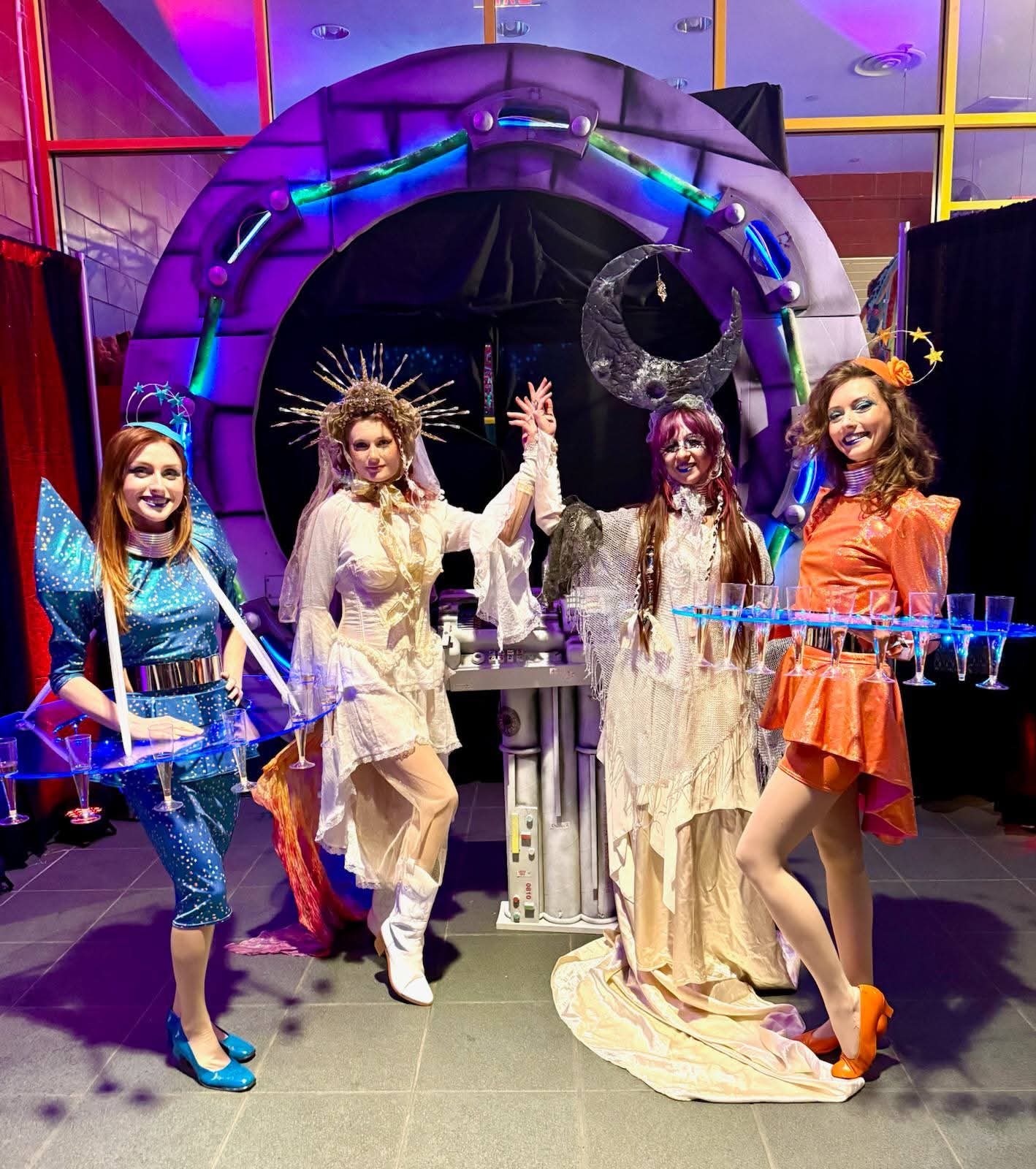
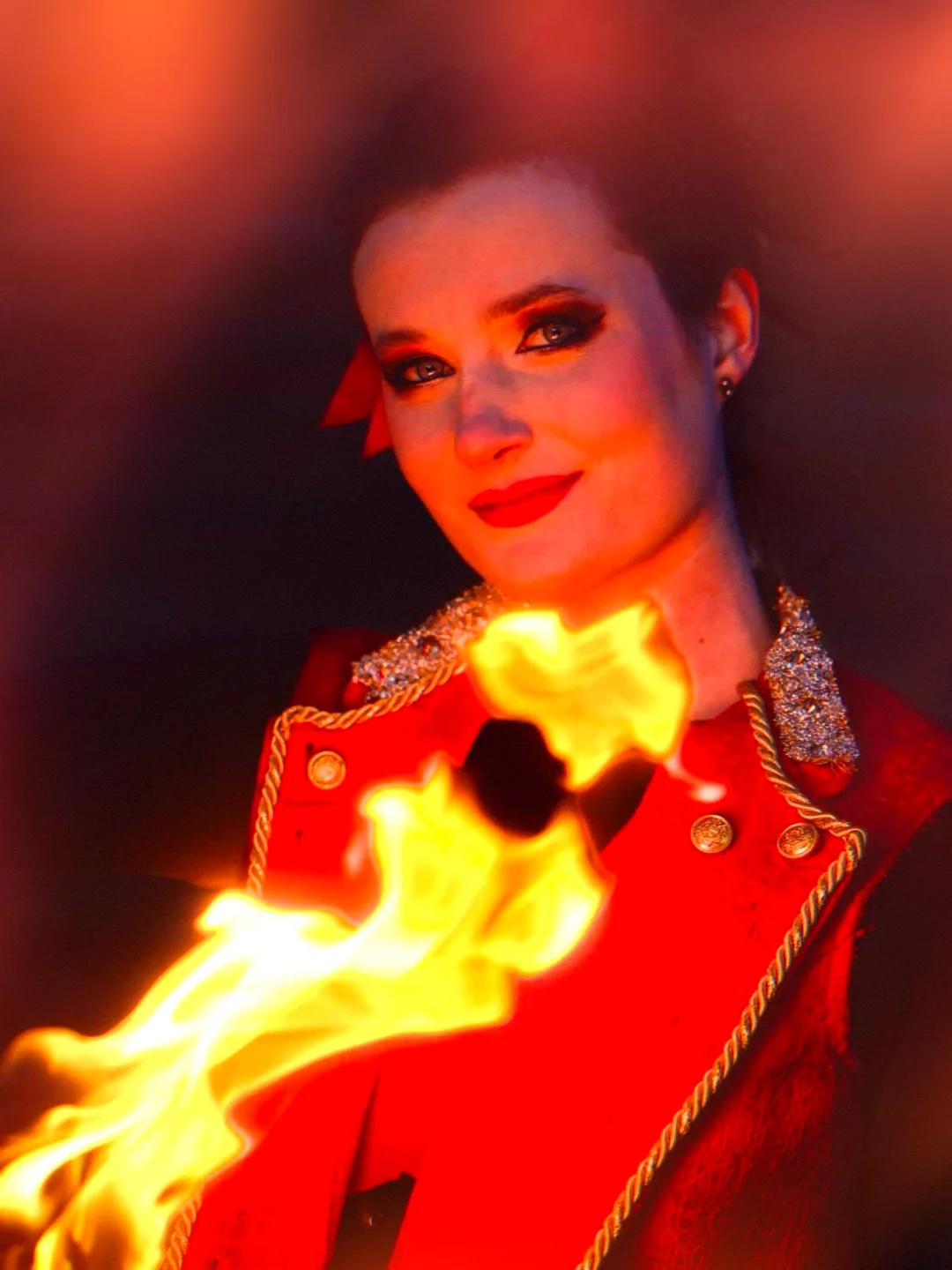
I became interested in all the different ways I could use art on a person, on a stage, in a space, or as part of an experience. I started doing face painting and body painting, building costumes and characters, creating murals and window paintings, making art installations, and performing as living statues and other characters. I’ve incorporated things like unicycling, balloon twisting, fire performance, flow arts, modeling, and interactive performance into my work as well.
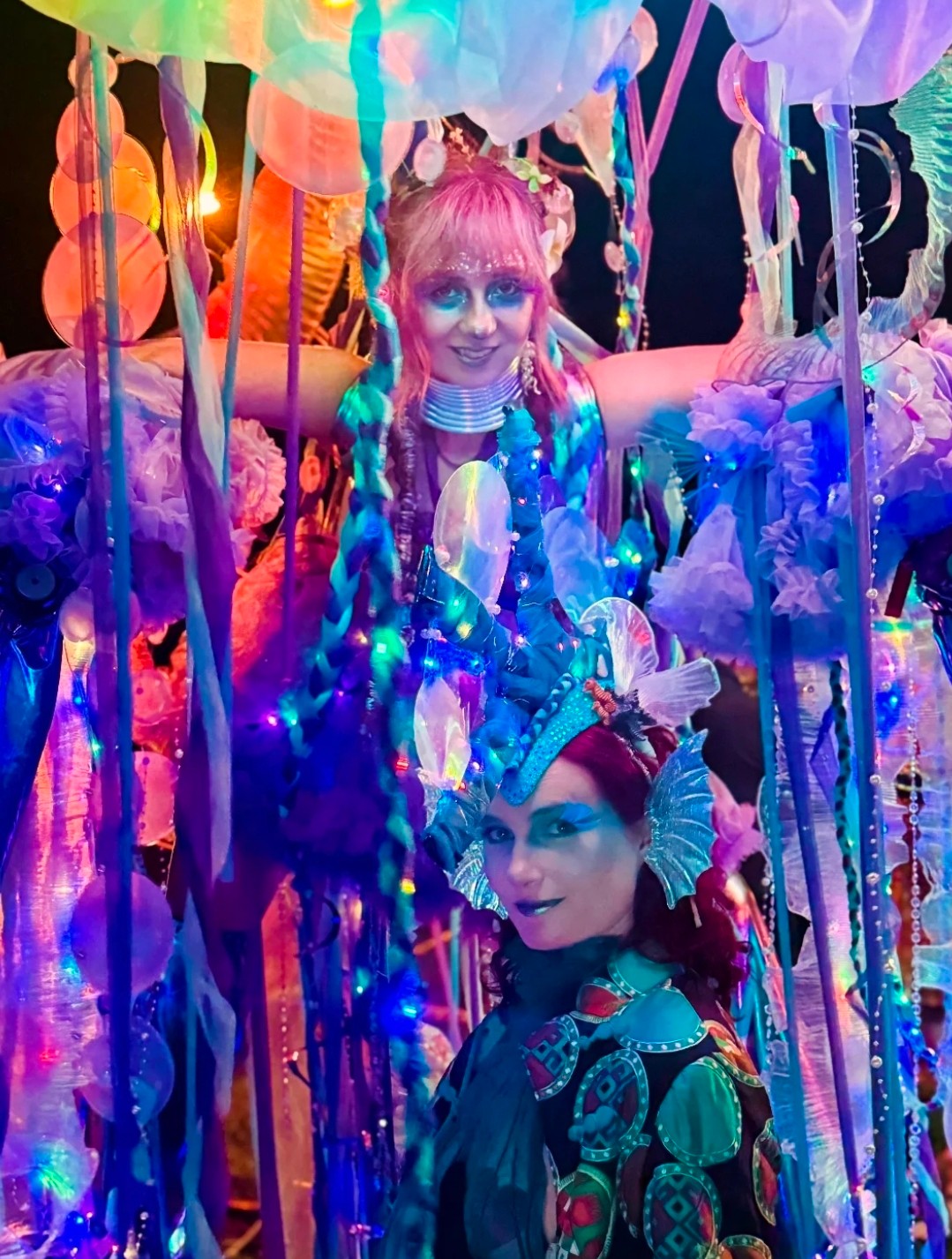
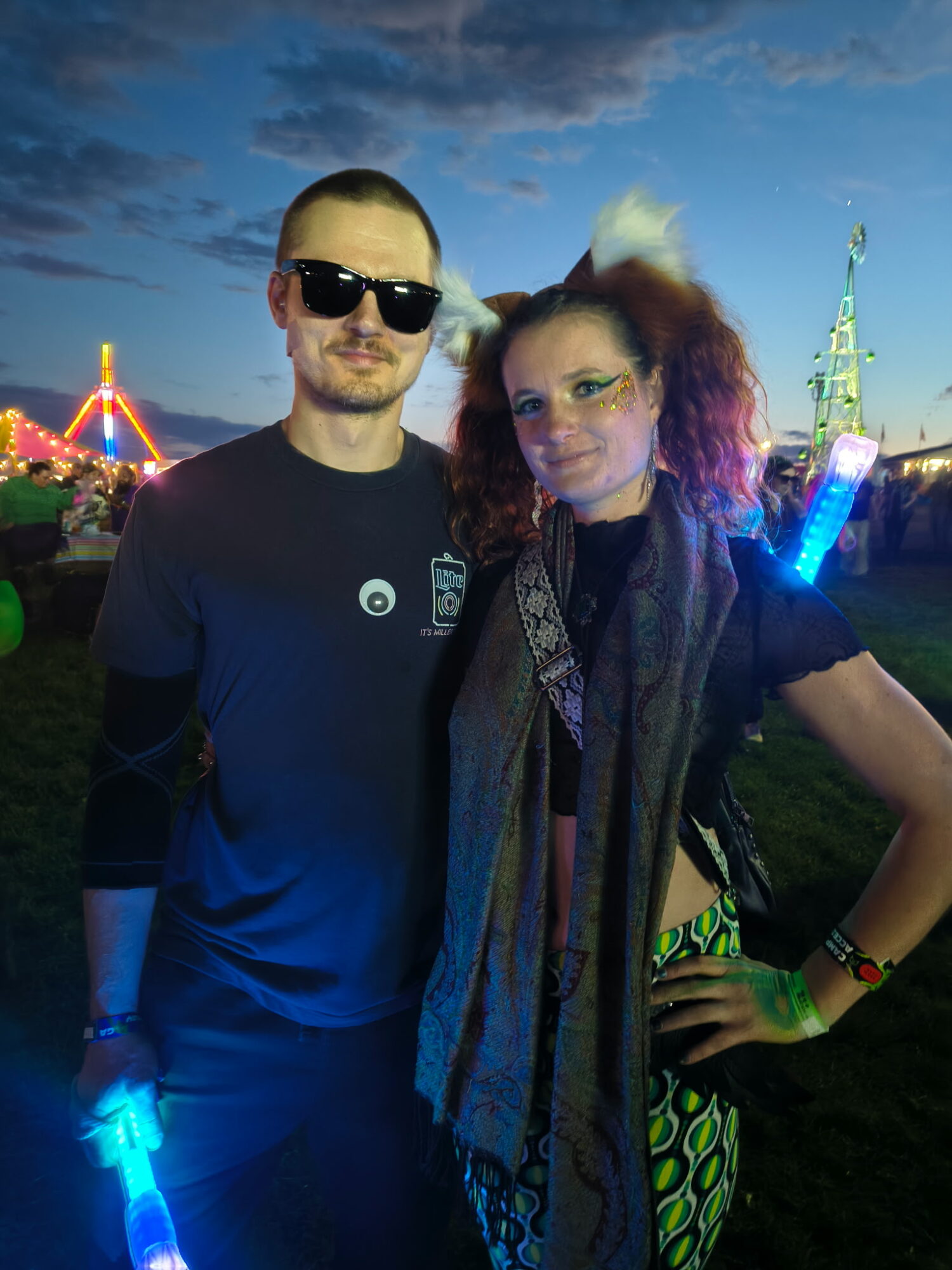
Festivals became a huge part of that journey. They gave me a place where all of these seemingly random skills actually made sense together. I could be a painter, performer, costume designer, character, entertainer, and installation artist all at once. I could create something visually spectacular and then physically become part of it.
That’s what I love most about being a multidisciplinary artist. I don’t really see a hard boundary between visual art and performance. A painting can become a costume. A costume can become a character. A character can become a performance. A performance can become an installation. And an installation can completely transform a space.
Over time, I’ve worked in so many different environments—from festivals and events to murals, body painting, modeling, immersive performances, and art installations. I’ve had opportunities to work with artists, performers, brands, event producers, and communities, and I’ve gotten to travel and create in some really incredible places.
My work has also become increasingly about creating experiences rather than just objects. I love the reaction when someone sees a character or a piece of art and makes them feel awe. I love creating something that makes people feel like they’ve stepped into another world for a moment.
Looking back, I can see that my career actually started long before I ever considered myself a professional artist. It started with watching my parents perform. It started with my dad teaching me to juggle and unicycle. It started with my mom dancing on cruise ships. It started with me riding a unicycle to elementary school and making art instead of going to class.
And then, during one of the hardest periods of my life, painting became the thing I held onto.
Now I’ve built a career around combining all of those pieces of myself.
I call myself a multidisciplinary artist because I don’t think I was ever meant to fit into just one category. More than anything, I’m someone who loves creating worlds and inviting other people into them.
In a strange way, I think I’ve spent my entire life doing exactly what my parents taught me to do: make something, be brave enough to get on stage, and make people smile.
I just found my own way of doing it with other people doing it their own way also. My two biggest current role models are Jessica Kelly (The Giant Jelly) and Chrystal Parker (Crystallineentertainment.com) they both have supported me, given me guidance and opportunities that have changed my life as a full time artist. Its so important to me to be around people who are also fearlessly going after their dreams.
We all face challenges, but looking back would you describe it as a relatively smooth road?
No, absolutely not. There have been a lot of twists, turns, setbacks, and periods where I genuinely wasn’t sure what my life was going to look like.
I think from the outside, it can be easy to look at someone who is now working as a full-time artist, traveling to festivals, performing, painting, and doing all of these fun creative things and assume that it was a straight path. Mine definitely wasn’t.
I dropped out of school as a teenager during a very difficult period of my life. I struggled with my mental health and spent a lot of time feeling like I didn’t fit into the traditional path that everyone expected me to follow. Art was one of the only things that consistently made sense to me.
I also had to figure out how to turn creativity into an actual career. There isn’t exactly a handbook for becoming a multidisciplinary artist. I’ve had to learn through experience—how to price my work, promote myself, find clients, negotiate jobs, build relationships, travel for work, create a professional setup, and figure out how to make a living from something that I genuinely love.
There have definitely been times when I’ve struggled financially or taken jobs that weren’t necessarily what I wanted just because I needed the money. There have been projects that fell through, gigs that got canceled, periods where work was slow, and times when I questioned whether I was actually capable of making this lifestyle work.
I’ve also experienced some very significant personal losses and difficult chapters that changed me as a person. Losing my dad was one of the hardest experiences of my life. He wasn’t just my father—he was one of the people who originally taught me how to perform and create. So continuing to build a creative life after losing him has been complicated. In some ways, though, it has also made me feel even more connected to the things he taught me.
There have been plenty of moments where I’ve had to start over, reinvent myself, or figure things out as I went. But I’ve learned that a creative career isn’t necessarily about having a smooth road. It’s about being adaptable enough to keep moving when the road changes.
One of the biggest things I’ve learned is that the parts of my life that once felt like disadvantages can sometimes become the things that make me unique.
Dropping out of school didn’t mean I stopped learning. I learned through making things, traveling, performing, working with other artists, and throwing myself head on into new experiences.
Not having one traditional career path allowed me to explore a lot of different forms of creativity.
And the difficult periods in my life taught me how powerful art can be—not just as something you make, but as something that can help you survive, communicate, connect with people, and rebuild yourself.
So no, it hasn’t been smooth. There have been some really hard roads.
But I’ve never really stopped creating.
And every time life has knocked me off course, I’ve eventually found my way back to art. That’s probably the most consistent thing about me.
As you know, we’re big fans of you and your work. For our readers who might not be as familiar what can you tell them about what you do?
I don’t really fit into one category, and honestly, that’s something I’ve come to really embrace.
I’m a painter first and foremost, but my work extends far beyond a canvas.
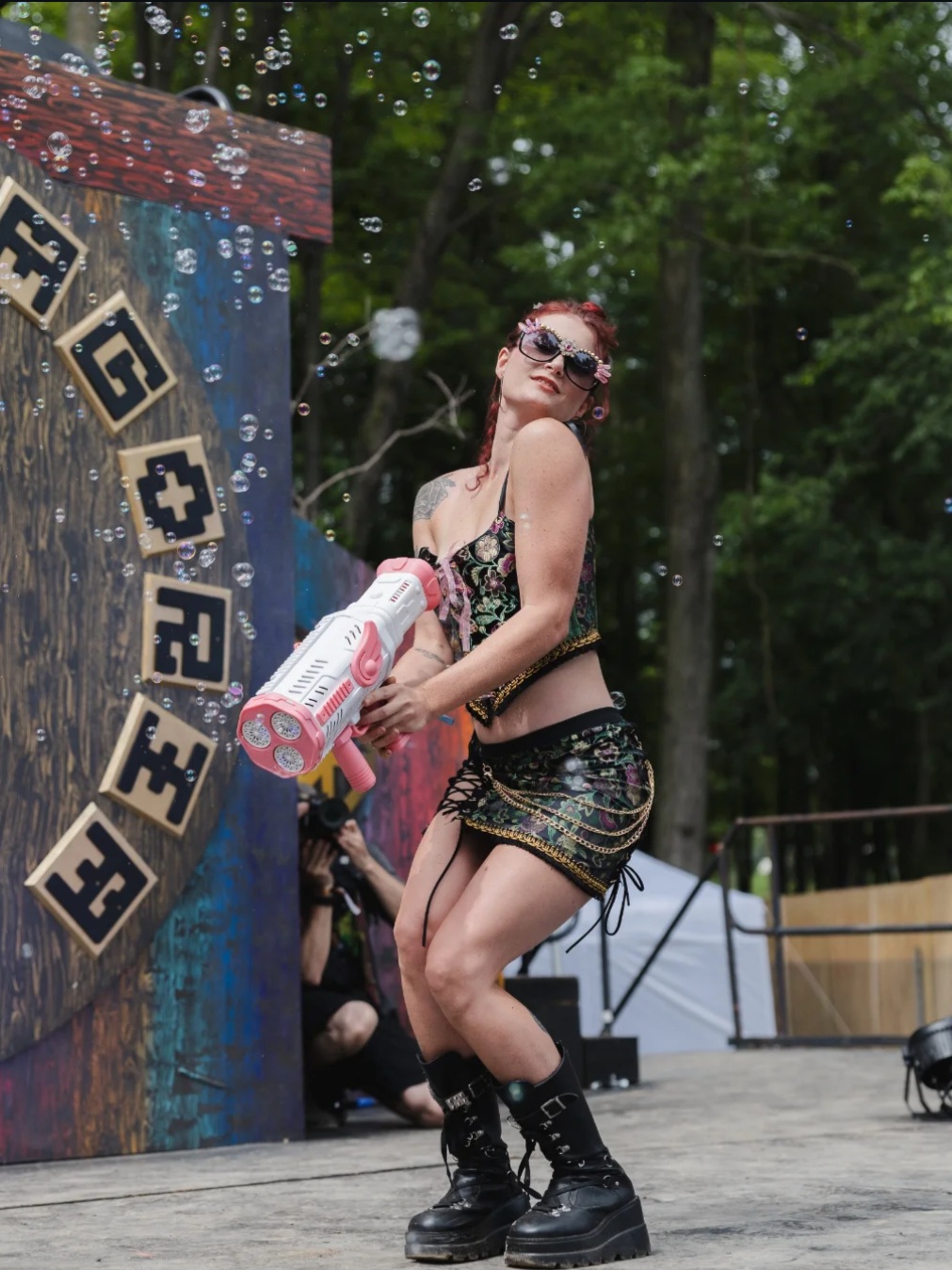
A lot of my work happens at festivals, immersive events, concerts, art gatherings, and other environments where the audience isn’t necessarily just standing back and looking at art—they’re actually experiencing it.
I’m especially drawn to creating colorful, surreal, whimsical, creature-inspired characters and environments. I love making things that feel like they could have walked out of a dream or another world. I tend to gravitate toward bold colors, expressive characters, fantasy, weirdness, and anything that gives people that is a little different and weird.
One of the things I’m becoming known for is taking an idea and turning it into a visual experience. I don’t necessarily want to just paint someone’s face—I want to transform them into a character. I don’t just want to paint a wall—I want to make the wall feel like it belongs in the environment. I don’t just want to wear a costume—I want to become someone or something completely different.
That’s probably what sets me apart the most.
I think a lot of artists specialize very deeply in one medium, and I have a tremendous amount of respect for that. My brain just doesn’t really work that way. I’m constantly thinking about how different mediums can interact with each other.
Because I grew up performing, I’m comfortable interacting with an audience. Because I’m a painter, I understand visuals and color. Because I’ve built costumes and characters, I understand how something needs to move on a human body. Because I’ve worked in immersive environments, I think about how art exists within a space rather than just as an isolated object.
All of those skills inform each other.
I grew up understanding that entertainment isn’t just about being technically good at something. It’s about connecting with people. It’s about making someone laugh, making them feel something, or giving them an experience they’ll remember.
That’s something I try to bring into everything I do.
One of the things I’m most proud of is that I’ve been able to build a career out of a combination of skills that probably wouldn’t make sense on paper. Painting, body art, costumes, character work, performance, unicycling, murals, installations, modeling, festivals—it might look like a random collection of things, but to me they’re all pieces of the same creative language.
I’m proud that I didn’t have to force myself into one traditional definition of what an artist is.
I’m also incredibly proud of the fact that I’ve built this career largely by figuring things out as I went. I’ve learned how to create the art, but I’ve also learned how to promote myself, find opportunities, work with clients and brands, travel for gigs, build relationships within the creative community, and turn an idea into something people will actually experience.
And perhaps most importantly, I’m proud that I’ve kept creating.
Art has been there for me through some of the hardest periods of my life. So being able to take something that once helped me survive and turn it into a career where I can hopefully give other people joy, inspiration, or even just a temporary escape from whatever they’re dealing with feels incredibly meaningful to me.
I think that’s ultimately what I’m trying to do with my work:
Whether someone sees one of my paintings, gets transformed through body paint, walks past a mural I’ve created, or interacts with an installation, I want them to feel like they’ve stepped slightly outside of their normal reality.
I want people to remember how it made them feel.
That’s what I’m most proud of, and that’s what I hope people recognize when they see my work.
We’d love to hear about how you think about risk taking?
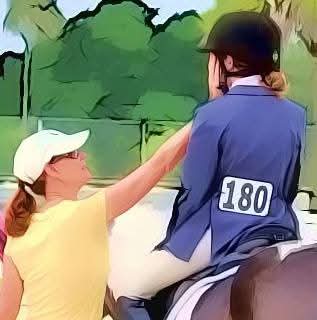
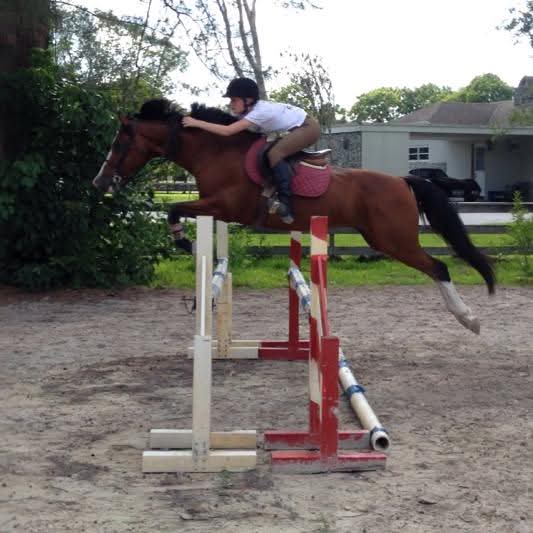
I’ve always had a complicated but very positive relationship with risk. I wouldn’t necessarily describe myself as reckless—I actually think I’m pretty calculated when something really matters to me. But I am absolutely someone who is willing to take big risks. I was always called a wild child growing up, or fearless. I would always take risk with animals, I was a competitive horse back rider and would get on any crazy green horse.
I’ve always been drawn to experiences that scare me a little, make me aware that life and death are on the same coin.
My path requires a certain willingness to be vulnerable. You have to get on stage knowing that people are watching you, and you have to be willing to fail in front of them. Making mistakes infront of 800 people under a spotlight and just laughing it off. So I learned pretty early that fear doesn’t necessarily mean you shouldn’t do something.
As I got older, that translated into a love of adventure and adrenaline.
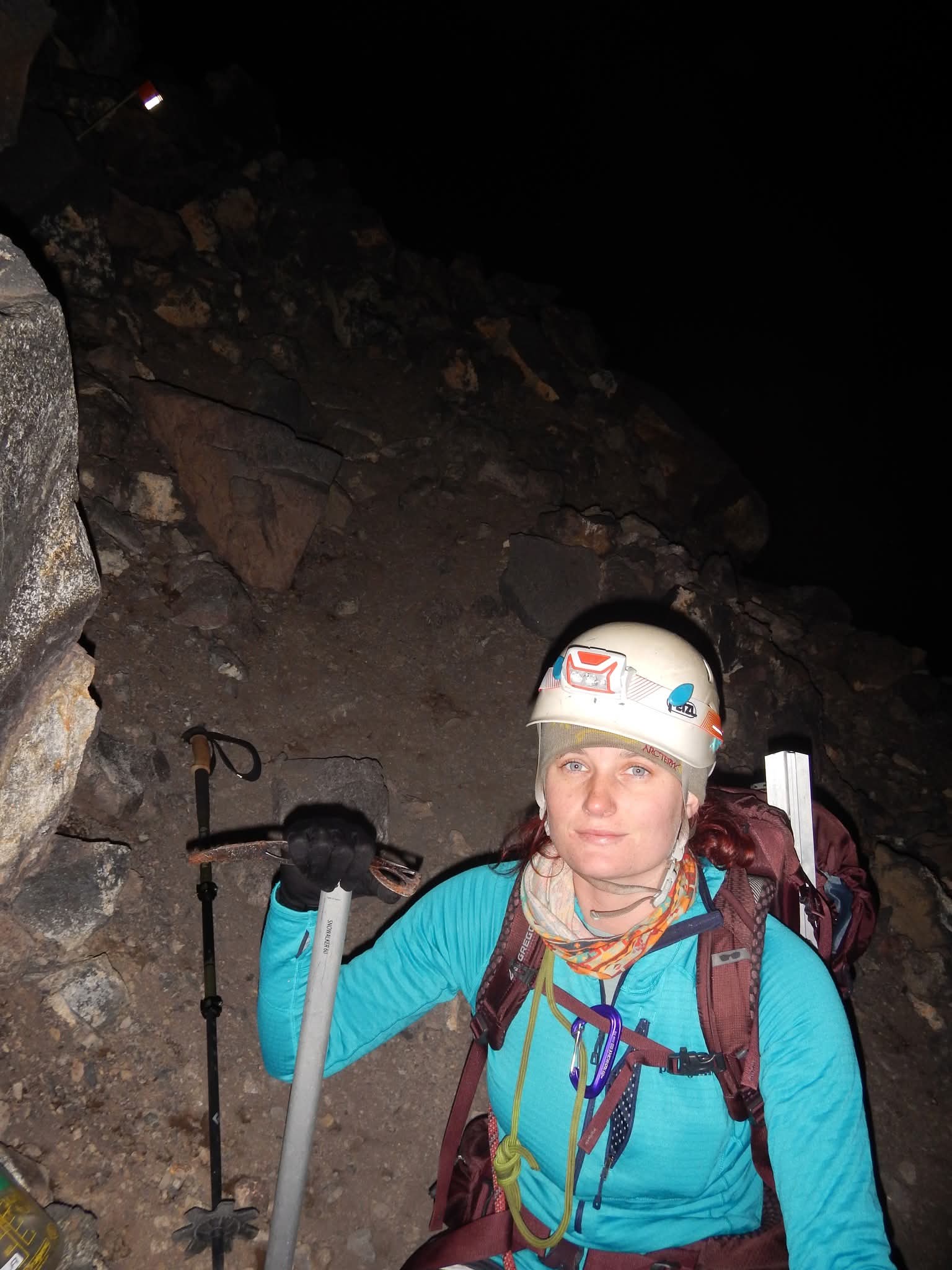
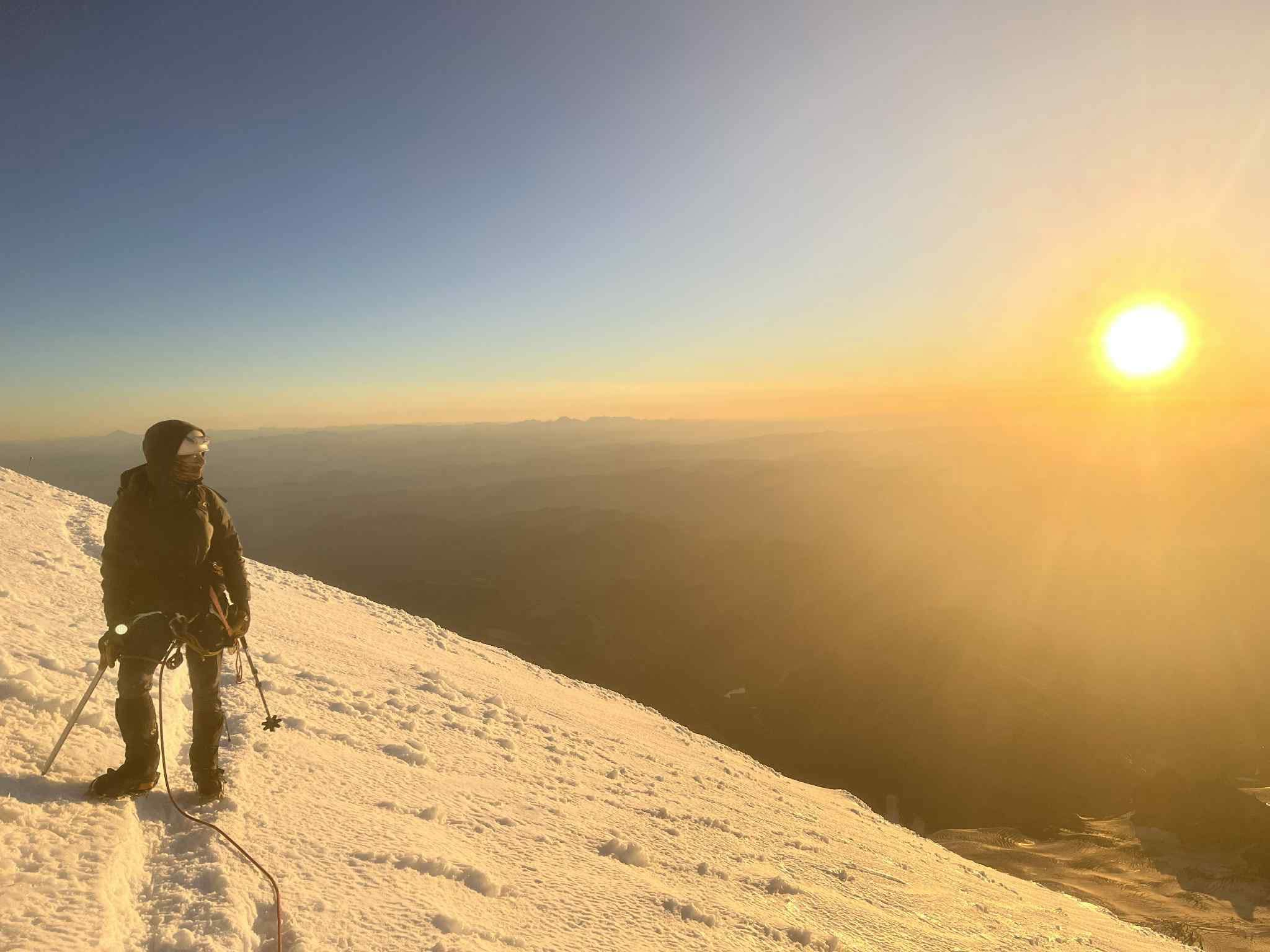
I’ve gotten into mountaineering and have climbed some pretty significant peaks, including Mount Rainier, Mount Hood, and Gannett Peak, the highest mountain in Wyoming and longest approach in the United States. Those experiences have probably taught me more about risk than almost anything else.
Mountaineering is a really interesting and intense relationship with risk because you can’t just be fearless. Fear is useful. You have to respect the mountain. You have to understand weather, terrain, your own physical limits, your equipment, your team, and when conditions are changing. Sometimes the bravest decision you can make is turning around.
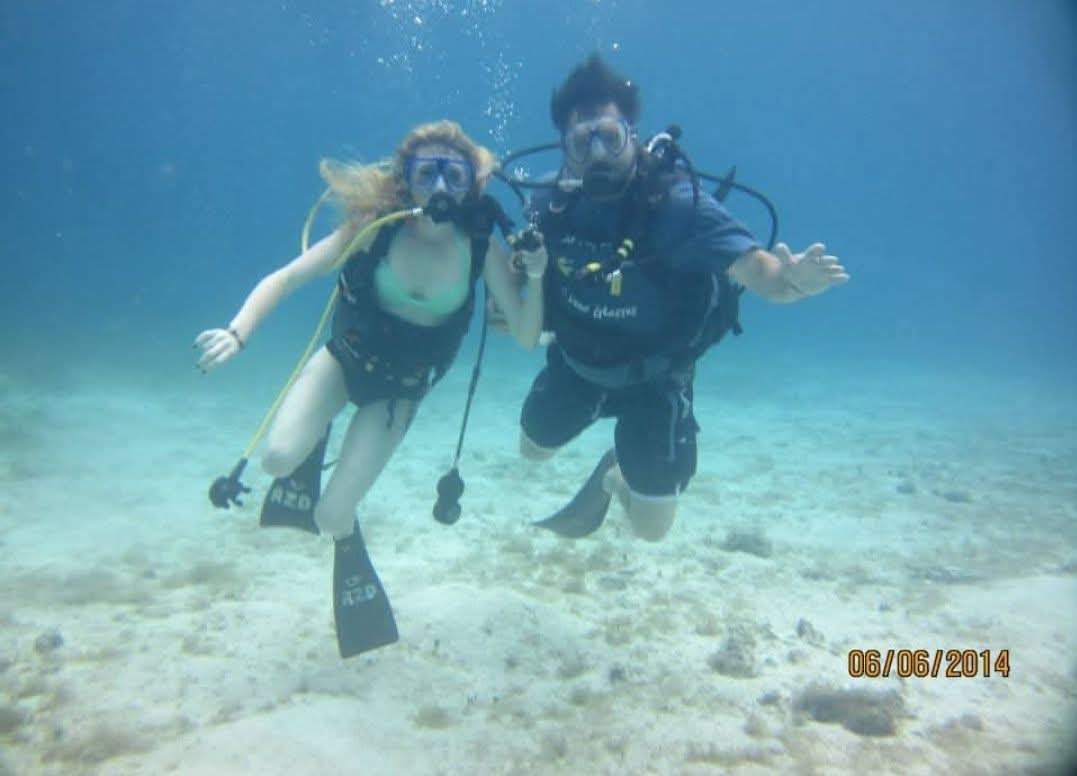
I’ve also skydived and pursued other adrenaline-heavy experiences. I love the feeling of doing something that makes my brain say, “Are you sure about this?” and then realizing that I’m capable of doing it. I have pushed myself past my limit on some 18 hour summit days…
But some of the biggest risks I’ve taken haven’t been physical at all.
Choosing to pursue art as a career was a huge risk.
I dropped out of school and didn’t follow a traditional educational or career path. There wasn’t a guaranteed job waiting for me at the end. Although my parents were supportive they also never attended college. My dad dropped out of highschool to join the circus and my mom moved to Japan from England when she was 16 to pursue being a dancer. I had to figure out how to make a living from my creativity. I’ve taken risks by traveling for opportunities, working festivals, taking production jobs, performing, building strange and elaborate things, putting my art in front of strangers, and saying yes to opportunities where I didn’t necessarily know exactly how I was going to pull everything off.
I’ve worked in production and thrown myself into environments where there is a lot happening at once—tight timelines, complicated logistics, unpredictable conditions, and a lot of responsibility. Those experiences taught me to stay calm, problem-solve, and adapt when things don’t go according to plan in my work.
I think that’s the common thread between climbing a mountain and building a creative career: you rarely have complete certainty. Its scary and will keep you up at night.
You have to assess what you’re getting yourself into, prepare as much as you possibly can, understand the consequences, and then decide whether the potential reward is worth the risk, but for me there is no other way when im chasing after what I love doing, surrounded by people I love.
Sometimes taking a risk means putting yourself physically outside of your comfort zone. Sometimes it means being vulnerable creatively. Sometimes it means saying yes to a job that intimidates you, traveling somewhere you’ve never been, investing money into an idea, putting your artwork in front of people, or choosing an unconventional life when the conventional one doesn’t feel right.
I’ve learned that if I wait until I’m completely comfortable or completely certain, I’ll probably never do anything extraordinary.
Some of the best things in my life have happened because I was willing to take a chance.
And honestly, I think my entire career is an example of that. I took something that once looked impractical—being an artist—and decided to see how far I could take it.
I’m still finding out.
Contact Info:
- Instagram: https://Instagram.com/jenergyart