




Today we’d like to introduce you to Daniel Krenz.
Hi Daniel, thanks for joining us today. We’d love for you to start by introducing yourself.
I grew up in a musical family: my dad is professional guitar player, and my mom is a pianist. I learned how to read music from the piano bench, as did both of my brothers. There was a variety of music in my house growing up from Jazz, Classical, Gospel, etc. I eventually picked up the trumpet as my instrument and played it all the way through college, where I went to Middle Tennessee State University and majored in Trumpet Performance.
In my undergraduate degree my interest in music simultaneously got both more niche and expanded greatly. I got to study music composition, worked with teachers (both good and bad), and was exposed to thoughtful historians and critics that showed me truly how rich the orchestral history is.
In college I met my future wife and got to know her through asking her to perform one of my compositions. We got married and then moved to Boston for my graduate studies. First, I went to Brandeis University where I studied Musicology and then followed that up with a degree from Boston University in Orchestral Conducting. Brandeis exposed me to rigorous scholarship and just how well some people know this music and are able to articulate it. Plenty of hours were spent in the library. Boston University was more hands-on music making, including my first foray into opera conducting.
With Covid in 2020 my wife and I moved back to Nashville, where I eventually started to work with various groups, such as Belmont University’s opera program, Nashville Opera, Huntsville Opera, among others.
Can you talk to us a bit about the challenges and lessons you’ve learned along the way. Looking back would you say it’s been easy or smooth in retrospect?
The largest obstacle is the mental side of it. When you are in college and studying music everyday there seems to be an implicit expectation, both on your part and the university’s, that you will graduate and go off to make money with your degree in the “real world.” When in actuality, that is rarely what happens. I first made money post-graduation by teaching marching band, driving all over the city to teach private lessons, and then bagging groceries at Walmart. I never took a marching band class, or a class on how to organize a private studio, (or how to bag groceries for that matter). But you just figure it out and make it work.
Then I went to Boston and started to make a lot of connections and was really getting excited about graduating and starting to work professionally. But I graduated in May of 2020 and eventually left our mouse-infested studio apartment and headed back to Nashville with my wife because of Covid. Covid really decimated the performing arts scene, as it did for all industries. When we moved back, we still had rent and bills to pay, so I started applying for any job that I could. Eventually I found my way into working for the State of Tennessee as an Information Systems Auditor. My background was not reflective in any way that I would be qualified for this job, but in one phone call with the recruiter she said, “If you can do Music Theory then you can do this job” and that was that.
While I was tremendously pleased with having a job, I also had a sense of defeat. I moved away from Boston and now was not “working” in music. Perhaps it was the jealousy of seeing friends and colleagues find work in music, or perhaps it was the mourning of a student dream that my future was going to be different than what I originally thought.
But, slowly and surely, jobs started to open up. A friend of a friend recommended me to the Huntsville Opera and now I’ve been invited back. I stepped in at the last minute for the Shoals Symphony Orchestra for a concert. More and more work has started to pick up for me, and I am tremendously fortunate to do them and still maintain a “day-job” in Cybersecurity. Although I still feel the pangs of wondering how life could have been, I am happy that I have a salary and flexibility that allows me to pursue whatever artistic projects interest me. In fact my life has turned out better than I could have envisioned.
Appreciate you sharing that. What else should we know about what you do?
Artistically my work spans across many different enterprises – which I have really grown to enjoy. Besides one-time gigs, I have a few steady recurring musical jobs. I work with the Nashville Opera, Belmont University’s Opera Theatre program, the Blueprint Ensemble, and I maintain my own composition practice.
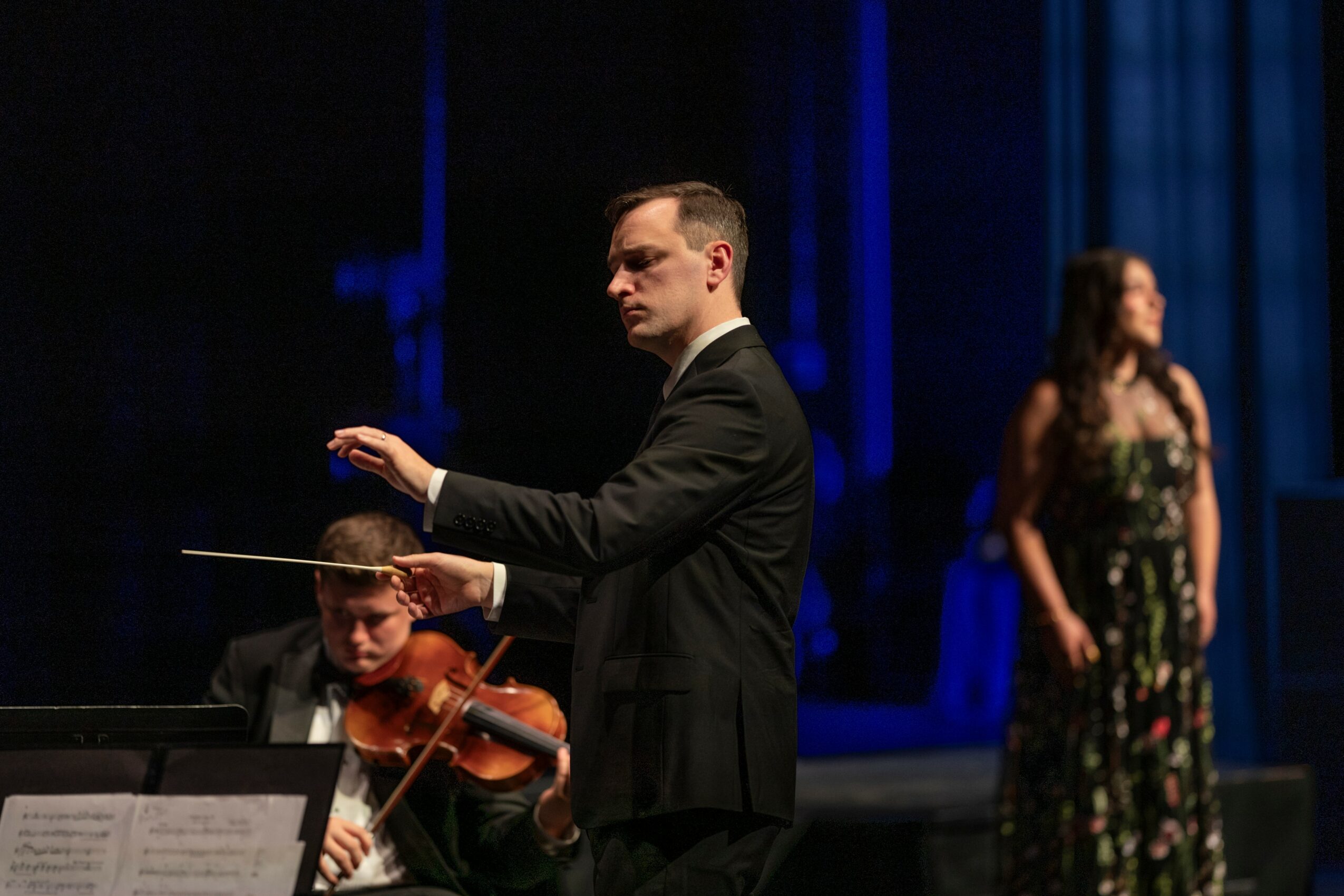
At Belmont I teach in their opera program where I am responsible for teaching music, leading rehearsals, and conducting the concerts. This is my sixth year with them. Opera is a fascinating art because it is so collaborative, and I am very happy that I have wonderful colleagues. Teaching also brings me great joy, especially because I am able to work with students who really do want to grow and get better. And there is nothing better than being able to see students grow and go off and do wonderful things.
For the Nashville Opera, I assist their Music Director, Dean Williamson. What this really means is that I serve as a second set of ears to check the balances between the orchestra and stage, and try to catch any other various issues that may come up from misprints in the parts or missed words from the stage. Working with them has been an education all to itself as you get to really dig into some great pieces of music with extremely talented professionals, on top of watching other colleagues do what they love.
The Blueprint Ensemble is a 501(c)(3) charity group that I started several years back. It is a chamber ensemble that is dedicated to performing the works of living local composers, as well as masterworks from the chamber repertoire. I love that group because we always try to perform in venues where you would not normally expect to hear classical music. We have performed at the Michelin-starred bar/restaurant Bastion, art galleries, all over the place. We have developed a small local following, but it always brings me joy to have someone come up to me afterwards and express their interest and surprise that we showed up at a place that they weren’t expecting. We premiered an opera this past year at the Kindling Arts Festival and look forward to several more premiers this year.
Lastly, I compose. While I had written some music before Covid, I really started to write more and more during Covid because I had no other musical outlet. I don’t know much of what to say about my music, the whole reason I write the music is that I can’t express it in words. But I do feel as if everyone should attempt to write music. It gives you a new appreciation and a new understanding of music that you cannot get from just reading about it. I have been very fortunate to be surrounded by tremendously talented musicians that are willing to perform my music and I hope to continue to write music that people would like to play and hear. Currently I am working on an opera myself that will be completed next year.
What quality or characteristic do you feel is most important to your success?
When I was at Boston University I had a teacher named Jonathan McPhee who is a conductor and composer and was the longtime Music Director of the Boston Ballet. In one of his conducting seminars he talked about the ability to be open to any possibilities, even if you might not be particularly interested in it at the first moment. He said that when he first started out in his studies he had no particular interest in being a Ballet conductor, but he said yes to one opportunity and now he has built a love and a career out of that opportunity.
I had that advice in mind when I was first offered some opera engagements. My education and training really had little to none operatic exposure. I was nervous, but said yes. Now 90% of my work is through this wonderful art form that I have discovered and loved.
So saying yes is crucial to a good start. Partnered with that is just output. I think of my favorite composer, J.S. Bach and just the sheer amount of music that he was able to write. Bach has over a thousand surviving works that we wrote all out by hand. Just to copy out the exact music that he wrote out would take years. Not only did he do this, but he composed it all, on top of performing and all of his other duties. The act of creating is a physical hands-on activity that demands output. With that output comes growth and development. There really is no substitute for doing it.
Contact Info:
- Website: https://www.danielkrenzmusic.com
- Instagram: https://www.instagram.com/dkrenz_music/
- Facebook: https://www.facebook.com/aba.bbes.10/
- Twitter: https://x.com/DKrenzMusic
- Youtube: https://www.youtube.com/@danielkrenz
- Other: https://www.blueprintensemble.org