



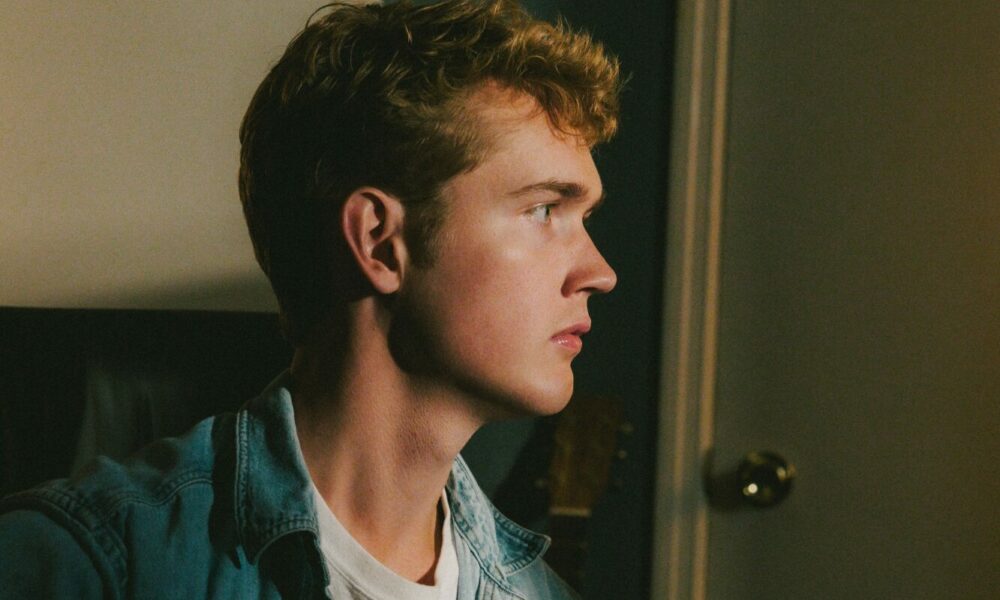
Today we’d like to introduce you to Ross Grieb.
Hi Ross, so excited to have you with us today. What can you tell us about your story?
I grew up in Omaha, Nebraska, and got an early musical start playing guitar when I was 11. I played in a lot of bands and started writing songs, and got my first introduction to the recording world when my high school indie rock band recorded an album. I loved the experience and decided I wanted to learn how to produce music.
I went to the University of Nebraska-Lincoln to study business and started producing on the side. All through college I spent probably 40 hours a week recording and working with singer-songwriters, bands, and rappers in town, getting experience. One of the artists I met early on was Noah Floersch, who was a year younger than me at school. He had no music out on DSPs yet but was incredibly talented, and we started working together beginning with his first single. We have worked on everything together since, and his viral TikTok that eventually became the single “Ghost of Chicago” that came out in April of 2023 altered the trajectory of both our careers.
Back to college, it was a four-year period of hard work where I produced dozens (possibly hundreds) of songs for free to hone my craft. Along the way, I interned for producer Ed Cash in Nashville, who taught me a lot about the artistic and creative side of production. I also had an A&R internship at Elektra, which taught me a lot about the business side.
After graduating college in May of 2020, COVID delayed my plans to move to pursue music full time so I ended up working as a worship leader for a church in Colorado. In August of 2021, I finally moved to Nashville (along with Noah Floersch).
I worked a part-time job and started going to shows and getting work with some local artists until I was finally busy enough to quit my job and produce full-time in October of 2022. Since then, it’s been a steady grind of working with more and more artists and continuing to improve my craft.
We all face challenges, but looking back, would you describe it as a relatively smooth road?
COVID threw a massive wrench in my plans, but it’s ultimately ended up being for the best. My plan in February of 2020 was to get a job working for a label or publisher in New York, and then producing after work hours until I had enough credits to my name to quit the job and pursue production full time. But Nashville was always where I truly wanted to be.
Because New York shut down during the pandemic, it didn’t make any sense to move there. It led to me moving to Nashville much sooner than expected, which is what I wanted anyway.
But this also led to me relying on music production for all my income sooner than expected, which anyone who has made that transition can attest is a very scary leap of faith. The first few months were slow and there were times I was worried I was going to have to get a job again, but I did my best to produce good music, treat people right, and kept praying God would send the right opportunities my way.
As you know, we’re big fans of you and your work. For our readers who might not be as familiar what can you tell them about what you do?
I’m a producer and songwriter. I don’t put myself into a box as far as what kind of music I make. My discography covers a very wide range of genres: indie pop, folk, rock, R&B, alternative hip-hop, and CCM. That being said, I am most known for the work I’ve done with Matt Schuster and Noah Floersch.
For Matt, I produced a series of acoustic covers (“Vienna,” “Ophelia” and “Outskirts of Heaven”) that have gained over 50 million streams on Spotify alone. I love real and raw-sounding recordings, and the approach Matt and I took to those records focused on sounding clean and spacious while also retaining the natural character of his voice and the guitar. It’s a sound that a lot of artists have since come to me wanting to use for their songs.
I’m very proud of all the music I’ve made with Noah. We’ve built our careers together from day one, and I’ve produced almost every single song in his discography (including two full-length albums). Our sounds have also evolved together, and are centered around a sense of not wanting to be constrained to a certain genre or instrument. We’ve done folk-pop records, piano ballads, electronic, and even some more classical capella-inspired pieces.
For everything, I’m driven by serving the artist and their art first and foremost. The song and the feeling behind it are more important than any production technique I might bring to the table–and so my production focuses on capturing that emotion. Oftentimes, I think that is best served by using real instruments and live tracking, retaining some of the little “mistakes” that make the music feel human.
What makes you happy?
I think relationships make me happy more than anything else, both in my career and in life. When I think back to the moments in the studio that give me the most joy, it’s always times when I was with people who are just great to be around.
Finishing a mix or writing a great hook is ten times more enjoyable when you get to do it with people you love. So much of why people like listening to music is because songs help us to express feelings and experiences that are otherwise difficult to explain, and making music with people I love makes me happy because it brings that shared understanding to a higher level.
Contact Info:
- Website: rossgrieb.com/contact
- Instagram: https://www.instagram.com/rossgrieb
- Other: https://open.spotify.com/playlist/5DA867hURo0gzg2mhZbwAM?si=13705d5677ea4836


Image Credits
Anna Schaeffer